
The Rebel We Need Again: Jimmy Cliff, John Lewis, And The Disappearing Courage To Speak
 12 June 2026
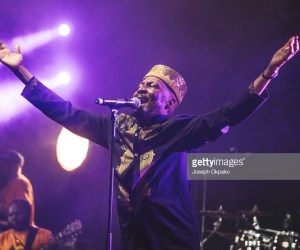


News Americas, NEW YORK, NY, Thurs. May 7, 2026: There are songs that entertain us, and then there are songs that interrogate us. Songs that refuse to remain in the background of life. Songs that return like spirits when society begins drifting too far from its moral center. For me, Jimmy Cliff’s “The Rebel in Me” is one of those songs.
“If the rebel in me can touch the rebel in you,
And the rebel in you can touch the rebel in me,
Then the rebel we be is gonna set us free.”
Those words are not simply lyrics. They are a challenge; a spiritual confrontation; a call for awakening.
As I listened to the song again recently, it did not feel old. It felt frighteningly current. It felt as if Jimmy Cliff was speaking directly to the condition of the modern world, to the exhaustion of ordinary people, to the silence that has overtaken so many communities that once believed in resistance, solidarity, and moral courage.
When people hear the word “rebel,” they often imagine destruction. They imagine violence, disorder, chaos, or rebellion for rebellion’s sake. But that is not the rebel Jimmy Cliff was speaking about. That is not the rebel that John Lewis spoke about when he urged people to get into “good trouble.”
The rebel they spoke of was moral.
The rebel is the person who refuses to become numb while society collapses around them.
The rebel is the teacher who refuses to abandon struggling children.
The rebel is the young man in the inner city who refuses to glorify violence because he understands the funeral costs of the streets.
The rebel is the woman who advocates for the poor while politicians weaponize poverty for votes.
The rebel is the citizen who still believes truth matters in an age where misinformation spreads faster than wisdom.
The rebel is the person who sees suffering and refuses to normalize it.
That kind of rebellion is sacred.
Today, however, something feels missing. We live in one of the most connected eras in human history, yet many people feel spiritually disconnected from one another. We have endless communication, but less courage. Endless information, but less conviction. We are witnessing war, displacement, economic instability, political division, rising housing costs, mental health crises, and loneliness on a global scale. Yet many people remain silent, not because they do not care, but because they are afraid.
Afraid of backlash.
Afraid of losing careers.
Afraid of being labeled.
Afraid of becoming unpopular.
Afraid of speaking too loudly in systems that reward compliance.
That fear is dangerous because silence has always been the greatest ally of injustice.
Growing up in Jamaica and later experiencing life in the United States, I learned early that many communities do not grow from abundance. They grow from absence. There are places where opportunity is absent. Stability is absent. Mental health support is absent. Economic mobility is absent. In many Black, brown, and Caribbean communities, people are forced to survive gaps that society has normalized for generations.
That reality shapes how you see the world.
You begin to notice voids everywhere.
You notice the abandoned schools.
The broken playgrounds.
The exhausted single mothers.
The fathers are working two jobs, yet still unable to afford dignity.
The young boys are being recruited by the streets before they are recruited by colleges.
The prisons are filling faster than classrooms.
The funerals are becoming more common than graduations.
And once you see those things clearly, it becomes impossible to completely silence the rebel inside you.
That rebel is not hatred. It is conscience.
It is the refusal to accept human suffering as ordinary.
When Jimmy Cliff released “The Rebel in Me” in 1989, the world was already wrestling with deep wounds. Communities across America were suffering through the crack epidemic. The AIDS crisis was devastating families while stigma prevented compassion. Many Caribbean nations were navigating violence, instability, and the unfinished consequences of colonialism and political corruption. Across parts of Africa, poverty and famine dominated international headlines while the global powers debated solutions from a distance.
The world was aching.
But there was still visible resistance.
There were student activists.
Community organizers.
Labor unions.
Grassroots movements.
Artists who challenged systems through music and poetry.
Young people who believed they had a responsibility to confront injustice, not merely comment on it online.
Today, despite all our technological advancements, there appears to be a growing emotional paralysis. Outrage has become performative. Many people repost suffering without truly engaging it. Social justice often becomes branding instead of sacrifice. Everyone wants change, but fewer people want the consequences that often accompany standing for something meaningful.
And that is the tragedy of modern rebellion.
We have confused visibility with courage.
Real rebellion has always carried risk.
Martin Luther King Jr. risked his life.
Malcolm X risked his life.
Nelson Mandela lost decades of freedom.
John Lewis had his skull fractured on the Edmund Pettus Bridge in pursuit of voting rights.
Those individuals understood something powerful: comfort has never transformed society.
Only conviction does.
That is why John Lewis’s phrase “good trouble” remains so important today. Good trouble is not reckless behavior. It is ethical disruption. It is the willingness to disturb systems that profit from inequality, indifference, or silence.
Sometimes society desperately needs disruption.
Not destructive disruption, but moral disruption.
The kind that forces people to confront uncomfortable truths.
Because if we are honest, many of the same problems that existed decades ago still exist today, only in different forms.
Housing has become unattainable for many young adults.
Inner-city violence continues to traumatize communities.
Mental illness is increasing while access to care remains unequal.
Loneliness consumes people despite constant digital interaction.
Economic inequality continues to widen.
Many veterans return home carrying invisible wounds that society applauds publicly but neglects privately.
Young people increasingly feel hopeless about the future.
And despite all this, we often pretend progress alone will save us.
But progress without moral courage becomes cosmetic.
A city can build luxury apartments while homelessness rises two blocks away.
A company can post diversity slogans while exploiting workers internally.
A nation can celebrate freedom while entire communities remain trapped in cycles of poverty and violence.
That contradiction is what the rebel notices.
The rebel asks difficult questions.
Who benefits from this system?
Who is being ignored?
Who is suffering quietly?
Why are we becoming emotionally desensitized to human pain?
Those questions matter because societies do not collapse only through war or economics. Sometimes they collapse morally. They collapse when people stop caring enough to intervene.
And perhaps that is why Jimmy Cliff’s lyrics still resonate so deeply.
“My love is deeper than the ocean…
You got the potion to bring out the love in me.”
At its core, rebellion rooted in justice is not about hatred. It is about love. Love for humanity. Love for truth. Love for communities. Love for future generations.
That is the “potion” Jimmy Cliff was speaking about.
The rebel is awakened not merely by anger, but by compassion.
A person who truly loves humanity cannot comfortably coexist with injustice forever.
Eventually, they speak.
Eventually, they challenge.
Eventually, they resist.
Not because they seek attention, but because conscience leaves them no alternative.
There is also another reality many people quietly experience: sometimes life cages the rebel inside them. Careers, institutions, finances, and responsibilities often pressure individuals into silence. Many people feel trapped between survival and conviction. They see what is wrong, but fear what speaking might cost them.
That tension is real.
History is filled with people who buried their convictions to preserve stability.
But history also reminds us that silence rarely protects societies for long.
The “caged lion” eventually begins to roar internally.
People reach a point where the cost of silence becomes heavier than the cost of speaking.
I believe many people are reaching that point now.
You can sense it globally. There is exhaustion. Disillusionment. A growing awareness that something fundamental is broken within modern society. People are questioning institutions, leadership, economic systems, and even the meaning of community itself.
And perhaps that is why the rebel must return.
Not the rebel of destruction.
The rebel of restoration.
The rebel who rebuilds communities.
The rebel who mentors children.
The rebel who advocates for mental health.
The rebel who protects truth in an era of manipulation.
The rebel who chooses empathy over apathy.
The rebel who refuses to surrender their humanity.
Because if the rebel in one person can truly touch the rebel in another, something powerful begins to happen. Courage becomes contagious. Compassion becomes contagious. Integrity becomes contagious.
One voice inspires another.
One act of courage awakens another.
That is how societies heal.
Not only through policy, but through people willing to stand morally awake in a sleeping world.
Jimmy Cliff understood that decades ago.
John Lewis understood it too.
And perhaps the question confronting this generation is simple:
Will we continue adapting to brokenness, or will we finally find the courage to challenge it?
Because there is still good trouble waiting to be made.
And somewhere inside many of us, the rebel is still trying to speak.
Related News
Caribbean Artists Are On 2026 FIFA World Cup Soccer’s Biggest Soundtrack
Buju Banton Is Back – And He’s Bringing Caribbean Music To Every Corner Of America Thi...
Shaggy Gets Brooklyn Day Honor, Chaka Demus Teams Up With Tanto Metro, And Sean Paul Drops...
