



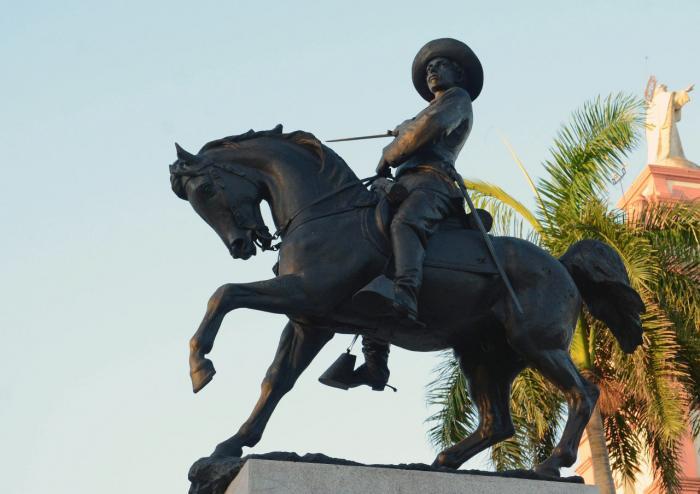
There are dates that don't go unnoticed, and May 11th is one of them because in Camaguey—and throughout all of Cuba—the day the Major, at just 31 years old, became immortal is never forgotten. And this isn't rhetoric. It's that there are men who die only in body, but their spirit remains free on the roads, and as the years, the centuries, pass, they end up riding again.
Looking back on it today, in 2026, it seems incredible: a twenty-six-year-old lawyer, newly married, from a wealthy family, who left everything to join a war no one thought was a sure thing. Anyone would say he was crazy. But no. He had the clarity of someone who understood his time. He knew Cuba needed him, and he was there to stand up to the empire of his era.
It wasn't just about wielding a machete. Ignacio Agramonte was a lawyer, a thinker, a constitutionalist. He drafted the first Constitution of the Republic in Arms. He defended the abolition of slavery with the same force with which he charged against the Spanish columns. And all the while, he wrote letters to Amalia. Letters that still touch our souls: "Only for you, always for you." Loving, yes. One of those who don't let commitment lead to oblivion, but rather to the deepest reason for fighting.
The people of Camaguey know this better than anyone. That's why, when someone says they are from Camaguey, they're not just talking about a demonym. Being from Camaguey implies a way of acting that believes in honesty, in education, in courage without pretense. It means recognizing a man who, by the age of 31, had already participated in more than one hundred battles—one hundred, no less—and rendered extraordinary services to the cause of independence.
And here, in the present, that image isn't a museum relic. It's more like a mirror. How many young people today, facing the enormous difficulties of the blockade and the daily grind, resemble that model? They are the ones who sustain the country. Those who study, those who create, those who ride horses in the face of adversity or sit in front of a computer with the same spirit of service.
Because Agramonte doesn't ask us to take up arms. He asks us not to be indifferent to injustice. To fight today's battles intelligently, with the same shame he felt—yes, with shame, that exact word he used when someone asked him what they had to continue the fight.
That's how we see him, on this anniversary: the young man who triumphed over death. The proof is in his park in Camaguey. There the horseman stands, sword raised, gaze fixed. He is not a statue. He is the guardian of the present.
People from Camaguey pass by and look up. They know that there, in that equestrian figure, rides the paradigm, the young man who knew his country needed him, and didn't hesitate. Because he's not a museum piece: he's memory made future. As long as there's a young man with his pride upheld and a heart both strong and tender, to keep pushing the country forward, the Major hasn't fallen. He keeps riding across his plains, on his island.
Related News
In them, work becomes their Homeland

The Executive Order of May 1st and the blockade measures announced today increase the harm...

Sanctions and threats of war: The last stand
