


The latest edition of the U.S. bimonthly magazine The American Conservative argued, with solid reasoning, that "the current policy toward Cuba undermines the very objectives and principles that underpin the National Security Strategy" of Donald Trump's administration.
It added that, despite Washington's constant statements about drug trafficking as a threat to national security, the policy toward the island ignores an uncomfortable truth: "Cuba is the U.S. government's main security partner in the Caribbean."
A few days later, a "national emergency" against Cuba was announced, based on the untenable lie that the small country allegedly "constitutes an unusual and extraordinary threat" to Washington's security and foreign policy.
The White House has lost its memory, misplaced or concealed very important and positive information about cooperation between Cuba and the United States in the areas of security, law enforcement, and compliance, in order to combat transnational scourges that affect the national security of both countries.
At the beginning of the first Trump administration, there were already 22 bilateral cooperation instruments and eight technical working groups on counterterrorism, drug trafficking, cybersecurity and cybercrime, travel and trade security, human trafficking and immigration fraud, money laundering and financial crimes, human trafficking, and criminal legal assistance. But the president's Florida advisers did everything possible to render them meaningless and freeze them.
In this regard, the article in The American Conservative argues that the current policy "is not based on our fundamental national interests, but on Cold War nostalgia and Florida state politics."
Contrary to the administration's claims of alleged "ill will," "relations with malign actors," and "hostility," it has not been Cuba that has failed to fulfill its commitments, but rather the one that has insisted on reactivating mechanisms buried by political interests that threaten the security of both countries and the region. Despite not being reciprocated, Cuba has not stopped fighting on all the aforementioned fronts, and counterpart agencies are well aware of this.
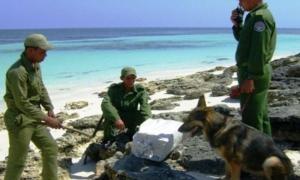
A recent press conference revealed that, in the last 14 years, Cuba's Border Guard Troops had seized more than 40 tons of drugs destined for the United States, and between 2024 and 2025 alone, 14 speedboats were captured, 39 drug traffickers were arrested, and more than four tons of various substances were seized. Meanwhile, 72 operations involving different types of drugs from 11 countries, with the United States as the main source, were disrupted by air in the last two years.
Another very telling fact is that, from 1990 to the end of 2025, Cuba had sent 1,547 formal messages to the U.S. Coast Guard reporting incidents or situations related to drug trafficking, and received 468 messages from its counterpart. That three-to-one ratio is further evidence of who is really promoting cooperation in this area.
This reality is acknowledged in the aforementioned article in the conservative U.S. magazine when it states that "Cuba is widely recognized as a positive example in the fight against drug trafficking in Latin America, working closely with the U.S. Coast Guard and other US agencies to track drug traffickers, share intelligence, and intercept smuggling routes across the region."
The most recent aggression against our people proves The American Conservative right when it states that, "unfortunately, policy toward Cuba remains trapped in a failed regime-change logic that dates back to before the end of the Cold War," which has been kept alive by "a policy controlled by a handful of intransigent Cuban-Americans who have insisted for decades that the only acceptable outcome is total surrender. That is not negotiating. It is a recipe for failure."
Related News

May these difficult times be an opportunity for growth

We must move from rhetoric to action

Even with fuel shortages, Cuba will not be defeated by the empire