

Goudrane and Adre, Chad – The water tanks had been bone dry for four days when a water truck crested the ridge above Goudrane refugee camp in eastern Chad, home to about 50,000 Sudanese refugees.
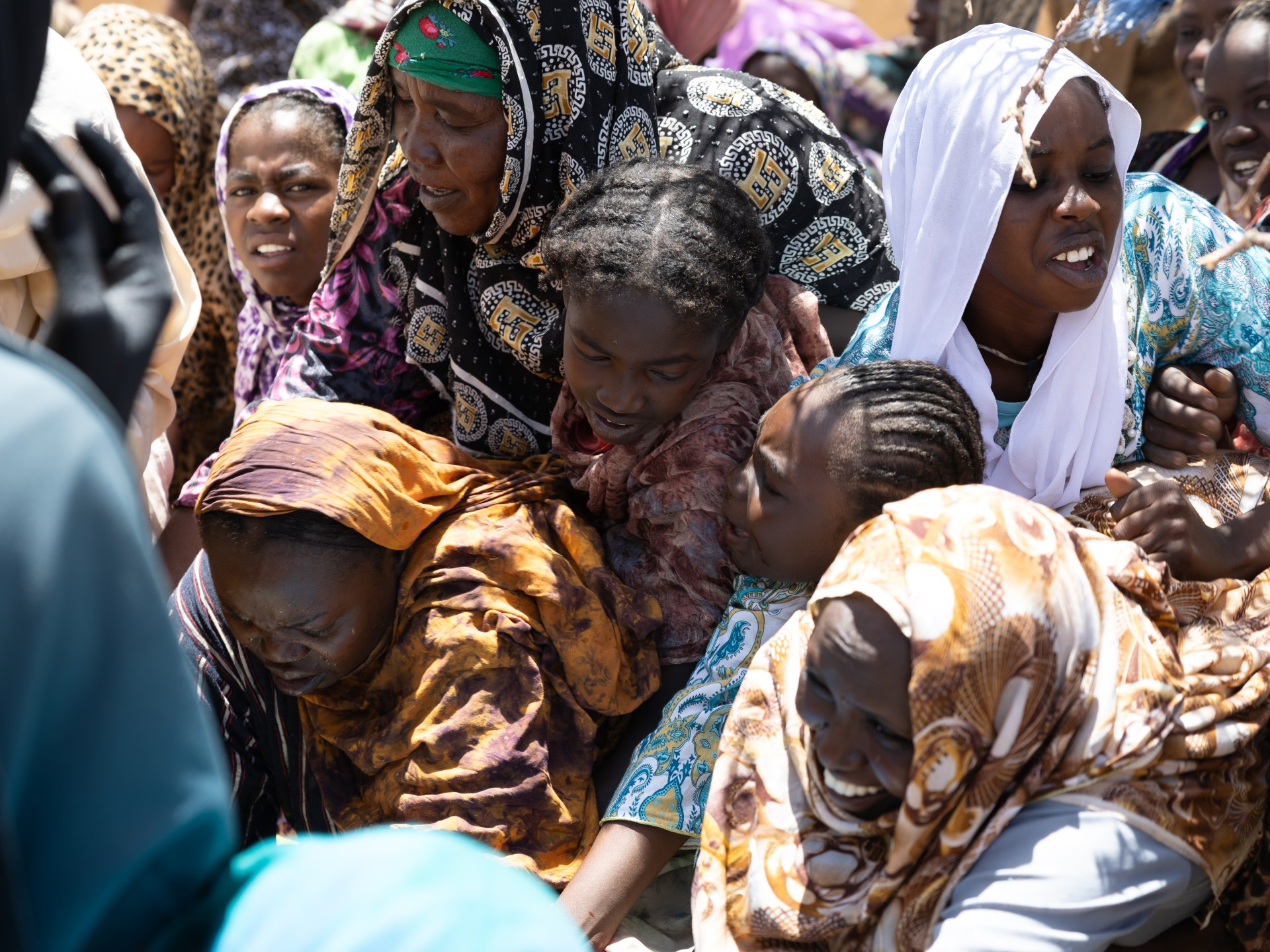
Hundreds sprinted across the burning sand towards the slowing truck. For many families, one filled jerrycan meant another day of survival.
The women at the front of the crowd fell first. They screamed as children clambered over them. Some sank to their knees, losing their grip on their jerrycans. Within 10 minutes, the crowd had surged around the truck until its 6,000 litres (1,585 gallons) of water were gone.
Rokhia Ibrahim, 43, a Sudanese schoolteacher, watched as her dejected pupils walked away carrying empty buckets.
“It was less than a year ago when I saw children like them die of thirst while escaping el-Fasher,” she said.
Water crisis
This month, Al Jazeera interviewed dozens of Sudanese refugees, including Ibrahim, who fled horrific violence in Sudan and are now struggling to survive in camps across eastern Chad.
For many, the desperate search for water has become another chapter in an ordeal that began with their escape from Sudan.

Less than a year ago, Ibrahim fled fighting around el-Fasher. During her escape, she said fighters from the Rapid Support Forces (RSF), the predominantly Arab paramilitary group that has been battling the Sudanese Armed Forces (SAF) since war broke out in April 2023, attacked her family.
Advertisement
Her baby was pulled from her back and thrown to the ground, she said. Her husband was kicked repeatedly in the head until he lost his sight.
“I watched the soldiers pour out the little water we had onto the ground,” she said, her eyes filling with tears. “And now we have almost no access to water again.”
Aid stretched
According to the United Nations, more than 938,000 Sudanese refugees have fled to neighbouring Chad since the war began in April 2023.
Most now live in overcrowded camps across the country’s arid east, where some refugees survive on less than half the minimum daily water supply recommended under United Nations High Commissioner for Refugees (UNHCR) humanitarian standards.
At the medical clinic in Goudrane camp, young mothers queue for treatment while the camp’s only doctor confronts a problem that medicine alone cannot solve.
“We have medicine to deal with infections and bacterial problems, but without clean water, you can’t take it,” the doctor told Al Jazeera.

The French humanitarian organisation Solidarites International has been operating in Chad since 2008, but says the water crisis unfolding in refugee camps in the east is among the most urgent emergencies it has faced in the country.
“We are doing everything we can to improve access to clean water in the camps, but current funding is not enough to ensure everyone has access to safe water,” said Thibault Henry, Solidarites International’s country director.
He said the continuous increase in needs is rapidly outpacing the capacity of existing boreholes, pipelines, sanitation facilities and water treatment services.
The escape
As the war intensifies in Sudan, more refugees continue to arrive in Chad carrying the physical and psychological scars of the conflict.
In the Adre transit camp on the Sudanese border, refugees described surviving brutal attacks by the RSF and allied armed groups. Some of the most harrowing accounts heard by Al Jazeera came from the roads leading out of their besieged towns and villages.
Zahra Khamis’s home city of el-Geneina, in Sudan’s West Darfur state, lies just 30km (19 miles) from the border with Chad. But in 2023, when she limped along the final stretch to safety, she felt the journey would never end.

Khamis said she had survived a violent rape, repeated attacks on her home and nearly 50 days under drone attacks. Water had almost disappeared from her neighbourhood, while food supplies dwindled after markets were bombed.
Advertisement
Then she saw an opportunity to escape.
“We managed to avoid the gunfire and the drones until we got to the road,” she told Al Jazeera. “Then I saw them all – the broken and bloody bodies of everyone, from young children to old women … all killed on the road.”
Khamis made it more than halfway to the border before her son was shot dead.
“We had no choice but to keep moving. So many people died on that journey,” she said.
Khamis is a member of the Masalit community, an ethnic African group that has been systematically targeted by the RSF throughout the conflict.
United Nations investigators have described attacks against the Masalit in and around el-Geneina as amounting to ethnic cleansing.
“We were the ones to feel the flames of war first,” Khamis said.
Hope fades
Now in its fourth year, the war has spread across much of Sudan.
As the conflict intensifies, more refugees continue to arrive in Chad carrying the physical and psychological scars of a war that has killed thousands of civilians and triggered what the United Nations describes as the world’s largest humanitarian and displacement crisis.
International efforts to end the conflict have yielded little progress, while foreign governments accused of supporting both the RSF and the SAF have come under increasing scrutiny over their role in prolonging the war.
For Sudanese refugees struggling to survive in overcrowded camps, hope of returning home is fading.
“I lost my husband and my son to the war,” said Fatne Adam, 53. “Both were shot by snipers as we fled.”

Adam has lived in Metche refugee camp in eastern Chad for more than three years.
“One day I would like to return to Sudan, but only when there is peace again,” she said. “Nobody can tell me when that will be.”
Related News
Yemen’s Houthis deny plan to charge ships transiting Red Sea
Trump grants Kyiv Patriots licences: What’s next in the Russia-Ukraine war?
Civilian deaths in Ukraine in July hit highest level since May 2022: UN