A center that contributes to scientific, health, and technological sovereignty At
 02 July 2026


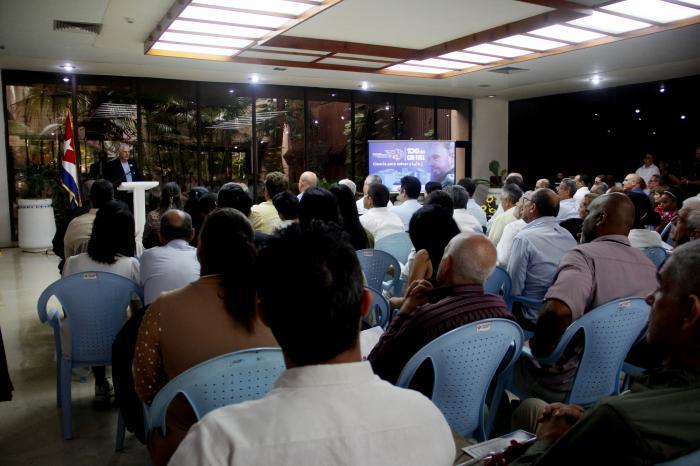
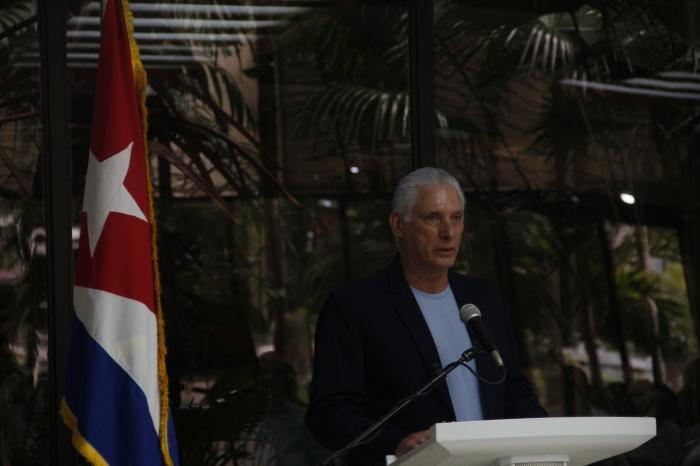
"Cuba needs you, it needs your intelligence, your dedication, and your commitment," said the First Secretary of the Central Committee of the Communist Party and President of the Republic, Miguel Díaz-Canel Bermúdez, to the workers of the Center for Genetic Engineering and Biotechnology (CIGB). "You are an expression of the resilience that distinguishes us as a people."
During the ceremony commemorating the 40th anniversary of the biotechnology center—which was also attended by Political Bureau member and Prime Minister Manuel Marrero Cruz—the President highlighted the institution's strategic role in the country's scientific development, its connection to Fidel Castro's vision, and its
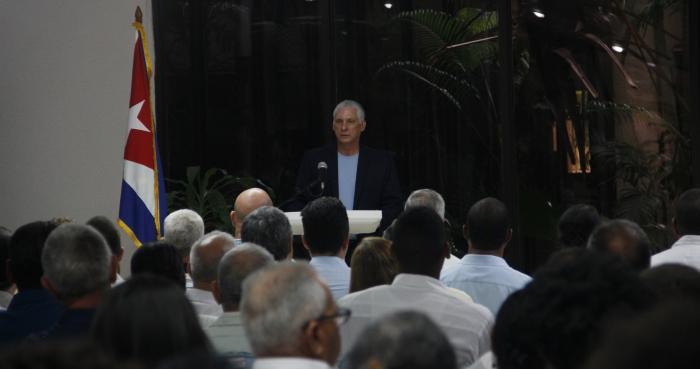
impact on Cuba's health, technological, and food sovereignty.
In his remarks, he recalled that when the world was just beginning to discuss biotechnology, Cuba was already promoting the creation of research centers. "Fidel was ahead of his time," he stated.
He added that back in 1960, "when a quarter of our population was illiterate, Fidel affirmed that Cuba’s future had to be a future of men and women of science and thought."
The Head of State emphasized that this foundational vision enabled the creation of the CIGB in 1986, in a context where "biotechnology was being invented in the most developed nations." He interpreted this as a decision of great historical significance: "And what did this decision mean? A whole legacy of profound thought and political action, and a deep humanist vocation. It meant scientific, health, and technological sovereignty."
The president insisted that this process entailed a strategy of national autonomy: "It meant that a small, blockaded, and underdeveloped country would not wait for others to solve its problems, but would solve them with its own talent, its own effort, its own people, and its own Revolution."
THE RESULTS ARE CLEAR
In his summary of results, he mentioned milestones in the Cuban biotechnology sector: "From the interferon that combated the dengue epidemic in 1981 to the Abdala vaccine. From Heberprot-P, the only one in the world that reduces amputations due to diabetic foot by up to 75%, to the vaccines against hepatitis B and the pentavalent Haemophilus influenzae type b vaccine. Recognized drugs such as streptokinase, Hebermin, Jusvinza, interferons, and all the products that have saved lives or improved the quality of life in Cuba and in dozens of other countries."
He also addressed the impact on the agricultural sector, highlighting that scientific development has contributed to food sovereignty through the Gavac and Porvac vaccines that now protect cattle and swine, and the high-genetic-value soybean and corn seed varieties, which are beginning to gain ground in food planting campaigns throughout the country with great anticipation.
The president emphasized that, in addition to the results already achieved, progress is ongoing and they currently have more than 40 innovation projects, including the development of HEBERSaVax, CIGB 300, CIGB 845, and CIGB 552, among others.
In this regard, he affirmed that "the CIGB is not just a scientific center; it is a bastion of what the Cuban Revolution is capable of creating when it puts science at the service of the people."
"It is proof that Cuban talent, trained in our schools and universities, can be on par with the best talent in the world," he concluded.
He also acknowledged the difficulties the sector has faced in recent decades: "the blockade, the scarcity of resources, the technological challenges, but each obstacle has become a stepping stone to advancement. That is Fidel’s legacy."
The President stated his conviction that "they will actively participate in the implementation of the necessary economic transformations to unleash productive forces, create wealth, distribute it with social justice, and bring us closer to the prosperity that the nation and our people deserve."
At the end of his remarks, he reaffirmed: "Fidel’s legacy calls upon you to continue being that beacon of innovation and progress that he envisioned. May the centennial of his birth be the impetus for a new era of achievements. Continue to be great."
For her part, the member of the Political Bureau and general director of the CIGB, Dr. Marta Ayala Ávila expressed that at times when imperialist aggression hits even harder, this group is even more committed to improving the quality of life of the population through science and innovation.
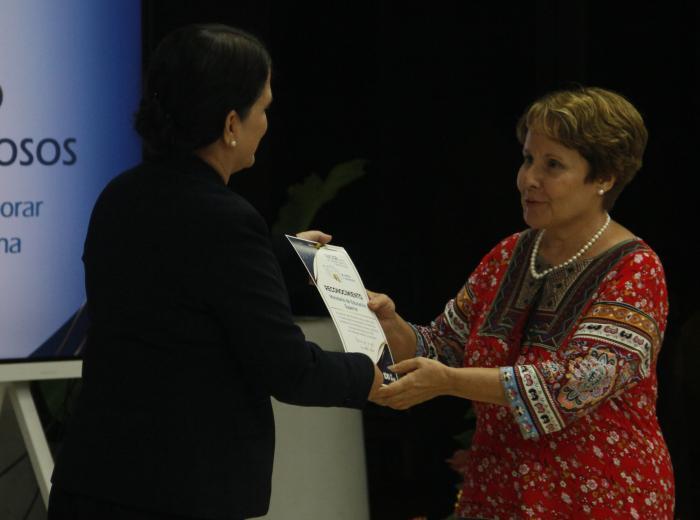
During the celebration, the founders who obtained leukocyte interferon for the first time in Cuba on May 28th, 1981 were recognized, as well as those workers who have worked during these 40 years.
Also, on behalf of the CIGB, special recognition was given to each of the entities that over the years have been valuable allies for this institution.
Likewise, the Cuban Workers' Federation (CTC) decided to award the center its 85th Anniversary Seal, a recognition presented by its general secretary, Osnay Miguel Colina Rodríguez.
After 40 years since its founding, the CIGB has consolidated its position as a high-tech institution dedicated to the research, development, production, and marketing of vaccines and other biotechnological products, with an impact on human, animal, and plant health, as well as on various sectors of the economy.