A $647 Million US Caribbean Operation Has Killed 205 People And Congress Says It’s Not Even Legal
 27 July 2026
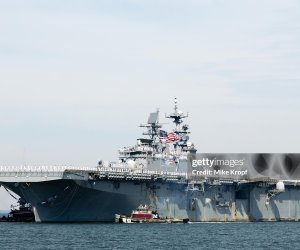


News Americas, WASHINGTON, D.C., Thurs. July 23, 2026: A US Caribbean operation and military campaign that has killed at least 205 people in the Caribbean Sea and eastern Pacific has cost American taxpayers more than $647 million – and, according to Congress’s own nonpartisan research arm, almost none of the policy driving it has ever been authorized by law.
That finding comes from a Congressional Research Service report, “U.S. Foreign Policy in the Western Hemisphere: Issues for Congress,” published on May 26th for members of Congress and their staff. The report documents how the Trump administration has reshaped US policy toward Latin America and the Caribbean almost entirely through executive orders, presidential proclamations, and bilateral agreements – without a single law passed by Congress to authorize, codify, or constrain any of it. Efforts to invoke the War Powers Resolution to check the campaign have failed by razor-thin margins.
Since September 2025, the campaign – known as Operation Southern Spear – has carried out dozens of lethal strikes on small boats accused of drug trafficking in the Caribbean Sea and eastern Pacific. As of early May, at least 205 people had been killed, including seven missing and presumed dead, while only three people have been captured alive and two extradited to the United States. The Trump administration has provided little public evidence connecting each vessel or victim to drug trafficking, and the overwhelmingly lethal ratio – 205 killed against three captured – has drawn criticism from legal experts who argue the campaign functions less like law enforcement and more like undeclared warfare.
The U.S. military started attacking boats off the coast of Venezuela on Sept. 2; the Trump administration has said it’s part of an effort to thwart drug smuggling. The U.S. has since struck at least 59 boats in the Caribbean Sea and eastern Pacific Ocean. In October 2025, President Donald Trump declared that the U.S. is in an “armed conflict” with drug cartels and designated some as terrorist organizations.
Rights groups like Amnesty International called it “extra-judicial killings.” “With nearly 200 killings, these extrajudicial killings are becoming normalized,” said Amnesty International USA’s National Director for Government Relations, Amanda Klasing. “Not only are these killings illegal, they are immoral. People of good conscience cannot allow this to continue, yet Congress has so far failed to halt, or even slow down, this lethal and unlawful campaign.”
A Department of War Inspector General report found the operation cost more than $647 million in its first two quarters alone, with additional strikes conducted since that accounting period likely pushing the total higher. Family members of people killed in at least one strike have filed wrongful death lawsuits in US federal court, arguing their relatives were fishermen and laborers with no connection to trafficking. The United Kingdom reportedly stopped sharing maritime intelligence with the US late last year over concerns that its intelligence was being used to facilitate killings without due process.
The CRS report is notable for what it doesn’t find: congressional authorization. It describes a hemisphere-wide policy shift – the strikes, tariffs imposed on regional allies, the military capture of Venezuela’s president, and the rollback of longstanding democracy-promotion programs – carried out almost entirely by executive action. That distinction matters because it means the policy remains, in the report’s own framing, legally vulnerable and potentially reversible, without the durable legitimacy a congressional vote would provide.
The doctrine underlying the campaign, dubbed the “Trump Corollary” to the 1823 Monroe Doctrine in the administration’s November 2025 National Security Strategy, asserts the US will actively enforce primacy across the Western Hemisphere to prevent migration, secure cooperation against cartels, and block rival powers – chiefly China – from gaining influence.
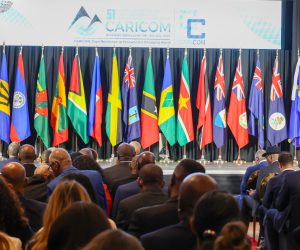
The Caribbean Community has responded to the surrounding pressure unevenly. Some CARICOM governments have joined the broader Americas Counter Cartel Coalition, also called the “Shield of the Americas,” a 17-nation security alliance the administration launched in March. It focuses on deploying military capabilities against narco-terrorist networks.
“Cooperate in the following areas: whole-of-government efforts regarding border security; countering narcoterrorism and trafficking; securing critical infrastructure; and other areas as mutually determined” and “Join a coalition to combat narco-terrorism and other shared threats to the Western Hemisphere” states the memorandum signed in Doral, Florida.
Others have voiced concern about sovereignty, and CARICOM foreign ministers have pushed to accelerate the CARICOM Single Market and Economy in part to reduce the region’s dependence on Washington.
For a region built substantially on tourism and small, trade-dependent economies, a US military campaign of this scale and cost operating without firm legal footing – one that has already killed people from Caribbean and neighboring nations – carries consequences that reach well beyond the current news cycle.
NewsAmericasNow will continue tracking Operation Southern Spear, the “Trump Corollary,” and Congress’s response as the policy develops.
Related News
Caribbean American Lawmakers Back Continued U.S. Military Aid To Israel; Both Received AIP...

The Silent Brief: The Real Question Was Never Advertising

CCJ President Breaks Silence: Denies Influencing Mohamed Ruling, But Admits Guyana Meddlin...