




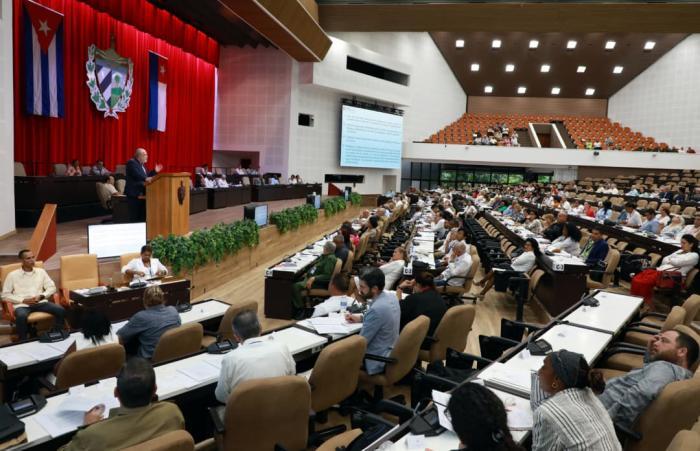
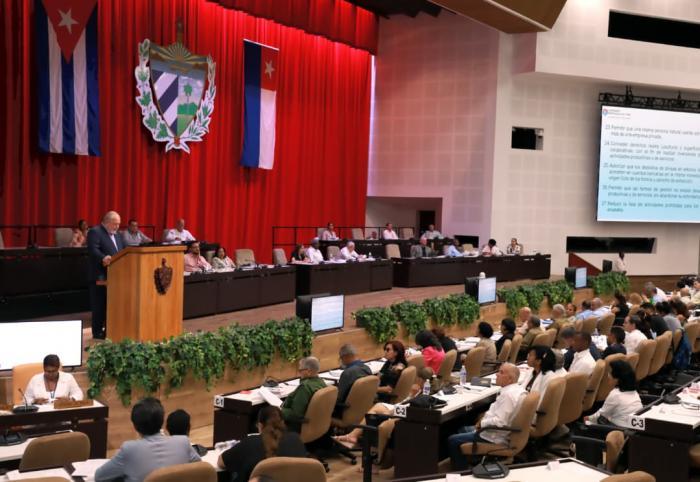
To evaluate proposals for economic and social transformations, a topic of vital importance for the future of the country, the Third Extraordinary Session of the National Assembly of People's Power (ANPP), in its 10th Legislature, was held on June 18th.
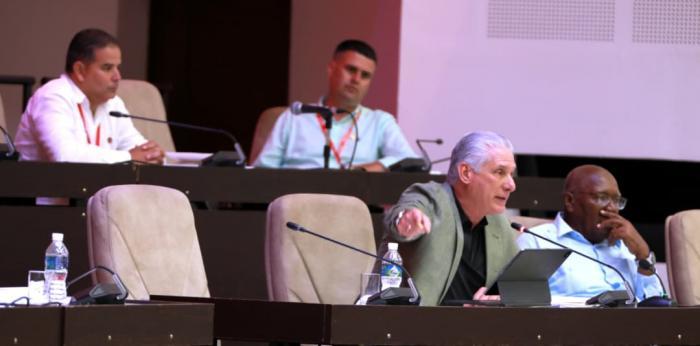
The meeting, taking place in its usual venue at the Convention Palace with deputies from Havana and those residing in the capital due to their responsibilities, as well as all deputies from across the country connected digitally, includes the participation—via teleconference—of Army General Raúl Castro Ruz.
Also present in the room was the First Secretary of the Central Committee of the Communist Party and President of the Republic, Miguel Díaz-Canel Bermúdez. The president of the National Assembly of People's Power and the Council of State, Esteban Lazo Hernández, commemorated Vilma Espín Guillois, heroine of the Cuban Revolution, who died on this date 19 years ago.
THE PRIME MINISTER REPORTS TRANSFORMATIONS OF STRATEGIC IMPACT IN THE CUBAN ECONOMIC AND SOCIAL MODEL
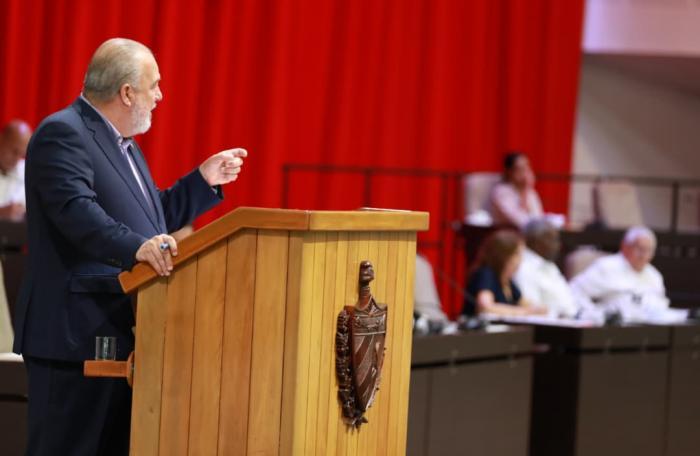
In the most complex context that the country has faced since the special period, the member of the Political Bureau and Prime Minister, Manuel Marrero Cruz, appeared before the ANPP to present transformations of strategic impact in the Cuban economic and social model, conceived as a sovereign exercise to preserve the conquests of the Revolution without renouncing socialism.
During his speech, the Head of Government contextualized the current situation: an unprecedented combination of coercive measures by the United States government, which has come to interrupt the supply of fuel and sources of foreign currency income, significantly affecting the stability of the energy infrastructure and the quality of life of the population.
He also recognized that his own errors and insufficiencies have never been denied, but he stressed that this set of factors has had a sustained impact on the implementation of the transformations approved since the 6th Congress of the Party in 2011, whose positive results were maintained until mid-2019, when the sanctions policy was intensified, reinforced at the beginning of January 2025.
In this scenario, the Party and the Government, in the legitimate exercise of their sovereignty, have promoted measures to reactivate the economy and correct distortions, a process strengthened with the approval of the Government's Economic and Social Program, validated by the people through popular consultation.
Taking popular sentiment as a direct reference, the Prime Minister announced transformations that find their first foundation in the thoughts of Commander in Chief Fidel Castro Ruz who, in 1993, in the middle of the special period, warned: "Life, reality, the dramatic situation that the world is experiencing, this unipolar world, forces us to do what otherwise we would never have done if we had had capital and if we had had the technology to do it."
Under the guiding principle of doing what is necessary to preserve what is essential, the proposed measures include expanding the participation of all economic actors on equal terms, promoting foreign investment and admitting market mechanisms as an instrument for resource allocation. These actions – he emphasized – do not constitute a surrender, but rather the sovereign adaptation of the development instruments to the specific circumstances of the country.
The Prime Minister recalled the premises of Army General Raúl Castro Ruz in leading the update of the economic and social model: not to be dogmatic or immobile, to banish the mechanical association between socialism and egalitarianism, and to recognize that socialist planning does not exclude, but must incorporate and regulate the rules of the market.
The transformations presented, which will be debated, are part of the collective effort to reactivate the economy and correct distortions, without ever giving up socialist construction, but as a condition for its preservation.
For the preparation of the transformation proposals – Marrero Cruz explained – the following were considered: the indications of the Army General and the First Secretary of the Central Committee, the Government Program 2026, the proposal to update the Conceptualization of the Economic and Social Model, as well as the Agreements of the ANEC Congress and leaders of the State and the Government of the country.
It meant that 390 proposals were received, 66.7% being accepted and the rest corresponding to the implementation process, other positive evaluations, as well as aspects that do not constitute transformations.
As a result of the analysis of the transformation proposals carried out in the Political Bureau, 69 recommendations were incorporated into the document.

The Head of Government pointed out that the document presented includes 176 proposals for transformations, grouped into 23 fundamental axes of the economic and social life of the country.
AXIS 1: TRANSFORMATIONS IN THE MANAGEMENT MODEL OF ECONOMIC ACTORS
State-Owned Socialist Enterprise
- Expand the powers of the state-owned enterprise system so that it operates with greater autonomy and under similar conditions to other economic actors. This includes carrying out any lawful activity, without abandoning its primary corporate purpose. From now on, any regulations approved for other actors will also apply to the State-Owned Socialist Enterprise.
- Decentralize the power to approve wholesale and retail prices to the state-owned enterprise system. Price setting will take into account costs, expenses, market trends, value chains, and the vertical and horizontal relationships between economic actors.
- Resize the State-Owned Enterprises (OSDEs), excluding state functions and those inherent to private companies.
- Empower the OSDEs to create state-owned enterprises and micro, small, and medium-sized enterprises (MSMEs). to companies for the creation of subsidiaries and state-owned micro, small, and medium-sized enterprises (MSMEs), and at both levels for:
*Mergers, dissolutions, liquidations, and other organizational changes, as applicable.
*State-owned business organizations (OSDEs) will be empowered to define their structures and group administrative positions or subcontract services.
- To make the approval and allocation of after-tax profits more flexible.
- To update the functions and powers of the Governing Boards to make their operation more flexible.
- To allow access to the foreign exchange market under the new conditions resulting from the implementation of the transformations, for business structures participating in supply chains.
* To eliminate the salary scale in the state-owned business system and establish a minimum wage that takes inflation levels into account:
* Salary levels, negotiated with workers and with the participation of the Union, will depend on the economic and financial capacity of the companies.
- Change the relationship between the state budget and the state-owned enterprise system, including reviewing the financial burden and eliminating subsidies to businesses.
- Empower Provincial Governments and Municipal Administrative Councils to create, merge, dissolve, and liquidate local state-owned enterprises, as well as carry out other organizational changes.
- Reduce to the bare minimum the indicators used to measure the efficiency of the state-owned enterprise system.
- Allow and encourage businesses (including private businesses) to make financial investments.
- Design financial instruments that allow for the capitalization of businesses without the participation of the state budget.
- Implement a National Program for the Valuation and Titling of State-Owned Enterprise Assets (appraisals) that:
*Conducts a national inventory of tangible and intangible assets of the state-owned enterprise system with market valuations.
*Issues enforceable ownership certificates that can serve as collateral for bank loans.
*Allow state-owned enterprises to monetize underutilized assets through long-term leasing to various economic actors and foreign investment.
- Design an efficient and competitive business system that generates revenue to support the services of social sector agencies.
- Establish procedures for bankruptcy, liquidation, and restructuring of assets with sustained losses in the state sector.
- Transform socialist state-owned enterprises into commercial companies with shares or equity interests:
*The State will define its shareholding in the sectors of the economy, guaranteeing its majority presence in strategic sectors.
*State-owned enterprises may purchase shares in other companies.
*Non-state management entities and individuals will also be able to purchase shares, according to a phased approach to be defined.
*This process will require classifying companies.
Non-state management entities
- Authorize the creation of non-agricultural micro, small, and medium-sized enterprises (MSMEs) and cooperatives pending approval on the
Economic Actors Platform.
- Reduce the requirements, procedures, and timeframes for the creation, conversion, and operation of non-state management entities, defining approval times.
- Allow the hiring of more than 100 employees. Entities with more than 100 employees will be classified as private companies.
- Allow an individual to own more than one private company.
- Expand the corporate structures under which private companies can be organized, including public limited companies.
- Allow the same individual to hold shares in more than one private company.
- Grant real rights (usufruct and surface rights) to private companies or cooperatives to enable them to make investments for the development of their productive or service activities.
- Authorize that cash foreign currency deposits from non-state actors be credited to bank accounts in the same currency, subject to a declaration of the lawful origin of the funds and withdrawal rights.
- Allow non-state management entities to develop other productive and service activities without abandoning their main activity.
- Reduce the list of prohibited activities for non-state economic actors.
- Improve the Economic Actors Platform and incorporate the use of Artificial Intelligence. Guarantee its transparency, traceability, and agility.
- Transform the institutional structure and the forms of ownership and management of the agricultural sector's productive base. Allow private companies to participate in agricultural activities.
- Develop an input market with the participation of all actors and with access to the foreign exchange market.
- Create a National Platform for Production Linkages that establishes the obligation for state-owned enterprises to publish their input and subcontracting needs, as well as the granting of tax incentives based on purchase levels from national producers.
AXIS 2: TRANSFORMATIONS IN OWNERSHIP RELATIONS. DIFFERENCES BETWEEN OWNERSHIP AND MANAGEMENT
The Head of Government indicated that, regarding the transformations in ownership relations and the differences between ownership and management, social ownership of the fundamental means of production is reaffirmed, and progress is being made toward non-state management of these means.
He added that among the new measures is the authorization for the purchase of shares and properties of state-owned enterprises by state and non-state legal entities, both national and foreign, as well as individuals, provided that the lawful origin of the funds is demonstrated.
He highlighted the creation of an Investment Program that incentivizes the participation of Cubans residing in the country and abroad in Cuban companies; in addition to recognizing the legitimate growth of the financial and material assets of legal and natural persons and guaranteeing the protection of labor and social rights without allowing indiscriminate exploitation of man by man.
AXIS 3: TRANSFORMATIONS IN THE ECONOMIC PLANNING SYSTEM
- Improve medium- and long-term planning, focusing on development design, prioritizing macroeconomic stability, reducing structural problems, and providing policy signals for all economic actors.
- Incorporate the economic, commercial, and service activities of non-state economic actors into the projections of the National Economic and Social Development Plan until 2030 and into the Provincial and Municipal Development Strategies.
- Transition to a financial planning model, where the State progressively relinquishes the physical distribution of resources, giving greater weight to market signals:
• State-owned enterprises will access inputs, foreign currency, and other resources for their production in a decentralized manner through market mechanisms.
• State orders will be executed through a contractual framework between supplying and demanding entities.
• The planning process must take into account the satisfaction of domestic market demands.
- Maintain the fundamental balances of the economy (agrifood, foreign exchange, energy, and the State budget), transforming them into instruments for diagnosing, anticipating, and correcting policies.
- Expand the limits for approving investments by decentralizing this authority to state-owned enterprises, commercial companies, or foreign investment entities, based on their financial capacity and access to resources.
AXIS 4: TRANSFORMATIONS AND RESIZING OF THE BUDGETED SECTOR
Marrero Cruz indicated that the proposals for economic transformation include a restructuring of the Central State Administration, which would involve a significant reduction in the number of ministries and budgeted agencies.
He explained that a legislative proposal is already circulating that contemplates the reorganization of state and governmental structures, with the aim of adapting them to the country's new economic conditions and making public administration more efficient.
This process, he said, would also directly impact provincial and municipal administrations, where a resizing of structures and workforces is planned.
AXIS 5: TRANSFORMATIONS IN MUNICIPAL AUTONOMY
Decentralize the following powers at the municipal level:
- Strategic planning.
- Territorial and urban planning.
- Food sovereignty and food and nutritional security.
- Community services.
- Promotion of local economic development:
• Diversify and strengthen its productive fabric, considering the participation of different economic actors, Cubans residing in the country and abroad, and including local production systems.
• Capacity to export and import, as well as generate and retain foreign currency for current and capital expenditures.
• Stimulate and manage foreign direct investment.
- Municipal administrative and human resources management.
- Local budgetary, financial, and tax management.
AXIS 6: ENERGY TRANSFORMATIONS
- Allow the participation of private and foreign capital in the import and marketing of fuels, including the retail network.
- Expand and restructure the management of the service station network, including mobile service stations:
*Require service stations managed by various economic actors to incorporate photovoltaic systems with energy storage to become independent of the National Electric System.
*Encourage the installation of solar charging stations to market electric vehicle charging services.
- Design financing lines, streamline requirements, and expand guarantees for granting loans to legal entities and individuals to incentivize the energy transition. Stimulate investment from the demand side.
- Allow state-owned enterprises to use foreign platforms to process payments for fuel purchases and sales.
- Apply a tax of up to 1% to the import of physical or financial fuel destined for operational inventories.
- Reduce the tax, by an amount equivalent to the investment made, for state and non-state economic actors who invest in renewable energy sources as part of their social responsibility in public service, social, or care centers, including public lighting.
AXIS 7: TRANSFORMATIONS TO INCENTIVIZE AGRICULTURAL RECOVERY
- Modify land management and use for all economic actors:
*Maintain the principle of land ownership by all the people.
*Grant the real right of usufruct over land to state, private, mixed, or natural legal entities that request it, for an indefinite period and for the amount of land specified in the submitted project, for all agricultural, forestry, and tobacco production, as well as for ecotourism and agritourism development projects.
*Authorize the state-owned enterprise that administers the socialist-owned land of all the people to grant usufruct rights to applicants through the corresponding contract, in compliance with current legal regulations.
*Authorize the granting of land in usufruct to Agricultural Production Cooperatives (CPA), once approved by the cooperative's General Assembly and in compliance with current legal regulations.
*Eliminate the requirement for usufructuaries to work directly and permanently on the land.
*Evaluate the definition of work collectives and propose the necessary structural transformations.
- Transform the cooperative management model:
*Authorize cooperatives to import and market fuels as inputs.
*Grant cooperatives the authority to conduct foreign trade directly, for the export of their products and the import of agricultural inputs and technologies.
*Allow cooperatives to directly manage external financing for exportable production, import substitution, and investments.
*Allow cooperatives to open bank accounts abroad and in Cuban banks, in both pesos and foreign currency.
*Make agricultural marketing more flexible. Recognize the market in price formation:
*Decentralize and empower state and non-state business entities, cooperatives, and producers to set prices for agricultural products.
*The contracting and negotiation of prices for agricultural products will be agreed upon between the producer and the buyer.
*Standardize the tax regime for all economic actors involved in the production, processing, and marketing of food.
*Create a National Price Information System for agricultural product markets, publishing reference prices on digital platforms.
*Design incentives for all economic actors to market agricultural inputs in both foreign currency and pesos and to have access to the foreign exchange market:
*Authorize all economic actors to directly market agricultural inputs and equipment in both foreign currency and pesos.
*Promote the creation of input markets in foreign currency, where domestic and foreign individuals and legal entities participate, through a simplified process.
*Approve a special tax regime for all economic actors participating in the input market, with incentives and bonuses for the import and sale of inputs in foreign currency.
*Establish banking procedures that guarantee the execution of foreign currency transactions for the sale of inputs to producers and payments to suppliers abroad, through the use of POS terminals for payments by magnetic card, bank transfer, cash, e-commerce, and other authorized payment methods.
-Increase financing for the primary production sector by expanding and decentralizing the Agricultural Development Fund and creating an Agricultural Development Bank:
*Decentralize the use of the Agricultural Development Fund to municipalities, tailored to the characteristics of their territories, upon presentation of projects that contribute to Development Strategies related to food production.
AXIS 8: SOCIAL TRANSFORMATIONS
- Digitize and make transparent the management of aid through the use of the SOBERANIA platform for real-time updates of the registry of individuals and families in vulnerable situations, thereby systematizing the different forms of assistance, their traceability, and governmental and public oversight.
- Establish that all economic actors (state and private – national and foreign), as part of their social responsibility at the community level, in the areas of finance, material resources, and services, participate directly in the following activities:
*Support pension payments through agreements with banks.
*Support the soup kitchens of the Family Support System and Community Food Centers.
*Support homes for children without parental care.
*Support nursing homes, maternity homes, senior centers, and other social centers.
*Establish differentiated pricing, discounts, free services, or solidarity quotas for people in vulnerable situations.
*Address cases of vulnerable situations identified by local governments.
*Support social and health transportation.
*Support public health institutions and educational centers.
*Contribute to community hygiene and sanitation in critical areas.
*Provide basic necessities to social institutions.
*Create monthly food baskets for vulnerable individuals and families.
*Offer employment, training, or apprenticeship opportunities to vulnerable individuals.
*Establish local emergency funds with private contributions.
*Designate private premises as collection and distribution points during emergencies.
*Support funeral services for low-income families.
*Promote fairs and community sales in vulnerable communities.
*Strengthen Social Work with a proactive and preventative approach by prioritizing its role within the municipality.
*Provide small-scale assets for the development of non-state activities to individuals experiencing multidimensional vulnerability, as a means to access employment and overcome this condition.
*Design educational, training, postgraduate, cultural, and other selected services that will serve as sources of income for the social sector.
- Design differentiated rates for childcare and daycare services based on family income.
- Design tax benefits for workshops employing people with disabilities to increase workers' income.
AXIS 9: TRANSFORMATION FROM PRODUCT SUBSIDIES TO PERSONAL SUBSIDIES
- Eliminate product subsidies and transform them into personal subsidies, implementing this in the following order:
*Products that are cross-cutting across the economy (fuels, electricity, freight and passenger transport, and water rates) that impact production and services, in order to pass on real costs to wholesale and retail prices.
*Other products.
- Create a Social Protection Fund, as a prerequisite for the transformations, using a portion of the savings from eliminating product subsidies.
AXIS 10: LABOR AND WAGE TRANSFORMATIONS
- Implement a comprehensive wage reform in the state-funded sector.
- Set the minimum wage annually and, correspondingly, the amount of social security benefits and pensions, as well as wage increases, based on inflation trends.
- Regarding the social security pension system, establish:
*The elimination of the upper limit on the scale established for social security contributions in the non-state sector.
*That individuals working simultaneously in the state and non-state sectors can enroll in and contribute to the corresponding pension schemes for each activity.
*That, of the 30 minimum years of service required by the contributory pension system, up to a maximum of 10 be considered if the person has dedicated them to family care.
-Eliminate the administrative approval requirement for technicians, healthcare professionals, researchers, teachers, professors, and public officials to hold multiple jobs.
-Establish incentives to retain the skilled workforce, with an emphasis on young people.
-Establish a monthly income equivalent to one minimum wage as a repayable stipend for young people between 18 and 30 years of age who are neither studying nor employed and who enroll in a training course. Funding will come from the social assistance budget or the business sector, as appropriate. The training period will be recognized as time of service rendered.
-Authorize employers, in agreement with the union, to negotiate reduced work schedules and corresponding payments for professional activities, which will be incorporated into the collective bargaining agreement.
- Establish for the business and budgeted sectors that employees of the entity itself may perform professional activities, construction maintenance, and similar tasks.
- Permit teleworking from abroad, at the employer's discretion.
- Include as a justified cause for suspension of social service, professional development abroad for personal reasons related to the professional profile, with the employer's consent.
- Directly empower entities to determine which employees will terminate their employment for economic, technological, and structural reasons, after evaluation by the governing body, in agreement with the union, and analysis in the assembly of members and workers:
*Workers in this situation receive monetary protection equivalent to a minimum of three and a maximum of six times the basic salary of the position they held, on a one-time basis.
- Establish protection equivalent to one month's remuneration for workers hired by self-employed workers (TCPs) in the event of temporary suspension or cancellation of their activity.
AXIS 11: TRANSFORMATIONS AND MODERNIZATION OF THE BANKING AND FINANCIAL SYSTEM
- Promote private capital participation in banking:
* Expansion of banking and non-banking financial institutions by private companies, cooperatives, and foreign investment with corporate and universal banking licenses.
* Private banks will operate under the supervision of the Central Bank of Cuba (BCC) under the same regulatory conditions as state-owned banks.
* The establishment of non-banking or non-financial support institutions for the banking sector, whether national or foreign, will be permitted for the granting of microloans.
- Eliminate restrictions on foreign currency payments between businesses with foreign capital and their national suppliers.
- Allow the opening of foreign currency accounts by legal entities and individuals without prior administrative authorization.
- Implement the regulatory framework for virtual assets and the use of financial technologies and expand their use for international and national collection and payment operations. Create financial entities for virtual assets.
- Update the interest rate system by adjusting it to current economic conditions (including sovereign bonds).
* Private banks will operate under the supervision of the BCC under equal regulatory conditions with state banks.
* The establishment of non-banking or non-financial financial institutions to support the private capital banking sector, national or foreign, will be permitted to grant microcredits.
- Implement the figure of last mile payment agent to formalize remittance flows through a private channel.
- Design other ways to capitalize banks, in addition to the resources of the State budget.
- Update the strategy with a new approach for the treatment of external debt, taking into account current conditions.
- Accelerate the automation process of banks and reduce the procedures associated with their services.
- Grant Transfermóvil a non-banking financial institution license.
- Complete the process of eliminating limits on bank transfers and withdrawals from natural and legal persons, national and foreign.
Exchange rate transformations
- Resize the official exchange and remittance market, with the participation of non-state economic actors, which includes granting licenses for private exchange house operations:
* Create a digital exchange market, in real time, with authorized agents.
* Implement a currency auction system.
- Carry out successive devaluations of the national currency to reduce exchange rate differences. Companies that do not support the devaluation will be liquidated.
* Incorporate cooperatives, diplomatic sector, state MSMEs and foreign investment that operate with non-state forms of management into segment II, guaranteeing that arbitration does not occur. State companies will compete freely for sales and in a controlled manner for purchases.
- Create state and private non-banking financial institutions that are dedicated to channeling financial flows, including remittances, through exchange operations.
- Establish single exchange windows for all economic actors that are decided.
- Expand the corporate purpose of non-banking financial institutions that offer the service for the administration of international cooperation funds.
AXIS 12: TRANSFORMATIONS OF THE TAX SYSTEM
- Improve consumption taxation, through the gradual implementation of the Value Added Tax (VAT). It will begin with certain production-consumption chains and will contemplate reduced tax rates on products in the basket of goods and services.
- Establish the electronic tax invoice with incentives that promote its assimilation by taxpayers.
- Apply a bonus to the sales and services tax based on the levels of banked sales.
- Reduce the fiscal burden of the business sector due to profits tax, with the aim of increasing its growth and investment capacities. Expand the tax base by eliminating special deductions that are not economically justified and reducing the risk of tax evasion.
* Establish a tax on gross income for companies that declare losses for more than two fiscal periods.
- Apply a reduced tax rate of the Profit Tax for the agricultural sector.
- Simplify the calculation and payment of the Profit Tax, eliminating the term of per capita profit, which implies applying the tax to CNA, CPA and UBPC partners.
- Design an accelerated depreciation regime for the acquisition of machinery, food production technologies and industrial processing, which favors the recovery of investments.
- Reduce the financial burden of entities, determined by the contribution of the return on state investment, conditioned for its use in development and capitalization.
- Apply tax incentives to state and non-state economic actors that finance investments in the social sector.
- Update the personal income tax, in accordance with the current inflationary scenario, through the following adjustments:
* Modify the progressive scale for the annual settlement and payment of the tax. Reduce the number of scales to homogenize the application of the tax.
* Increase the minimum tax-exempt threshold to the level of the country's average salary by the end of 2025.
- Reinstate the simplified tax regime for less complex activities, with an automatic adjustment system based on annual gross income levels, allowing the National Tax Administration Office to focus its oversight on larger taxpayers.
- Increase the fixed amounts of the following taxes:
* Land transportation tax based on vehicle type, value, fuel, and other factors.
* Vessel tax.
* Document tax.
* Environmental taxes.
* Fee for registering advertisements and commercial publicity.
- Design tariffs and incentives that promote domestic production processes and the import of raw materials, materials, technologies, and equipment for the use of renewable energy sources.
AXIS 13: TRANSFORMATIONS IN PRICING POLICY
- Decentralize the power to approve prices and tariffs to companies and territorial and local administrations.
- Eliminate price formation based on the cost-plus method and establish, for price formation, the market reference price or a correlation, defining its position in the value chain.
AXIS 14: TRANSFORMATIONS IN FOREIGN INVESTMENT
- Stimulate foreign investment participation in private and cooperative enterprises through the creation of joint ventures and international economic association agreements.
- Extend the limit for granting surface rights to 99 years and usufruct rights to more than 50 years for foreign investment.
- Allow businesses with foreign capital, in any form, to open bank accounts abroad without authorization. In all cases, the Central Bank of Cuba and the National Tax Administration Office must be notified.
- Allow real estate businesses to conduct sales and purchases of residential units.
- Eliminate the mandatory use of employment agencies for selecting and hiring personnel.
- Allow foreign investment to receive its income in foreign currency, operate flexibly in a partially dollarized economy, and access the foreign exchange market.
- Reduce documentation and processing times, and decentralize the approval of foreign investment, including the application of tacit approval. This will be applied to all permitting processes in the country related to issuing licenses for economic, financial, and commercial activities with a direct impact on the registry.
- Allow foreign investment in Old Havana and other heritage areas.
AXIS 15: TRANSFORMATIONS IN FOREIGN TRADE
- Promote exports of goods and services that, through the decentralization of export powers, differentiated incentives, and productive integration with foreign capital, increase the total value of exports to achieve a sustained trade surplus in goods and services.
- Apply the principle of negative nomenclature for companies engaged in foreign trade, including foreign investment.
- Allow private companies and cooperatives to directly conduct foreign trade activities, subject to prior authorization from the Ministry of Foreign Trade and Foreign Investment.
- Approve the sale of trademarks and patents by institutions in the international market, subject to prior authorization.
AXIS 16: SCOPE OF PARTIAL DOLLARIZATION OF THE ECONOMY
- Expand the scope of partial dollarization of the economy to include intercompany and commercial transactions, in accordance with the current situation.
- Modify the current conception of closed self-financing schemes in foreign currency towards a scheme of contributions from foreign currency transactions.
AXIS 17: TRANSFORMATIONS IN THE TOURISM SECTOR
- Add the following to the existing business models (joint ventures and management contracts) for all tourism activities:
* Leases.
* Granting of usufruct rights for a fee.
* Concession of areas with assets or under development in different regions of the country, and the sale of real estate (approval on a case-by-case basis).
This applies to foreign investors, Cubans residing abroad, and those residing in Cuba.
- Include certain areas of the country in the Business Opportunities Portfolio as Economic Development Zones, where special regimes are established.
- Allow the application of all business models in the keys, heritage areas of Old Havana and Trinidad, as well as in all tourist destinations in the country where these models are beneficial for the sector and foreign investment is required for their development.
- Permit real estate development in all tourist areas of the country where this type of business is needed. Establish the possibility of developing real estate businesses in areas of Havana and other urban areas of the country linked to tourism.
- Allow joint ventures and leasing for the negotiation of tourist marinas.
- Approve tax and fiscal benefits for all economic actors for ecotourism projects and other specialized tourism models in order to attract foreign investment and diversify sustainable and responsible tourism development.
- Create an online corporate bank for the tourism sector with international ties that promotes virtual asset services.
- Update the car rental activity (currently exclusive to two companies in the country) to include other state-owned enterprises, foreign investment, and non-state management models.
- Update the incorporation of travel agencies to joint ventures, 100% foreign-owned companies, as well as non-state management models.
-Authorize private tour guides and sales agents, subject to prior authorization due to the high level of specialization required for this activity.
-Approve local destination managers capable of integrating all stakeholders and ensuring the success of the mixed governance model.
-Evaluate the implementation of a special tax—which does not currently exist—or contribution from all tourists visiting a designated tourist area or resort, and allocate the revenue to the area's sustainability, maintenance, and promotion.
-Promote Cuban brand franchises abroad as a way to generate revenue, for example: Casas Cuba, Casas del Habano, La Bodeguita del Medio, El Floridita, and Tropicana.
AXIS 18: TRANSFORMATIONS IN TRANSPORT
- Eliminate the restrictions on vehicle acquisition by various economic actors and individuals, as well as the established deadlines, promoting photovoltaic electric mobility.
- Authorize the direct, non-commercial importation of a 100% electric car by individuals. Provided it is accompanied by a charging station with a fully renewable energy source, it will be exempt from taxes and duties.
- Allow the direct commercial importation of electric vehicles (mopeds, motorcycles, and tricycles) for assembly and sale by authorized state and non-state legal entities. Provided it is accompanied by a charging station with a fully renewable energy source, it will be exempt from taxes.
AXIS 19: TRANSFORMATIONS IN COMMERCE, GASTRONOMY, AND SERVICES
- Modify the policy on state administrative management of commerce, gastronomy, and services, prioritizing non-state management models and foreign investment options.
- Reorganize wholesale trade, prioritizing the creation of supply markets with direct access for individuals and legal entities. Do not place limits on the actors who carry out this activity.
- Authorize the marketing and provision of services by foreign entities based in the country, including branches and representative offices.
- Create chains of stores, restaurants, and a network of light food establishments under recognized brands or others, expanding throughout the country.
- Invite light food franchises to invest in the country.
- To tender recreational parks, zoos, aquariums, protected areas, and lodging facilities to state-owned, foreign, private, and cooperative companies, establishing the conditions for their operation, including sales percentages in pesos and foreign currency.
- To formalize street vendors in various forms within communities, issue "street vendor" permits, and implement a simplified tax system.
- To stimulate wholesale and retail public procurement, using the public procurement budget and bank loans as working capital.
- To create an automated, digital, auditable, and public system for tendering premises and assets to all economic actors.
- To transition from the regulated basic food basket to controlled sales without subsidies within the retail network.
- To authorize individuals to import goods for commercial purposes, levying tariffs in foreign currency. This does not imply granting foreign trade powers.
AXIS 20: TRANSFORMATIONS IN INSURANCE POLICY
- Recognize the profitability of the financial resources mobilized in the insurance sector.
- Create life insurance as a complement to social security protections.
- Boost the marketing of foreign currency policies for transportation, travel, and medical expense risk coverage.
- Mandate civil liability insurance for vehicle drivers.
AXIS 21: DIGITAL TRANSFORMATIONS, ARTIFICIAL INTELLIGENCE, AND THE KNOWLEDGE ECONOMY
- Establish a national framework for mandatory interoperability, data governance, artificial intelligence, and territorial equity.
- Implement a competitive remuneration system that contributes to promoting the export of professional services in digital technologies and artificial intelligence.
- Allow foreign investment in expanding Etecsa's data center capabilities.
- Allow the private sector to provide data center services that do not host the country's critical infrastructure management platforms, equipment manufacturing, and the installation of mobile and fixed networks, triple-play services, data centers, cloud services, IP telephony, and contact centers.
- Establish a digital platform using artificial intelligence for the public procurement system and bidding processes, ensuring transparency, security, and including risk classification.
- Allow for the mixed management of postal infrastructure and last-mile logistics.
- Recognize data as the fifth factor of production (along with land, labor, capital, and entrepreneurship), which implies considering it a non-renewable economic resource with the capacity to generate wealth.
AXIS 22: TRANSFORMATIONS IN THE NATIONAL STATISTICAL SYSTEM
- Design a statistical system that adjusts to economic and social transformations.
- Complete the change of the base year of the National Accounts.
- Resume the construction of the producer price and foreign trade indices, maintaining the consumer price index, together with the products derived from the observed prices.
AXIS 23: TRANSFORMATIONS IN THE CONTROL AND INSPECTION MECHANISMS
- Create a working group, due to its importance and transversality, led by the Central Committee of the PCC and integrated by the ANPP, the Attorney General's Office of the Republic, the Comptroller General's Office of the Republic, the Supreme People's Court, the Council of Ministers (DAOLPP, DSPOD and Department of Crime Prevention), the MININT and the MINJUS, in order to analyze what is established regarding control and make proposals for transformations.
Preliminarily, it was identified that the implementation of the transformations impacts more than 148 provisions of the Cuban legal system:
■ 15 regulations to be repealed.
■ 22 rules to be completely modified.
■ 79 regulations to be partially modified.
■ More than 50 lower-ranking complementary regulations (resolutions).
Additionally, it will be necessary to develop 32 new higher-ranking regulations (10 laws, 14 decree-laws and 8 decrees).
The Prime Minister of Cuba, Manuel Marrero Cruz, affirmed that the proposals for economic and social transformations are developed in correspondence with the Government Program for 2026, considering that both strategies are complementary and respond to the objective conditions of the economy and the current sociodemographic dynamics.
As explained, 76% of these transformations fully correspond to the content of the program, while the rest expands it, integrating changes in the business fabric, greater openness to national and foreign private capital, modernization of the banking system, coherence between exchange, tax and price reforms, as well as territorial decentralization and the resizing of the central administration of the State.
Marrero Cruz stressed that these transformations do not imply renouncing the social responsibility of the State, but rather they incorporate a recognition of market mechanisms as instruments for the efficient allocation of resources.
Likewise, he pointed out that among the main challenges for implementation are the definition of an operational sequence and adequate schedule, the strengthening of institutional capacities, social protection, legal legitimation and citizen participation, in addition to the mitigation of geopolitical risks.
The Prime Minister indicated that during the execution of the process there will be contradictions to be resolved, including the impact of partial dollarization on the economic evaluation, the elimination of subsidies and their relationship with prices, as well as the decentralization of powers without sufficient municipal capacity and the liberalization of agricultural prices without a proportional increase in production.
In this sense, he stated that the implementation process will be flexible, with constant review, adoption of corrective actions and a learning system aimed at managers and managers.
Marrero Cruz also highlighted that the proposals seek to confront the current economic crisis through a window of structural transformation, the failure of which could generate irreversible consequences in the political and social order.
Finally, he reiterated that these measures do not constitute a deviation from the socialist project, but rather respond to the logic of its development, in a context in which Cuba continues the construction of socialism guided by the ideas of Fidel and Raúl.
IN THE VOICE OF THE DEPUTIES
Deputy Danhiz Díaz Pereira stated that among the main feelings raised by the analysis of the document on economic and social transformations are the defense of socialism and the will to build a more developed country, with full dignity for all citizens.
He considered that the proposals constitute an opportunity to move towards a model capable of guaranteeing quality education, better universities, better salaries for teachers and workers, as well as universal health with better institutions and availability of medicines.
Among his proposals, he proposed that in transformation 63, referring to the Sovereignty platform project, it be specified that it constitutes an additional way for the identification of vulnerable people and not the only one, taking into account that the Ministry of Labor and Social Security has other mechanisms for that purpose.
He positively valued the recognition of the social contribution that companies can make and considered that there should be a single business system in Cuba. He also suggested including people who perform care functions among the beneficiaries of employment, training and learning opportunities.
He also proposed that specific crises, which do not necessarily constitute emergency situations, be incorporated into the provisions on the authorization of private spaces as collection and distribution points.
Díaz Pereira commented, in relation to the creation of a social protection fund and the implementation of a comprehensive salary reform, that they are priorities that must be materialized before carrying out other transformations to avoid further impacts on the population.
Regarding the elimination of administrative prohibitions for the exercise of employment by professors and doctors, he suggested specifying the concept of civil servant for a better understanding of its scope.
He highlighted that more than 10 measures in the document explicitly include youth, in coherence with the policy approved for this sector.
Among the proposed complementary actions, he suggested creating a communication channel, possibly supported by artificial intelligence, to allow the public to clarify doubts about the transformations; reviewing personnel policy procedures to enhance the presence of top leaders in municipalities; and calling on the Ministries of Education and Higher Education to adapt curricula and programs of study to the new realities.
He also proposed completing a single, centralized, and digital national employment registry to facilitate the management of labor information.
The deputy emphasized the need to strengthen the management capacities of municipalities and pointed to positive experiences in Havana, where ministers and deputy ministers have directly supported local authorities in transferring management skills and competencies.
He expressed concern about the risks of corruption and influence peddling associated with the new measures, although he affirmed that the transformations should not be feared, but rather that control mechanisms and social protections should be strengthened. In this regard, he underscored the importance of preserving labor rights and continuing to improve existing guarantees.
Finally, he emphasized that communicating the transformations is a shared responsibility and affirmed that the 470 deputies, along with the various agencies and institutions, have a duty to explain the scope of the measures to the people. He stressed the need to pay special attention to Cuban youth and expressed confidence in the country's capacity to save the Homeland, the Revolution, and socialism.
Deputy Carlos Miguel Pérez Reyes stated that, despite the policy of maximum pressure exerted against Cuba, the country remains steadfast in defending the Homeland and its social and economic model. However, he affirmed that alongside the effects of the blockade, there are internal obstacles that must be eliminated and emphasized that several of the transformations presented have been proposed for years.
He underscored that change does not mean renouncing socialism, but rather defending the country's current conditions, and maintained that true social justice cannot exist in an economy that is not productive. In this regard, he supported the proposed reforms, which aim to grant greater autonomy to state-owned enterprises and open opportunities for all economic actors. He also emphasized the vision of a single Cuban business sector comprised of state, cooperative, private, and foreign entities.
During his remarks, he made several observations on the document under review. Regarding the reforms related to state ownership, non-state management, and the transfer of assets, he deemed it necessary to precisely define the concept of fundamental means of production and avoid vague statements about the gradual nature of the reforms.
He proposed revising point 32 to avoid contradictions between public ownership of the fundamental means of production and the expansion of non-state management models. He also suggested removing the word "private" from point 23 and clarifying that a single individual may hold equity and ownership interests in more than one company.
Regarding point 56, he called for clarification of the scope of the additional 1% contribution linked to fuel, considering that the accumulation of various taxes could increase the cost of a product that is highly sensitive for the population.
With respect to the tax system, he proposed that until the value-added tax and electronic invoicing are implemented, the sales and wholesale services tax be eliminated, arguing that it increases costs in the value chains.
In banking matters, he proposed explicitly including the Cuban private sector among the actors authorized to collect payments abroad, on equal terms with other economic entities.
The deputy identified five essential elements for the success of the transformations: public accountability regarding progress and challenges; swift implementation of the measures; active participation of economists, universities, businesses, local governments, and the population; support for those implementing the changes; and the need to subsidize people, not products, accompanying these actions with an increase in income.
He also called on the Cuban private sector to strengthen its social responsibility by supporting, to the best of its ability, retirees, family support systems, children's homes, senior citizen centers, daycare centers, and other vulnerable sectors. He argued that the contributions of this sector should be organized to become a concrete force at the service of the people.
In closing, he stated that the greatest risk is not in over-transforming, but in doing so only partially, and he called for moving forward together, with the people and for the people, in the production, transformations, and development of the country.
"As I have said on several occasions, this is truly applying the concept of Revolution," stated Deputy Emilio Interián Rodríguez, who acknowledged the work done in developing the proposals and called for swift action, without bureaucracy or fear, to implement the transformations and help overcome the complex situation facing the country.
Referring to the agricultural sector, he considered that the measures presented address many of the problems that have limited the growth of food production. He highlighted the transformations related to marketing, contracting, and price formation, noting that these must correspond to real costs to incentivize producers and recover affected sectors, including livestock.
He emphasized the importance of maintaining tax incentives for production and promoting the import of inputs and raw materials through tariff and tax policies that reduce costs and increase the competitiveness of domestic production. He cited pork production as an example, whose development, he said, can benefit from better use of available raw materials and the production of higher-quality products.
Interián Rodríguez described the transformations related to land use and ownership as revolutionary. He considered it necessary to expand access to idle land for producers with proven results and eliminate limitations that hinder the incorporation of new land into production.
He also called for a review of the outstanding debts owed to agricultural producers, considering that payment delays affect motivation and constitute an issue that requires attention.
The deputy emphasized that the new measures demand greater initiative from producers and the search for their own alternatives through production chains and other forms of management, in accordance with the guidelines aimed at increasing national production.
He stressed that the economic and social transformations respond to sovereign decisions of the country and assured that any future changes will continue to be carried out under the premise of preserving national independence and socialism.
As part of the debate, Deputy Laura Marian Bacallao Padrón praised innovative proposals such as 66 and 69, associated with the Social Transformations Axis, which require a responsible party for their implementation. She suggested considering the possibility of explaining the transformations to the population for greater understanding and to avoid misinterpretations.
Likewise, Deputy Francisco Ricardo Sagaró, from Santiago de Cuba, proposed incentivizing payments based on the achievement of indicators and salary differentials that encourage, among other things, the pursuit of higher education and performance-based pay.
On the other hand, Deputy Ailyn Febles asserted that these are transformations for all Cubans, not just a select few, measures that will allow, despite the blockade, "more Cuban-style socialism."
She acknowledged that all companies are national and that the functioning of the business system must be based on socialism, and she emphasized the importance of direct dialogue with the population regarding the significance of these measures.
Similarly, Ana Teresa Igarza maintained that the fundamental challenge of the transformations lies in their implementation and in preserving the Commander's founding vision and the achievements already attained.
She considered it the right time, given the transformations, to discuss the Business Law, considering the multitude of stakeholders involved, and she highlighted that the productive linkage platform is applicable to the entire business sector.
She proposed that micro, small, and medium-sized enterprises (MSMEs) not be evaluated by the number of employees but by their revenue and profitability.
At another point, Deputy Leydis María Labrador commented on the legal safeguards for the proposals and transformations, noting that the Constitution supports the measures, and considered that, based on the political foundations of the Magna Carta, there is a way to ratify these proposals.
Deputy José Carlos del Toro Ríos, president of the National Association of Economists and Accountants of Cuba (ANEC), emphasized that the proposals presented are also the result of analyses and contributions made by Cuban economists. He indicated that the organization is committed to the process of communicating the transformations and to monitoring their implementation, in order to contribute to the identification and mitigation of risks. He also expressed his support for the transformations and reaffirmed the commitment to advance in defense of socialism, under the premise put forth by Commander-in-Chief Fidel Castro Ruz: to change everything that must be changed to preserve what is essential.
Speaking at the debate, the First Secretary of the Central Committee of the Party and President of the Republic, Miguel Díaz-Canel Bermúdez, stressed that the proposed economic and social transformations do not signify a renunciation of socialism, but rather a search for how to continue building it under the specific conditions of Cuba, a country that has faced the blockade imposed by the United States for decades.
He pointed out that this is Cuban socialism and explained that the proposals are the result of contributions from economists, the study of experiences in other socialist countries, and the extensive debate that has taken place in the country over the years.
He recalled that many of the measures were already included in the first version of the Guidelines and considered that, regardless of the current complex scenario, the country should move forward with these transformations.
"We have reached a moment of maturity, of reflection, characteristic of the debate that has taken place over all these years, which is telling us that we had to continue defending socialism, but building it with some transformations," he stated.
Díaz-Canel noted that, even in a more favorable economic context, it would have been necessary to undertake these changes, albeit under more comfortable circumstances. He added that the main challenge is to preserve and expand the social justice built by the Revolution, for which it is essential to have an economy capable of generating the necessary resources.
"We all talk about maintaining social justice, but the first thing we have to do is produce." “If we don’t produce, if we don’t generate wealth, if we don’t provide quality services that are inclusive and comprehensive, what kind of social justice are we going to defend?” he reflected.
The president affirmed that social justice requires a solid economic foundation and emphasized that the priority is to work, produce, and create wealth. “In such difficult conditions, there is only one way to do it right: by innovating,” he concluded.
Speaking at the close of the exchange, Political Bureau member and Prime Minister Manuel Marrero Cruz highlighted the depth of the analyses conducted both in the Political Bureau and in the Plenum of the Central Committee of the Party and in the extraordinary session of the National Assembly, and emphasized the enriching and transformative nature of the debate.
He stressed that the interventions of the deputies were not limited to supporting the proposals, but also incorporated concrete proposals that imply modifications and even new transformations. In that regard, he reported that the working group tasked with drafting the document will immediately begin a revision process to incorporate the proposals, opinions, and criteria contributed during the analysis, with the aim of creating a single document.
Marrero Cruz clarified that the proposed transformations constitute the "what" and that the next step is to develop the "how"; that is, the mechanisms for their implementation and a more precise definition of their scope. He noted that many of the proposals made by the deputies are precisely part of this implementation phase, where the measures must be finalized and expanded so that their results can be observed.
He acknowledged that this is an arduous and complex process, requiring rigorous management and coordination among various institutions. He explained that, by decision adopted at the highest level, the Government is responsible for directing and managing the entire implementation process; the National Assembly of People's Power and its president, Esteban Lazo Hernández, are responsible for providing legal support for the transformations; and to the member of the Political Bureau and Secretary of Organization of the Central Committee of the Party, Roberto Morales Ojeda, personally assume the political assurance of the process.
The Prime Minister emphasized that the country's top leadership has assumed the responsibility of comprehensively guiding the process stemming from the proposed economic and social transformations.
José Amado Ricardo Guerra, member of the Political Bureau and Secretary of the Council of Ministers, read a letter from Army General Raúl Castro Ruz, in which he expressed his support for the proposed economic and social transformations. In the message, the leader of the Revolution expressed his agreement with the presented measures and his conviction that they contribute to the goal of strengthening socialism and preserving the gains achieved in the complex circumstances facing the country.
Related News

Cuban jurists: A commitment to justice and the nation

Another shipment of aid donated by Mexico and Belize arrived in Cuba

Cuban jurists, firm in defending revolutionary legality
