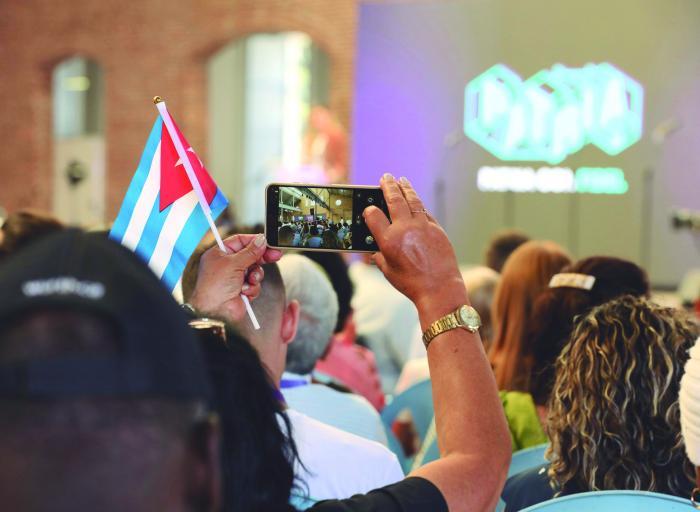



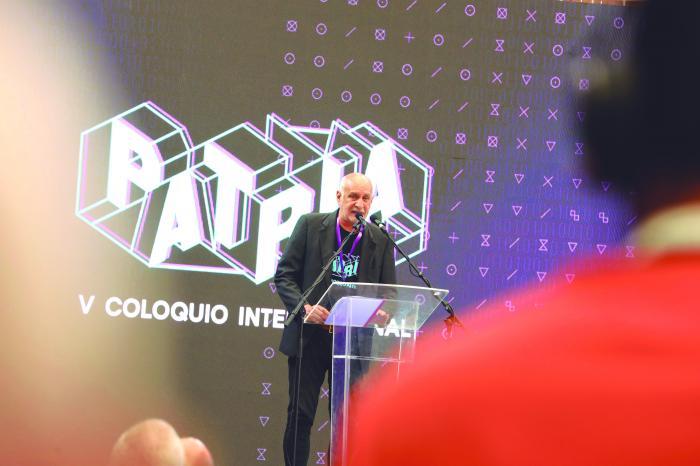
In a global context of neo-fascist offensives, media manipulation, and the return of imperial interventionism in Latin America, it is both strategic and urgent to view digital communication as a battleground. Under this premise, the fifth edition of the Patria International Colloquium—which runs through Saturday the 18th at the Cultural Station on Línea and 18th in Havana—brings together 150 delegates from more than 20 countries to strengthen capacities for truth, organization, and cultural resistance.
The event aims to establish itself as a global hub for the convergence of critical thought, technological innovation, and communicational practice, with Cuba as the epicenter of the Global South’s debate against media operations that seek to fracture social consensus and criminalize sovereignty.
In the presence of Miguel Díaz-Canel Bermúdez, First Secretary of the Party’s Central Committee and President of the Republic, the colloquium was inaugurated this Thursday in Havana. Also in attendance were Political Bureau members Roberto Morales Ojeda and Bruno Rodríguez Parrilla, along with other leaders, journalists, and social organizations.
Ricardo Ronquillo Bello, president of the Union of Cuban Journalists, described the blockade as a “calculated and genocidal evil” taken to its highest extremes.
He emphasized that, despite the drastic economic adjustments, the leadership of the Revolution decided to maintain the Colloquium —financed largely by the attendees— as proof of a common cause with the world. He denounced the “communicational violence” that masks other forms of violence and called for a civilized code against it.
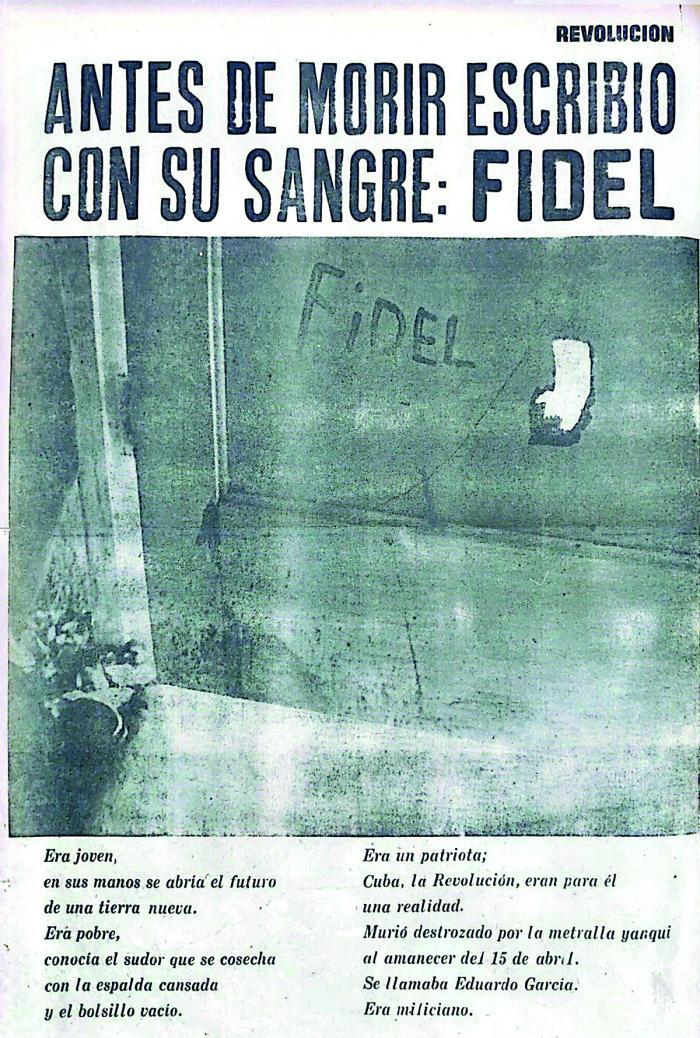
He noted that the powerful sequence lies as if they were DNA, and cited recent campaigns against Venezuela, Iran, and Cuba. He affirmed that, inspired by Fidel—to whom this edition of Patria is dedicated—the Colloquium must forge a universal common front of a permanent “Operation Truth.”
He concluded that Patria is preparing the country for the “21st-century communications Bay of Pigs” and, in the words of José Martí: “Patria is humanity.”
“THEY SHALL NOT PASS”
Maria Zakharova, spokesperson for the Ministry of Foreign Affairs of the Russian Federation, stated in a message sent to the participants of the 5th International Patria Colloquium that, today, in the face of growing negative trends in the international information sphere, the importance of joint efforts by the world’s nations in the fight against disinformation, manipulation of public opinion, and information leaks is heightened.
She stated: “The Patria Colloquium is the platform through which journalists, bloggers, academics, diplomats, officials, and public figures fight for the truth, for freedom of thought, and for the right of every people to call their homeland ‘Patria,’ without obeying foreign norms imposed by others.”
“Russia and Cuba are more than just partners,” stated the spokesperson for the Russian Foreign Ministry. “We are bound by truly warm and fraternal ties that have stood the test of time. We share common values that we defend on the international stage. These include sovereignty—including digital sovereignty—multipolarity, trust in international law, and the central role of the United Nations in conflict resolution.”
The president of the Al Mayadeen network, Ghassan Ben Jeddou, also sent a digital message to the event, in which he welcomed the decision to hold the Patria Colloquium, despite all forms of criminal blockade, sadistic siege, and human injustice.
He highlighted the profound political and strategic changes the world is undergoing today and advocated for strengthening free and coordinated communication from the Global South through mechanisms of joint coordination among peoples.
WITHOUT DIGITAL SOVEREIGNTY, NO SOVEREIGNTY IS POSSIBLE
During the panel on “Cultural Hegemony and Cultural Power,” attended by Díaz-Canel Bermúdez, Mexican professor and political analyst Alina Duarte, who is affiliated with Latin American alternative media, stated that “for decades, the peoples of the world have been told that there is only one path: the destiny of capital, the destiny of U.S. imperialism. And today we are narrating the new world we are building.”
The analyst called for radical activism in thought and communicational action: “With every pen, with every cell phone in hand, with every device capable of communication—including the spoken word—we can bring that new world into being, a socialist world.”
She also questioned the role of algorithms, “which have allowed entire generations of youth to become obsessed with likes, with ego, with individualism,” and warned against digital extractivism: “Our free time is labor for those platforms that decide what we see and what we don’t.”
For his part, Brazilian journalist Renato Rovai, a leading figure in critical thought in his country, delved deeper into the debate on the architecture of digital power and its implications for political and cultural discourse in the 21st century.
“Generally, when we think of political discourse, we think only of content, but that is no longer the case. The turning point is that power no longer lies solely in what we say, but in how things are distributed. All of us here can speak, but who will listen? And who does what? Who are the world’s new cultural mediators?” warned Renato Rovai.
The Brazilian journalist was emphatic in identifying major tech platforms as the new global gatekeepers, displacing the historical role of human editors. “Before, we journalists talked a lot about gatekeepers: editors chose the articles and the topics. It was human beings who determined ‘this one yes, this other one no.’ But today, the recommendation system depends on the platforms; it is the algorithms that decide.”
By way of example, he described the ideological shifts of the major tech moguls: “Zuckerberg was a democratic guy, close to progressive neoliberalism. Now he’s a right-wing extremist, because that’s the price of allying with the U.S. government.” And he asserted that they, in a way, control the public debate. “The new hegemony is in the hands of a few bastards who dominate global opinion. There is an architecture of digital power.”
The afternoon session also featured the panel “Technopolitics: Between Control and Emancipation,” which addressed topics such as artificial intelligence, the risks of technological dependence in the Global South, and social media as a sovereign space; as well as the panel “Roundtable: Critical Thinking in the Face of the New Information Order.”