


Arriving at the pediatric oncology ward of the National Institute of Oncology and Radiobiology (INOR) is to realize how fragile and unfair life can be. But it also means feeling hope.
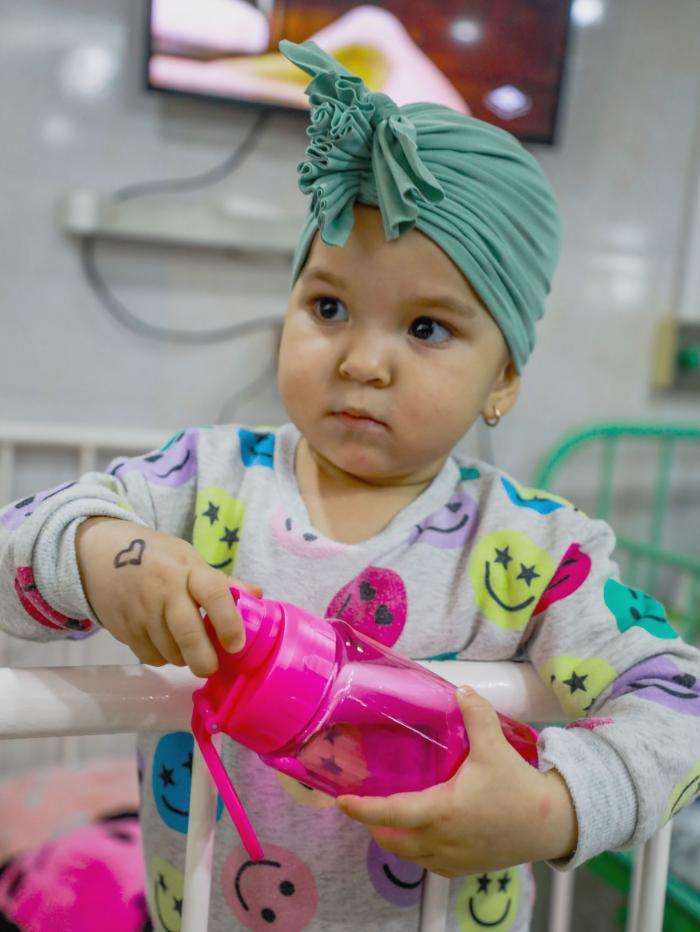
There, the hallways whisper. There are mothers who have gone days without sleep on armchairs turned into beds, fathers who have traveled from all over the country with one hand on their daughter's or son's shoulder and the other holding their medical records. In this ward, 20 beds shelter thousands of stories.
Children play, greet each other, and convey happiness and hope, oblivious to the seriousness of why they are there. Outside, life goes on as usual. Inside, Dr. Mariuska Forteza Sáez, head of the INOR's Pediatric Oncology Department, and her team wage a daily battle against an enemy that does not discriminate based on age.
HERE, SCARCITY HAS NOT BEEN ABLE TO OVERCOME DETERMINATION
When first-line chemotherapy does not arrive, there is no time for lamentation. Protocols must be modified, doses readjusted, and a mother must be told that her child will receive a different treatment plan—perhaps less effective, perhaps more toxic—because the medicine he needs is, like so many things, on the other side of a wall.
And yet, this service—which treats the most complex cases from all provinces—maintains survival rates comparable to those in developed countries. This is not rhetoric. It is a certainty that hurts and embraces at the same time.
"We have to reinvent ourselves every day," says Dr. Mariuska. And when she says it, there is no defeat in her eyes. There is determination.
Because there, amid the shortages, a syringe is the possibility of administering the right medication. A painkiller means that a patient can say goodbye without pain. A diagnosis is the beginning of a journey that is traveled as a team, with sincerity, without false promises, but with the certainty that science—and human will—can overcome any shortage.
In Cuba, the battle against cancer is fought with what is available. And sometimes, what is available is only the determination of those who refuse to give up.
Who, then, is a stranger to cancer? It is very unlikely that anyone does not have a family member, friend, neighbor, or acquaintance who suffers from it or has lost a loved one to it. In Cuba, one person dies of cancer every 20 minutes, and between 140 and 150 new cases are diagnosed every day, which by the end of the year exceeds 50,000. The most common types are breast cancer in women and prostate cancer in men.
But it is not just about numbers: these are lives cut short, especially when, despite having an accessible health system, not all the medicines and technologies needed for effective treatment are available due to the economic blockade imposed on the country.
PERSEVERANCE AND ADAPTATION
With more than 25% of its population aged, Cuba faces a demographic challenge that exacerbates the impact of cancer, explained Dr. Luis Martínez Rodríguez, director of INOR. He stressed that "four out of ten cases can be prevented by changing lifestyles," hence the importance of educational campaigns.
"Despite all the priority and protection given by the state, we have been limited," he acknowledged. The institution maintains its three missions—care, teaching, and research—and has not closed any departments, but "activity levels have declined" due to shortages of supplies, reagents, spare parts, and fuel. This even affects the transportation of workers and patients, although he assured that "no child has been denied treatment due to a lack of fuel."
Faced with this scenario, the response has been resilience. "We operate as a health service in times of economic war, but our commitment is to maintain the oncological health of our people," he said.
Vitality is sustained by collective effort and a commitment to connectivity. INOR maintains links with the national oncology network through telemedicine and has strengthened international exchange. "We have held videoconferences with leading centers in Canada, Spain, Mexico, Russia, Japan, and China," he noted.
IN SEARCH OF SOVEREIGNTY
Dr. Elías Gracia Medina, head of the National Oncology Group, recalled that "clinical cancer research began in Cuba in the 1970s. We can proudly say that it began here in 1974, before many countries in the region." A fundamental milestone came in the 1980s: "The first monoclonal antibody developed in Cuba was created in our laboratories, when very few countries had that capability."
This achievement laid the foundations for the creation, in the midst of the Special Period, of the Center for Molecular Immunology (CIM), a leader in the development of therapeutic vaccines and antibodies. "Today, of a portfolio of more than 90 cancer drugs, 40% are manufactured domestically," she explained. However, this effort to achieve therapeutic sovereignty clashes with the economic blockade imposed by the United States.
"Because of these laws, which prohibit us from obtaining financing and accessing markets, the manufacture of many drugs has been affected. There is a shortage of raw materials and resources," he denounced. In addition, Cuba's inclusion on the list of state sponsors of terrorism "complicates financial transactions and ultimately affects all patients."
Research is also suffering. "From having more than 30 clinical trials, today we have a very small number. We have had to prioritize only the most critical ones due to the lack of reagents," he lamented. Despite this, the country is not standing still: alternatives are being sought through international collaboration. "We are sustained by the capacity and commitment of our professionals. No one can take that away from us."
THE LIMITATIONS GO BEYOND THE MEDICAL
"The impact of the blockade on our cancer patients is comprehensive and devastating," emphasized Gracia Medina. "It's not just about having or not having a medication. It's that the patient can't get to the hospital because of a lack of transportation, has difficulty eating properly, and, if they need an oxygen concentrator at home, there is often no electricity to power it."
The specialist pointed out that, although Cuba has developed high-level oncology, these external measures are eroding the quality of care day by day. "It is very sad for professionals to have to modify a treatment and use a less effective one due to a lack of the appropriate medication, or to see how equipment breaks down and we cannot repair it due to financial barriers."
Dr. Carlos Alberto Martínez Blanco, head of the Cancer Control Section at MINSAP, reiterated the complaint: "These inhumane and genocidal measures are an attack on the right to life." Despite everything, Cuba maintains a structured national program at all levels of health care. Resistance, science, and national biotechnology allow it to sustain itself.
"Our professionals, with extraordinary effort, ensure that the fight does not stop," he concluded. "We will continue to exercise our sovereign right to treat our patients."
And as long as there is a child waiting, a diagnosis to confirm, a family member to support, that fight will have meaning. At the INOR, as in every hospital in the country, Cuban oncology continues to stand strong. Not because the shortages have ceased, but because there are those who refuse to give in to them.