

Following 20 years of governance shaped by a suffocating siege, deeply entrenched political divisions, and relentless military conflict, Hamas has officially dissolved its Government Emergency Committee in the Gaza Strip, a body that effectively ran the Palestinian territory.
The move transfers administrative authority to a newly formed technocratic body, marking an historic pivot for the besieged enclave.
The handover to the “National Committee for the Administration of Gaza“, operating under the internationally backed “Gaza Peace Council,” officially concludes a turbulent era. However, some analysts believe that this transition — and its significance — cannot be fully understood without examining the milestones of the blockade, targeted destruction, and international political exclusion that preceded it.
2006: A democratic victory and an immediate siege
The trajectory of Hamas’s rule began on January 26, 2006, when the group won a massive and unexpected majority in the Palestinian parliamentary elections. Hamas secured 76 out of 132 seats, defeating the long-ruling Fatah movement, which won only 43 seats. The election saw a heavy turnout, with nearly 78 percent of 1.3 million eligible voters in Gaza casting ballots.
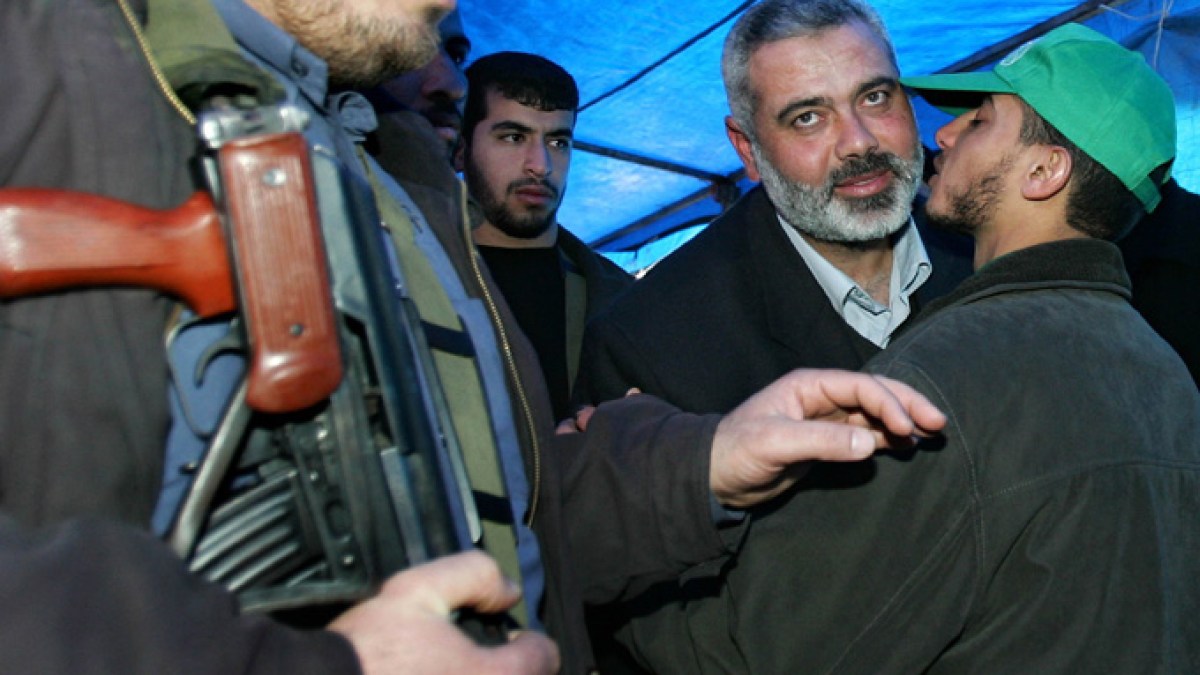
At the time, Hamas leader Ismail Haniyeh attempted to reassure the international community that the group was a “mature movement” that was politically open. However, Palestinian legislator Hanan Ashrawi warned at the time that the victory could lead the Palestinians into international isolation.
Advertisement
Her fears materialised almost immediately. Rather than leading to political integration, the victory triggered a severe Israeli economic and security blockade in the first half of 2006.
Palestinian political researcher Mohammad Al-Aila recalled how no international or local party questioned the integrity of the elections, yet Western powers that claim to celebrate democracy rejected the results when they showed a political winner misaligned with their interests. When initial attempts to absorb and moderate the group failed, the international system pivoted to a strict policy of exclusion.
2006 – 2010: Factional warfare and a suffocating blockade
The situation escalated dramatically on June 25, 2006, when Palestinian fighters captured Israeli soldier Gilad Shalit in a complex cross-border operation. Israel cited this military operation, alongside the election results, as justification for tightening its grip on the enclave.
By June 14, 2007, following a period of bloody infighting between Palestinian factions, Hamas took full military and political control of the Gaza Strip. In response, Palestinian President Mahmoud Abbas dissolved the unity government that had been in office until then, and Israel imposed a comprehensive land, sea, and air blockade of Gaza.
This set the stage for the economic devastation that would come: Over the following years, 80 percent of the population became reliant on aid, 80 percent of factories were closed, and tens of thousands of people lost their jobs. Despite attempts to break the siege — most notably the 2010 Freedom Flotilla, which ended in a deadly Israeli military raid on the Mavi Marmara ship — the blockade has remained a defining feature of daily life.
2014 – 2023: Shifting administration and reconciliation attempts
To manage the enclave amid the ongoing siege and repeated Israeli military offensives in 2008, 2012, and 2014, Hamas formed an administrative committee in 2014 following the collapse of a reconciliation agreement. Seeking to ease its international isolation, Hamas released a new political document in 2017, and later that year, dissolved its administrative committee under Egyptian pressure to empower a unity government.
As reconciliation efforts repeatedly faltered, the “Government Action Follow-up Committee” emerged in 2018 as a semi-permanent body to manage civil and service affairs.
Al-Aila pointed out that Hamas’s willingness to relinquish civil administration was not solely a product of the current war. The group had previously demonstrated a readiness to share power, notably pushing for the general Palestinian elections that were cancelled by President Abbas in 2021, and agreeing to a reconciliation accord signed in Algiers in 2022. Having realised that bearing the sole burden of government was no longer sustainable, Hamas recognised that governing Gaza required a broad national consensus.
Advertisement
But everything changed in October 2023, when Hamas fighters led an attack on southern Israel. Nearly 1,200 people were killed, and Palestinian fighters took more than 200 captives to Gaza. Israel responded by launching a genocidal war on Gaza, in which more than 70,000 people have since been killed.
2023 – 2025: War, emergency governance, and targeted assassinations
Following the outbreak of the war in October 2023, the Hamas governing body activated a central operations room, officially forming the “Government Emergency Committee”. This body coordinated the management of hospitals, displacement shelters, water supplies, and rubble removal.
Throughout the war, Israel systematically targeted Gaza’s civil infrastructure and administrative cadres, as well as senior Hamas leaders. In July 2024, Hamas leader Ismail Haniyeh — who was involved in peace negotiations — was assassinated while visiting Tehran.
In a major blow to the local governance system in Gaza, Israeli forces assassinated Issam al-Da’alis, the head of the Government Action Follow-up Committee, in March 2025.
According to Al-Aila, this was a deliberate strategy. He explained that the Israeli army systematically worked to dismantle administrative capabilities by striking civil and police headquarters to create an “administrative void.”
This resulting institutional chaos made Gaza more susceptible to alternative, internationally imposed administrative arrangements, framing them as a necessary response to the vacuum created by the Israeli military.
2026: The Peace Council, the final handover, and the future
Following a ceasefire agreement, the White House approved a transitional administration structure in January 2026. This included the establishment of a “Gaza Peace Council” and the technocratic “National Committee for the Administration of Gaza,” headed by Ali Shaath, a Palestinian official and civil engineer.
On July 6, 2026, the Government Media Office in Gaza held a news conference outside Al-Aqsa Martyrs Hospital to announce the official dissolution of the Emergency Committee.
Israeli officials have expressed deep scepticism about the transition. Israeli Foreign Minister Gideon Saar dismissed the move as a “trick,” arguing that Hamas is attempting to replicate the “Hezbollah model” in Lebanon — allowing a technocratic government to handle municipal services while the group retains its military power.
Under the transition terms, approximately 45,000 existing government employees across the health, education, and interior security sectors will remain in their positions to ensure the uninterrupted delivery of essential services.
Al-Aila warned against any international attempts to dismantle this massive bureaucratic workforce, noting that replacing civil servants who hold years of vital professional experience would lead to institutional paralysis and social unrest.
He stressed that while the new National Committee is billed as a non-political entity, it is not politically independent, having been formed under US auspices with specific political goals. Its success, he concluded, remains entirely dependent on avoiding exclusionary policies and building positive, consensus-driven relationships with Gaza’s existing political forces, families, and civil society.
Advertisement
Related News
Spanish police accuse tractor driver of sparking wildfire as blazes spread
Cuban president accuses US of genocide, seeking takeover

USS Lincoln crisis: How it compares to past aircraft carrier deployments