
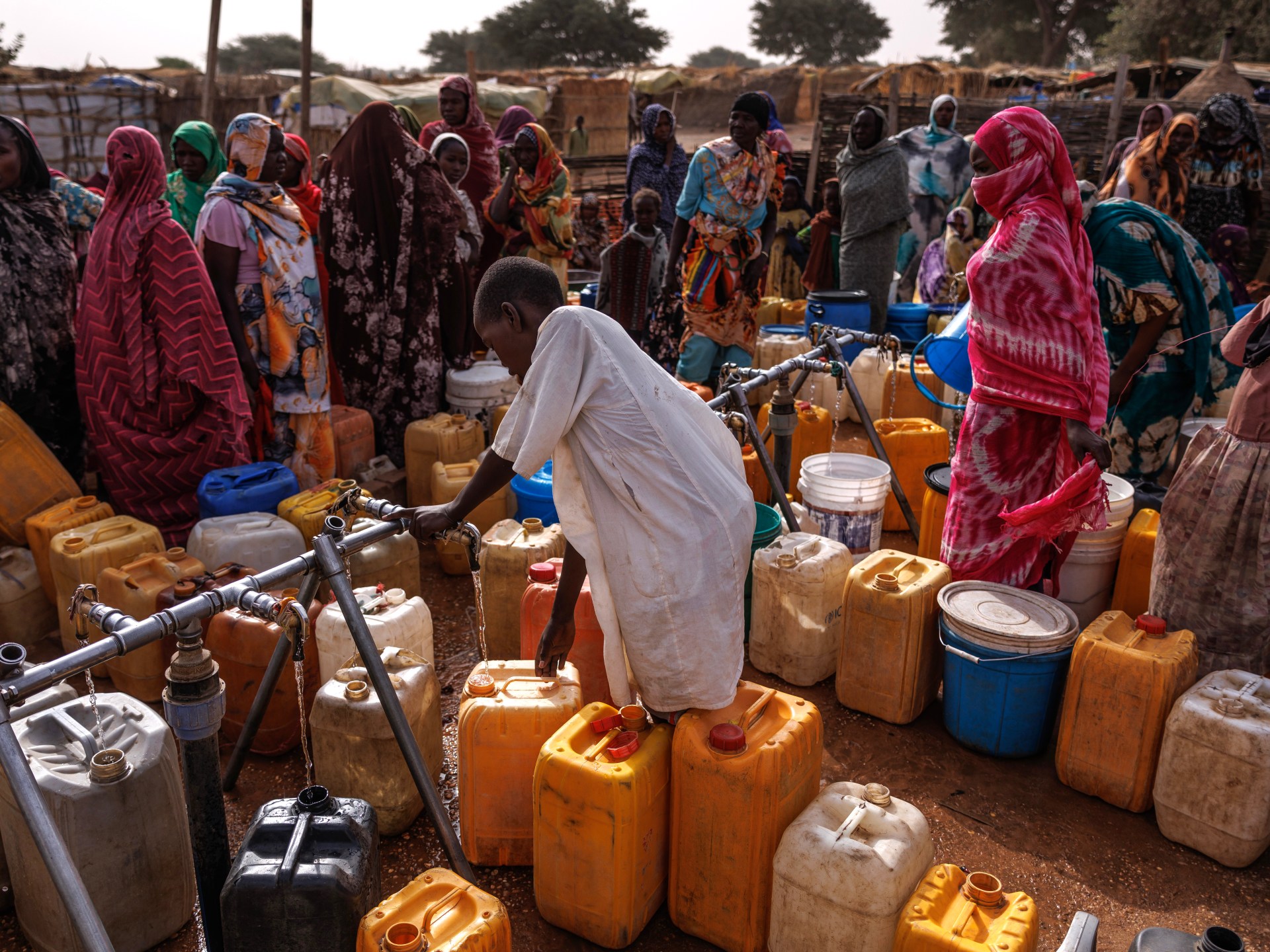

More than 8 million school-age children in Sudan remain out of the classroom because of the ongoing civil war that erupted more than three years ago, the United Nations has said.
Deputy Secretary-General Amina Mohammed delivered the warning on Friday at an informal UN Security Council session on safeguarding education in Sudan, as the war entered its 1,210th day.
- list 1 of 3Medics among six Palestinians injured in Israeli attacks across West Bank
- list 2 of 3Will Pakistan-Saudi-Turkiye alliance actually create a new regional order?
- list 3 of 3ICC body urges Chad and Venezuela to reverse course on withdrawal
end of list
“Among everything this war is taking, one of the most significant is the future of Sudan — depriving the education of its children,” Mohammed said, cautioning that the conflict is depriving an “entire generation” of its future.
Nearly three-quarters of schools have been damaged, destroyed or otherwise rendered unusable in the country’s Darfur since fighting erupted in April 2023, according to the UN.
“Five children in every six are out of school, and parents will tell you they would rather keep their children at home than send them to a classroom, because home for them is the only place left where they can keep them safe,” Mohammed said.

Since 2024, the UN has documented more than 67 attacks on schools and more than 154 instances of schools being used for military purposes, Mohammed said, noting that the figures almost certainly understate the true toll.
More than half of Sudan’s teachers have gone unpaid, though many continue working “against all odds”, Mohammed said.
“Sudan has already lost a generation to its earlier wars, and it is losing another one now,” the deputy secretary-general said, adding that the burden of the conflict falls disproportionately on women and children who “had no say in any of it, but suffer most”.
Advertisement
She said the UN and its partners have brought more than a million Sudanese children back into some form of learning this year, but this remained far short of what is needed.
Since the conflict began between the Sudanese army and the Rapid Support Forces (RSF) paramilitary group, UNICEF has issued multiple warnings on the fighting’s impact on children. Approximately 15 million people across the country have been displaced so far, with nearly 33 million people – more than half of them children – in dire need of humanitarian assistance, according to the children’s agency.
Visiting Sudan earlier this year, UN High Commissioner for Human Rights Volker Turk described accounts of mass killings and gang rape, calling the conflict “not just another conflict” but “a human rights catastrophe unfolding in real time”.
Related News
At least one Lebanese person, two Israeli soldiers killed in south Lebanon

At least 19 people killed in Sri Lanka prison clashes
At least 15 dead, dozens missing as ferry capsizes in Zimbabwe