



Every December 10, the world celebrates Human Rights Day since the United Nations General Assembly adopted the Universal Declaration on this matter in Paris in 1948. However, although the text served as the basis for the adoption of important international legal instruments, humanity remains indebted to the principles expressed at that time.
The planet in the 21st century faces enormous challenges that compromise life itself on Earth. Genocides are occurring with direct transmission by the media and digital networks, such as that carried out by the State of Israel against the Palestinian people. Inequality and poverty reign due to the unjust international order marked by neoliberal globalization, the effects of climate change are becoming more visible, hatred, xenophobia, and intolerance against minorities are exacerbated, and politicization, selectivity, and manipulation are used in the treatment of human rights.
Similarly, dangerous neo-fascist tendencies are emerging that seek to revive the most despicable violence and practices that humankind has endured. Technologies and the media continue to serve spurious interests that respond to the logic of transnational capital.
Peace also suffers constant imperial threats, such as those looming today over the Caribbean region and, specifically, against the Bolivarian Republic of Venezuela, under the pretext of combating drug trafficking. Extrajudicial executions are carried out in total disregard for international law, while attempts are made to justify the ruthless wave of persecution of immigrants.
In this complex scenario, Cuba defends the full dignity of its citizens and reaffirms its enduring commitment to promoting and protecting all human rights for all people, recognizing their interdependent and indivisible nature, as endorsed by its legal and institutional framework, which is constantly being improved.
It is worth remembering that, after being put to a referendum, the Constitution approved in 2019 states in Article 41 that "The Cuban State recognizes and guarantees the enjoyment and exercise of human rights, which are inalienable, imprescriptible, indivisible, universal, and interdependent, in accordance with the principles of progressiveness, equality, and non-discrimination. Respect for and guarantee of these rights is mandatory for all."
These values underpin the island's extensive achievements in this area, despite the genocidal blockade policy of the United States government, the main obstacle to the development of our people, as Alena Douhan, Special Rapporteur of the United Nations Human Rights Council, recently noted during her visit to Cuba.
According to Douhan, the coercive measures imposed by the United States "limit the State's ability to develop public policies, undermine the rights to food and a dignified life, hinder academic exchanges, affect the supply of energy, drinking water and medicines, and violate the right to life in general."
Despite this policy of maximum pressure by the Trump administration, which constitutes a flagrant violation of the human rights of an entire people, Cuba is not giving up on building an independent, sovereign, socialist, democratic, prosperous, and sustainable nation. Its strengths in achieving this goal include the proven resilience, participation, and creativity of millions of its citizens who are now contributing ideas to the Government Program, with the aim of overcoming the current complex situation without abandoning the path of socialism. This process of analysis and debate is an example of popular participation in decision-making on fundamental issues affecting the country.
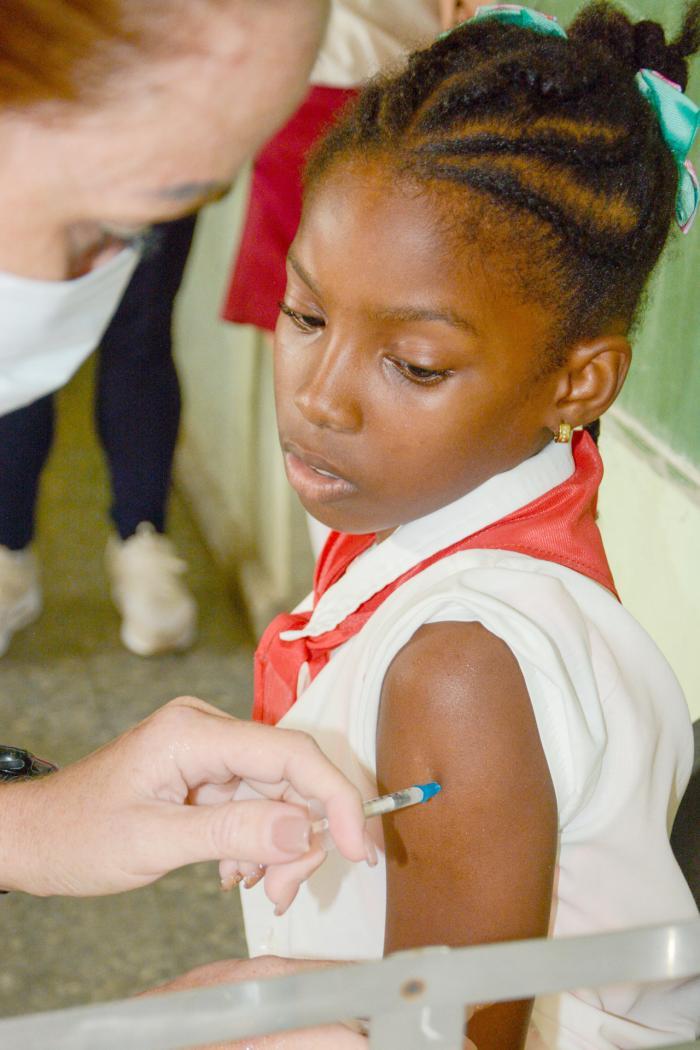
As a founding member of the Human Rights Council, the Caribbean nation also reaffirms its commitment to the struggle to establish a more just, democratic, and equitable international order that breaks down the barriers that hinder the well-being of the majority. And under the principles of solidarity and internationalism, it is willing to share with other countries its more than six decades of experience in human development in areas such as health, science, education, culture, and others in which it has been universally recognized.
In this endeavor, beyond December 10, José Martí's ideal is a daily inspiration: "I want the first law of our Republic to be the worship by Cubans of the full dignity of man," and also Fidel's maxim in the glow of January 1959: "The Cuban Revolution can be summarized as an aspiration for social justice within the fullest freedom and the most absolute respect for human rights."