Trump reportedly rejects Iran’s seven-day ceasefire proposal. What’s next?
 26 September 2026

United States President Donald Trump has reportedly ruled out an Iranian proposal to reopen the Strait of Hormuz within a week, according to unnamed US officials cited by The Wall Street Journal.
Trump’s rejection comes just hours after Iran put forward a new roadmap to opening the strait, through which one-fifth of global oil and natural gas is shipped during peacetime – and days after the US president threatened to “annihilate” Iran from the floor of the UN General Assembly.
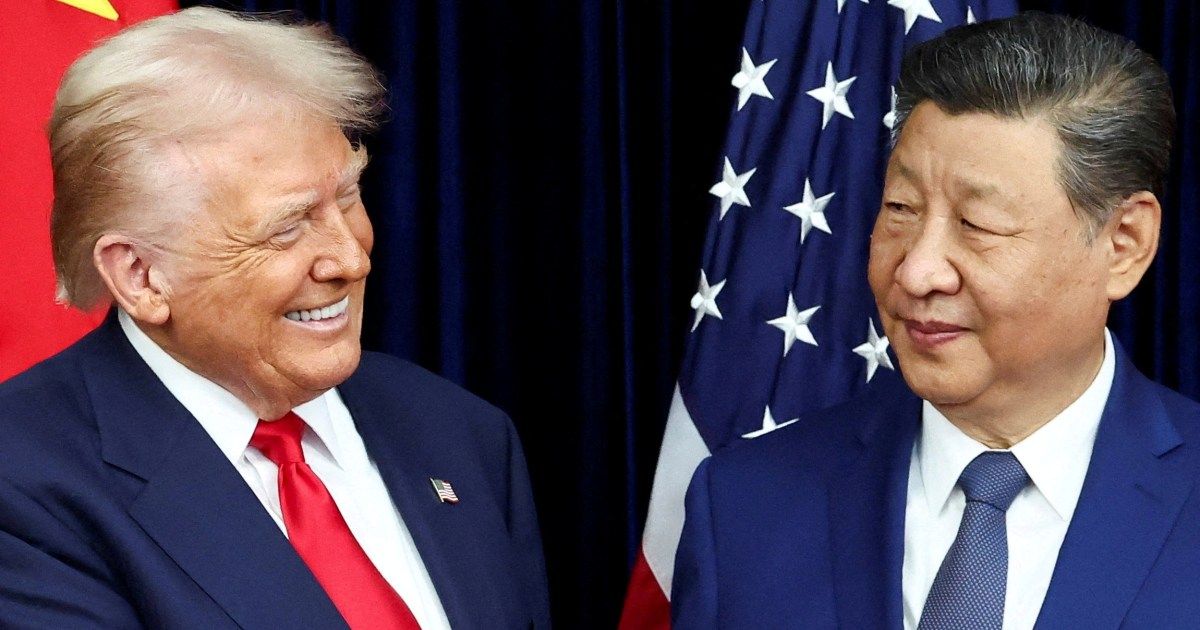
- list 1 of 3Trump hails ‘very productive’ talks with China’s Xi Jinping
- list 2 of 3Netanyahu’s UN belligerence wins cheers at home as world walks out
- list 3 of 3Iran war squeezes Iraq’s economy as oil revenues fall and prices rise
end of list
Here’s what we know about Trump’s response to the proposal and what could come next in the conflict.
What was in Iran’s seven-day proposal?
The proposal lays out a roadmap to open the Strait of Hormuz with normal maritime passage within a week.
Speaking to reporters on Friday, Iran’s Foreign Minister, Abbas Araghchi, said the proposal calls for the US to take actions it committed to under the failed June 17 Islamabad Memorandum of Understanding (MoU) on an accelerated timeframe.
Those actions include releasing $12bn in frozen Iranian assets, lifting Iranian oil sanctions and ending the US’s naval blockade on Iranian ports, Araghchi told reporters at a private media briefing on Thursday, according to The New York Times. He also said all hostilities, including in Lebanon, where Israel still occupies part of the south of the country, must cease during the seven-day period.
Araghchi said once the US conditions are met – which he estimated would take four or five days – the Strait of Hormuz could be reopened and negotiations with the US on a “final deal” would start on day seven.
Advertisement
He said the process could begin as soon as the US accepts the plan.
“The choice now rests with the United States,” said Araghchi. “Iran does not accept coercion, threats or intimidation.”
How has the US responded?
The US government has not publicly responded to the plan.
However, The Wall Street Journal reported that Trump had quickly ruled it out, citing unnamed US officials.
They said Trump was sceptical about whether Iran would fulfil US demands. Trump’s most persistent demands have been that Iran never be able to acquire a nuclear weapon and that it restore free passage in Hormuz.
Iran says it will not discuss its nuclear programme until the conditions it has laid down are met, which has led to an impasse between the two sides.
Meanwhile, a US official has told Al Jazeera that Washington is in no hurry to respond to Iran’s proposal and that it sees itself as being in a strong position with respect to the Strait of Hormuz.
Late on Friday night, Trump posted an image of a map on his Truth Social platform that labelled it “Trump Strait”.
Trump has previously said the US has “total control” over the waterway and threatened to designate it as a US territory. Iran strongly denied that, saying it has complete control of the strait.
Are peace negotiations still happening?
Yes, but mostly indirectly. At the UN General Assembly in New York this week, Qatar has been passing messages between the two sides as an intermediary.
Both the US and Iran have said the door to diplomacy remains open and a US official told Al Jazeera that ongoing mediated talks are “positive and constructive”.
Qatar, a key mediator in the conflict, said its foreign minister spoke with Iranian President Masoud Pezeshkian on Friday about de-escalation and the conditions for renewed dialogue.
Earlier this week, US officials, including special envoys Jared Kushner and Steve Witkoff, held mediated discussions with Iranian counterparts in New York, a meeting Trump described as “very good”.
Nevertheless, there is “an enormous amount of scepticism in Washington that the two countries are on the same page,” according to Thomas Warrick, senior fellow at the Atlantic Council.
“I think that the best we can hope for is that this offer from the Iranian foreign minister does lead to further discussions to try to clarify what preconditions Washington is willing to work with,” Warrick told Al Jazeera.
Where does the US-Iran standoff go from here?
Possibly towards renewed hostilities.
According to the US officials cited in The Wall Street Journal, Trump told his aides he expects to carry out a new bombing campaign against Iran after the US midterm elections in November.
Advertisement
That comes after Trump told the UN General Assembly he was considering whether to “annihilate” Iran and “drive them into hell” in the absence of a deal.
At the same time, Trump has said he believes a deal to end the conflict will come shortly after the midterms.
Paul Musgrave, an associate professor of government at Georgetown University in Qatar, told Al Jazeera that Trump “doesn’t want to end the war on unfavourable terms” and that the result of November’s elections will likely help steer his policy.
If Trump’s Republican party suffers severe setbacks in the elections – and loses its majority in Congress – he may opt for “unilateral actions, including perhaps a resumption of warfare”, said Musgrave.
“That would also mean that Iran would have delivered a really stinging political blow to President Trump,” Musgrave continued, adding this could trigger short-term escalation, “followed by negotiation so that the White House doesn’t look like it’s just surrendering”.
Related News
Suspected smugglers on trial over deadliest migrant tragedy in France
Qatar says ‘no alternative to diplomacy’ as Belgium and Rwanda restore ties

UK lawmakers vote against bill to legalise assisted dying