

A proposal by US President Donald Trump for an “energy ceasefire” between Russia and Ukraine appeared to be gaining ground this week when Ukrainian President Volodymyr Zelenskyy said Kyiv was “ready” to make an agreement.
Trump has blamed the Ukraine-Russia war for the current record rise in diesel prices in the United States, which has become a major issue as the country approaches midterm elections in November.
- list 1 of 3Putin’s party wins supermajority in Russia’s parliamentary election
- list 2 of 3UN General Assembly 2026: Who is speaking and when?
- list 3 of 3Russian strikes on Ukraine kill three as Zelenskyy arrives for UN summit
end of list
Trump and Zelenskyy met for 40 minutes on Tuesday on the sidelines of the United Nations General Assembly in New York to discuss efforts to end Russia’s full-scale invasion of Ukraine, now in its fifth year.
In comments to reporters at the UN headquarters, Zelenskyy said Kyiv would halt strikes on Russian energy facilities if Moscow stopped targeting Ukraine’s energy systems as well. “If they don’t want us to attack their diesel and refineries, we are ready – if they will not attack our energy system, our electricity, heating system, water supplies,” he said.
The Trump-Zelenskyy meeting comes as a barrage of attacks on energy facilities by both Russia and Ukraine continues unabated, raising questions over whether such a truce could indeed be reached – and whether it could hold.
Here’s what we know:
Why are Russia and Ukraine targeting energy facilities in particular?
This year, Ukraine has massively expanded strikes on Russia’s oil industry, using long-range drones to strike refineries and other energy facilities at sites up to 3,000km (1,865 miles) from the Ukrainian border. The aim is to disrupt Russia’s energy industry, which it relies on to fund its war effort.
Advertisement
A September 20 attack forced the Moscow oil refinery, which processed about 230,000 barrels of crude a day in 2024, to halt crude processing, the Reuters news agency reported, citing industry sources. Also this month, Ukraine launched its deepest-ever attack into Russia, targeting two Arctic gas condensate facilities more than 3,000km (1,865 miles) from its border.
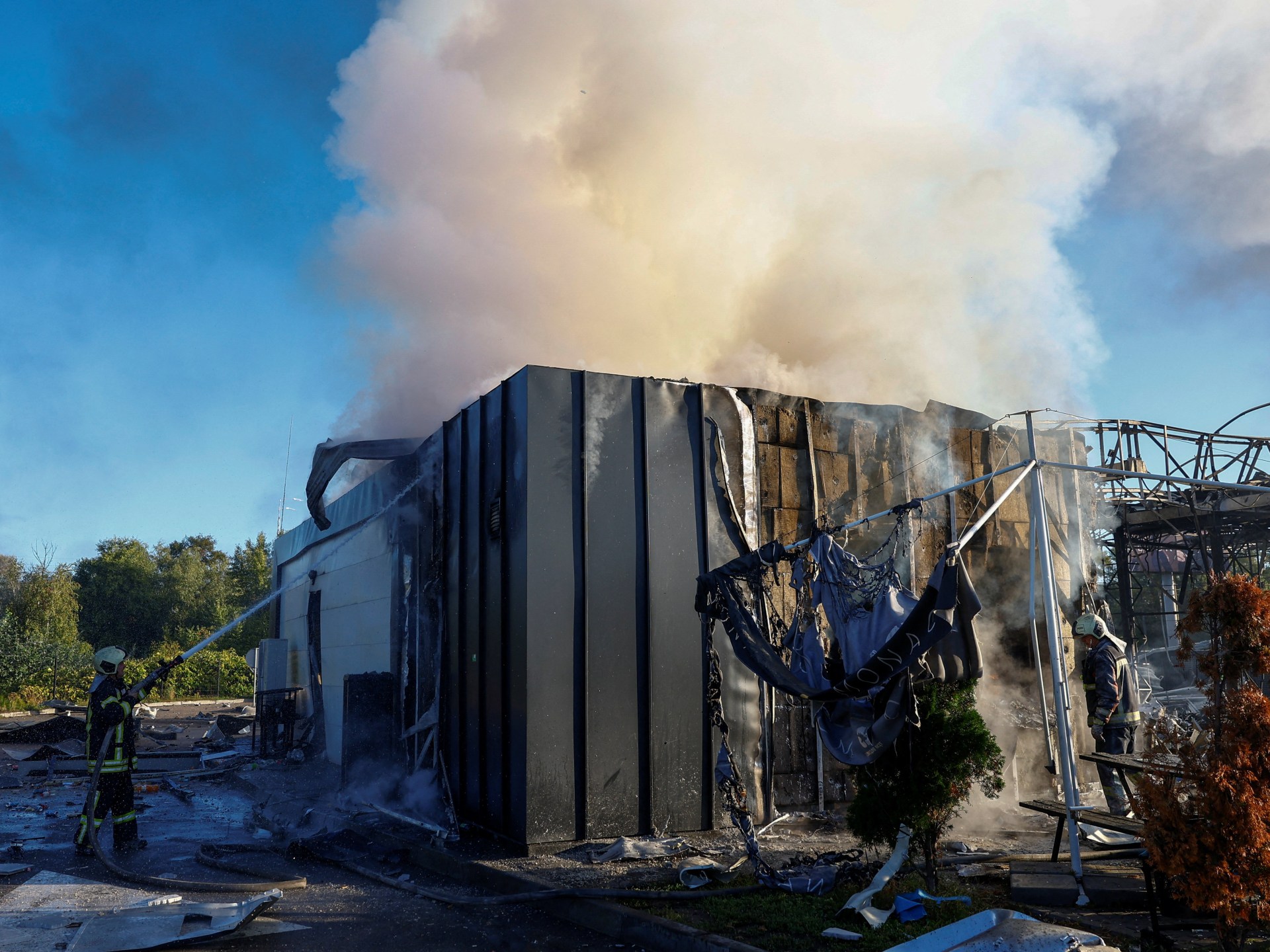
On Wednesday, Russia slammed jet-powered drones into two petrol stations and other sites in Kyiv, killing one and injuring at least seven people. Ukrainian oil company Ukrnafta said Russia had hit one of its petrol stations in the capital, the sixth such facility attacked in recent weeks.
Zelenskyy also warned in a post on Telegram on Tuesday that Russia was planning “a new massive attack” against his country.

What does an ‘energy ceasefire’ mean?
A bilateral energy ceasefire between Ukraine and Russia would involve a mutual halt of attacks on all energy-related targets in each other’s countries. What remains unclear is whether both sides can agree on the preconditions for it being set in place.
The Kremlin previously welcomed the US proposal for an energy moratorium while also calling for such measures to be extended to Russian seaborne energy exports and sanctions.
On Wednesday, Zelenskyy said, “Both the US and Ukraine want to see this senseless Russian war ended before winter.” But he also insisted that there could not possibly be any discussion of easing sanctions against Russia “when Ukrainians live every day under the threat of missile and drone attacks”.
Why is Trump involved in this?
This week, Trump expressed concern about the extensive damage done by Ukraine to Russia’s fuel-processing capacity, which he said is stoking diesel prices and “hurting the world”. On Sunday, he asked Ukraine to stop hitting Russian diesel refineries in particular.
But Trump’s intervention to halt Ukraine’s attacks on Russian energy facilities appears to contradict his administration’s general approach to Russian energy.
This month, the US Congress passed a new bill that gives Trump sweeping powers to impose sanctions on Russia’s crude exports as well as steep tariffs on buyers of Russian energy.
Analysts say that Trump’s approval ratings have slumped to a record low at home, and he is now likely hoping an energy ceasefire could reduce petrol and diesel prices at US pumps ahead of the November midterm elections.
Furthermore, amid fears that Russia will try to cripple Ukraine’s heating and power facilities as winter approaches – as it did last year – Zelenskyy has asked Trump for additional Patriot air defence missiles, the only weapon in Ukraine’s arsenal capable of downing Russia’s ballistic missiles.
Advertisement
A halt to attacks on energy facilities, instead, would ease that pressure on Washington, whose supply of Patriots is being depleted by the US-Israel war on Iran.
But while such a ceasefire could lower prices, it would also likely aid Russia’s war economy, analysts said.
“The ongoing sales of Russian fossil fuels continue to finance Russia’s war against Ukraine,” Amanda Paul, senior policy analyst at the European Policy Centre (EPC), told Al Jazeera.
“Rather than putting the emphasis on the impact of Ukrainian strikes on fuel prices, Trump should be putting greater pressure on Russia to end its attacks and bring the war to an end,” she said. “Trump himself is responsible for stoking high energy prices, due to the repercussions of the US-Israel war on Iran and the subsequent blocking of the Strait of Hormuz.”
Marnie Howlett, an associate professor of international relations in Eastern Europe and Eurasia at the University of Oxford, said that by pressuring Zelenskyy, Trump was placing emphasis on the wrong actor in the war.
“It is Russia’s – not Ukraine’s – responsibility to end the attacks,” Howlett told Al Jazeera. “The Russian Federation has repeatedly broken ceasefire agreements, so the war will continue until it agrees to recognise Ukraine’s territorial sovereignty.”
Christopher Pool, a researcher at the Department of War Studies at King’s College London, said Trump actually holds little leverage over the Ukrainian deep-strike campaign and has been “mysteriously reticent” to put pressure on Russia.
“A truce is more likely to be agreed because of pressures on both Ukraine and Russia caused by the war itself,” Pool told Al Jazeera.
“Ukraine is facing the hardest winter of the war, and memories of the brutal winter last year, when heating and electricity cuts were commonplace whilst temperatures dropped to minus 25 degrees Celsius [minus 13 degrees Fahrenheit], are fresh in Ukrainian minds.”
At the same time, Russia is facing its own energy crisis as a result of the Ukrainian deep-strike campaign. “The Kremlin may fear its effects on certain sections of the Russian population whose support, or apathy, is crucial for its survival,” the researcher added.
“The Ukrainian deep strike campaign therefore not only degrades Russia’s capacity to prosecute and escalate its war, but brings the war home to the very people the Kremlin is trying to shield from its effects.”

Could such a truce hold?
Since Russia launched its full-scale invasion of Ukraine on February 24, 2022, no ceasefires have been successfully maintained between the warring sides. During his presidential campaign in 2024, Trump claimed he would end the war in Ukraine very quickly if he resumed office as US president. However, this has not happened.
While Trump said last week that the two countries had agreed to stop attacking each other’s energy facilities, strikes resumed almost immediately.
In May, Trump announced a three-day ceasefire to mark the end of World War II for the Russians. Russia announced a ceasefire for May 8 to 9 to coincide with commemorations of the Soviet Union’s victory over Nazi Germany, while Ukraine announced its own proposal for an open-ended ceasefire beginning on May 5.
Advertisement
But Moscow and Kyiv both quickly accused each other of violating these ceasefires. Talks deadlocked over Ukraine’s eastern Donetsk region, with Kyiv saying it would not pull troops back from parts of the region it controlled.
Ukrainian and Russian officials met in Turkiye for the first direct talks in years in May 2025, hoping to move forward on a full and unconditional ceasefire. The Istanbul talks resulted in an agreement to swap 1,000 prisoners of war each, but stopped short of the most urgent objective of halting the hostilities.
A previous round of talks in Istanbul in March 2022, soon after Russia invaded Ukraine, also failed to de-escalate the conflict and establish a diplomatic route.
Analysts say it is unlikely that a Trump-brokered energy ceasefire would be any different. “Russia is not interested in such a plan,” Paul said, as Moscow has been known to double down on attacks on energy facilities during the winter season.
“The Kremlin will exploit ambiguities in an energy truce by claiming that Ukraine violated the agreement and using that as justification for renewed attacks,” she said.
“Any deal would need clear rules, independent verification and a precise definition of what constitutes a violation – which will be hard to achieve.”
According to Pool, “Kyiv is likely to hold to its end of the bargain as long as Moscow does likewise.”
“Whether Russia does the same would be a reflection of how seriously the Kremlin takes the ongoing threat to the bubble in which urban and middle-class Russians have, to date, been able to live,” he said.
Related News
Satellite images show destruction from Nepal-Tibet floods

Could Trump’s Iran trade war threaten Spain’s saffron-infused paella?
Russia to close Goethe-Institut centres as Germany tensions escalate