

A young woman in a sleek bun and a jacket with Kazakh patterns smiles from the screen at a directors’ meeting of Samruk-Kazyna, Kazakhstan’s sovereign wealth fund.
In late 2025, she became the company’s newest board member.
- list 1 of 4UK’s Burnham, Canada’s Carney discuss AI risks, defence cooperation
- list 2 of 4What are the world’s biggest AI companies and how much are they worth?
- list 3 of 4Israel weaponises AI for West Bank demolitions
- list 4 of 4Trump says he will create ‘AI Force’ with new ‘AI czar’
end of list
But SKAI (or Samruk-Kazyna Artificial Intelligence) is not the first woman to join the all-male board: She is the first artificial intelligence programme with voting rights to support the company’s push for greater transparency and better governance.
In Kazakhstan, AI is the new talk of the town, and part of its new branding and modernisation agenda to improve public services, attract investment and diversify the economy beyond reliance on raw materials.
President Kassym-Jomart Tokayev declared 2026 the “Year of Digitalisation and Artificial Intelligence” to introduce advanced technologies in all sectors of the economy, develop skills, startups and Kazakh-language technologies.
In 2025, the government created a Ministry of Artificial Intelligence and Digital Development, and last month, it approved an action plan through 2029 that includes promoting AI literacy in schools and universities, digitalising healthcare, public services, tax collection and the energy sector.
In 2025, Kazakhstan became the second jurisdiction, after the European Union, to pass a law governing AI.
In the futuristic ball-shaped EXPO building in the capital Astana, a new AI museum invites visitors to wander through digital installations and robots, try AI models and immerse themselves in an otherworldly experience.
Advertisement
At the nearby Astana Hub, the largest innovation cluster in Central Asia, which runs the museum, hundreds of schoolchildren are taught programming, generative artificial intelligence, 3D animation, and motion design – for free. For adults, the “Tomorrow School” seeks to develop Kazakhstan’s brightest tech talents.
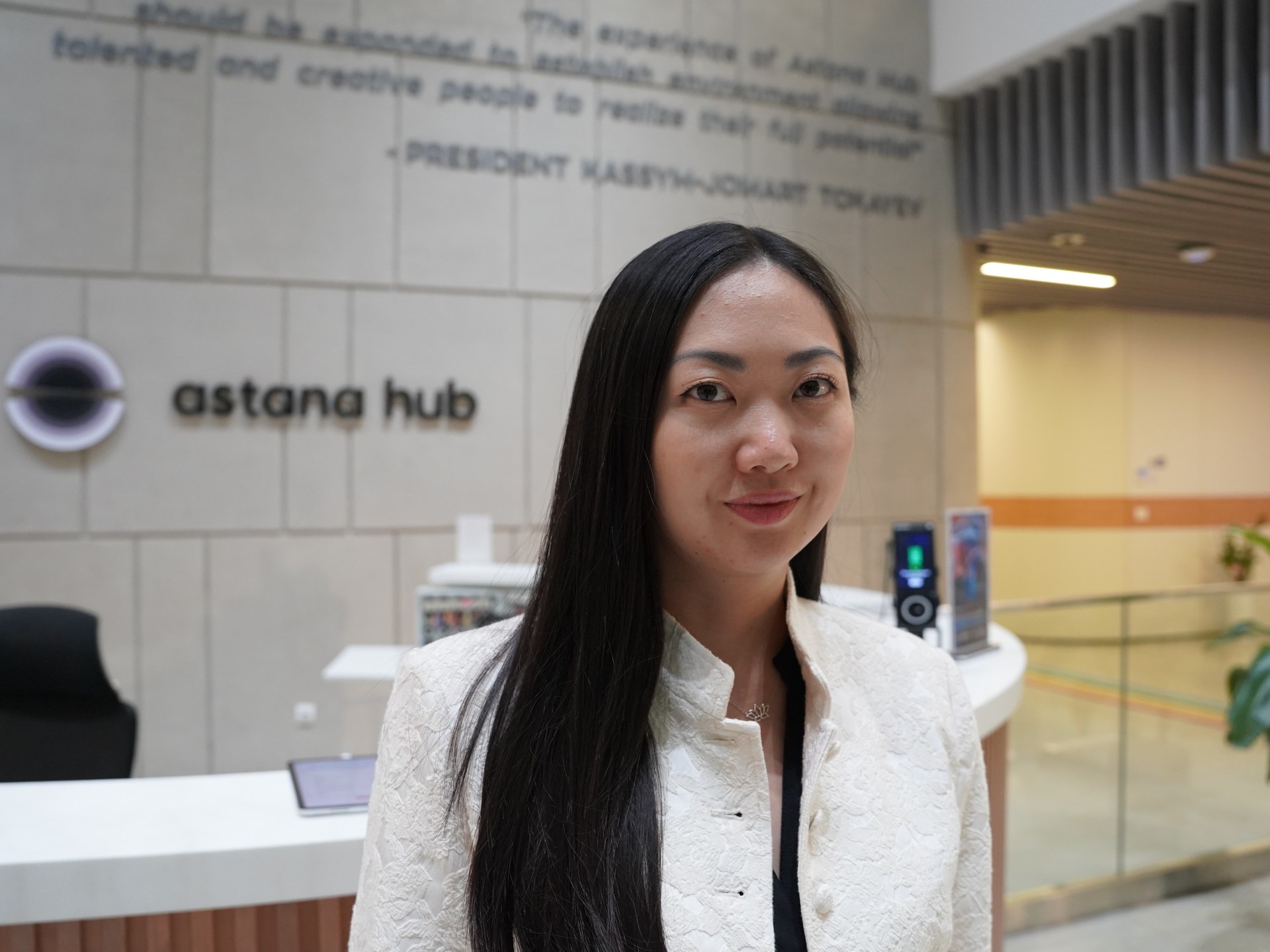
“We have students from 18 to over 50, coming from various backgrounds who at some point decided to change their profession and become IT workers,” Valeria Tio, Astana Hub’s managing director, told Al Jazeera. “The candidate selection is strict. Of the 25,000 applications that we have received, we took less than 2 percent of the most talented people.”
The candidates first play a logic and memory game to select those with the best potential. Then, during an intensive four-week course called the “Pool”, organisers select a student cohort to participate in training for two years.
While Kazakhstan’s AI push has made it a pioneer in the region, it “is still far away from becoming a Silicon Valley, but it is becoming a regional AI centre”, said Yuri Misnik, chief technology officer at InDrive, a unicorn company actively training a new generation of IT specialists in Kazakhstan.
“Thanks to proximity to China, Kazakhstan can have the best of two worlds: The western innovation and insights from the east … Similar to what happened 15 years ago with digital transformation, the winners change the business, the processes, and the business models.”
Eighteen months into the Tomorrow School programme, the hub has trained 500 people. Some have secured jobs. This month, pools open in 12 Kazakh regions.
“A girl who worked as a barista in our cafeteria found work as a developer after one year of study. This is a real social elevator,” Tio said.
Astana Hub also has a startup incubator, which helps to create new teams, develop IT products, and sell them to other markets. They partner with hubs in Dubai, Shanghai, Malaysia and the United Kingdom and closely cooperate with the government. Thanks to that, their residents pay zero tax. One percent of their income goes towards the hub’s development.
Over eight years of operation, Astana Hub has helped to incubate Kazakhstan’s first unicorn company – a privately held startup valued at more than $1bn – named Higgsfield, a video-generating programme. By 2030, Tio said, the hub hopes to have five unicorns.
At the nearby Nazarbayev University, another company tries to break new ground. The Institute of Smart Systems and Artificial Intelligence was the first academic entity in Central Asia to operate a supercomputer.
Advertisement
In 2019, scientists realised that neither of the popular AI voice assistants at the time, such as Siri or Alexa, recognised the Kazakh language. The team decided to build its own national product.
When the coronavirus hit in 2020, researchers encouraged local Kazakh speakers and traditional toastmasters who were at home without work to record themselves reading texts using different emotions to train the new Kazakh model. It worked: In December 2024, the company launched its local answer to ChatGPT.
The MagniSoz model works with text and audio in 11 different languages. Oylan, an updated version, which translates from Kazakh into “Think!”, works with images, too, in English, Russian and Kazakh.
“It has deep-thinking, reasoning and web search functions,” said Yerbol Absalyamov, the institute’s executive director.
“To ensure protection of data, we decided to deploy it locally on our servers. It is available open source to all Kazakhstani people, including the government. Our work has two principles: First, AI for good, and second, AI for Kazakhstan.”
While ChatGPT today works in the Kazakh language, too, Absalyamov says a local large language model is still key. First, because the data it collects stays within the country and second, because it represents local culture, history and traditions.
“Our mindset might be different from the European or North American one, so while creating these models, we collect data that represents Kazakhstan, our people, culture, history and identity,” he said.
But AI development is not without issues.
The decision to create large data centres in Kazakhstan, which require stable water and electricity supply, has raised concerns.
“Kazakhstan still imports power at peak times, and a large share of plants and grids are old. When it comes to the environment, the ministry said cooling will use immersion systems rather than water, but no assessment has yet been made public,” said Tlegen Kuandykov, programme coordinator at CAPS Unlock, a local think tank. “Whatever the engineering answer turns out to be, that transparency gap is a real policy failure.”
Another potential problem is the use – and potential misuse – of data.
“Human rights are a big issue. The new AI law contains protective language, but enforcement is not clear yet and it might not include serious public oversight. Biometric identification and facial recognition are being rolled out rapidly,” Kuandykov said.
Related News

Spain’s spy agency warned of mass crossings into Ceuta before border crisis
Yemen’s army says recaptured key territory as clashes with Houthis continue
‘Totally reliant on Mother Nature’: UK drought raises water security fears