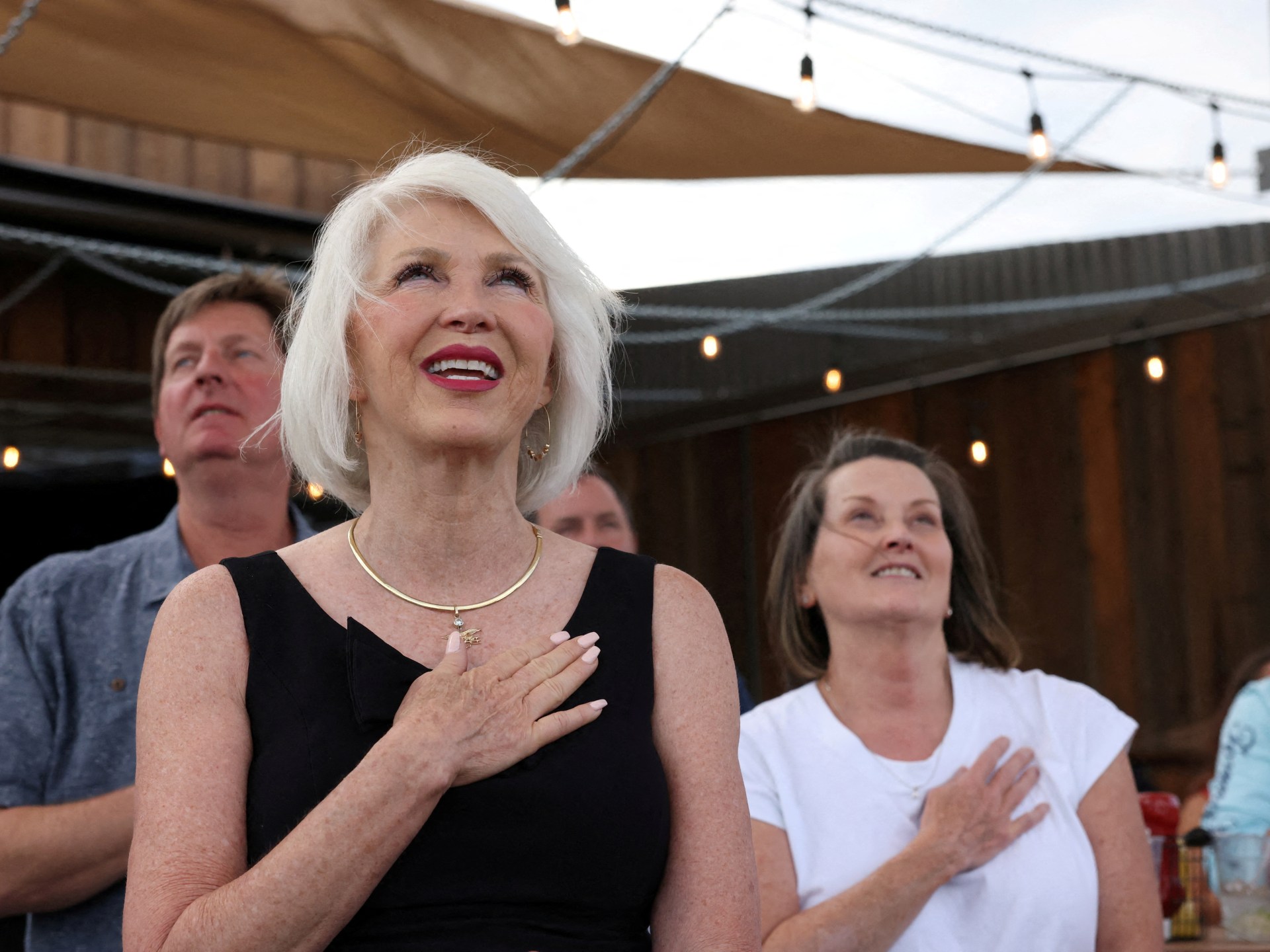

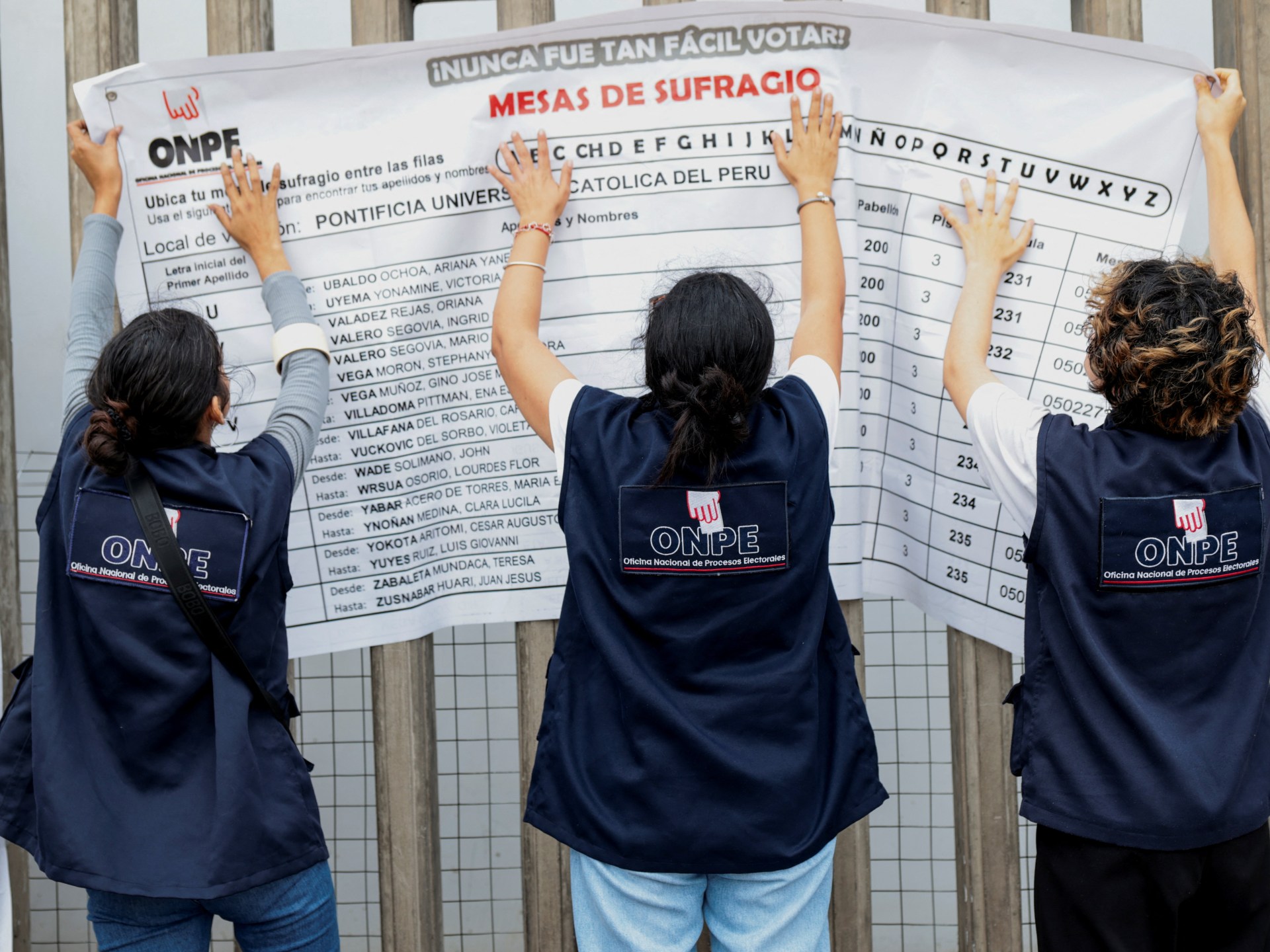

Polls have opened in Peru’s presidential run-off, culminating an election season marred by confusion and protest.
Issues of crime, corruption and voter disillusionment following years of political turmoil loomed large over Sunday’s vote, which saw right-wing candidate and former first lady Keiko Fujimori face off with leftist congressmember Roberto Sanchez.
- list 1 of 3Peru probes trafficking of citizens to fight for Russia in Ukraine
- list 2 of 3Peru presidential candidate charged with financial crimes
- list 3 of 3Peruvian authorities confirm Fujimori and Sanchez advance to runoff
end of list
Both are running to be the South American country’s ninth leader in a decade, with Peruvian leaders regular toppled by forced resignations or impeachment in recent years.
How the elections are administered will also be closely watched after logistical issues and a lengthy vote count challenged trust in the process during the first round of voting. The April 12 election featured 35 candidates.
Following that vote, Fujimori easily asserted her place in two-person runoff with 17 percent of the vote, but it took weeks for Sanchez to be named her competitor with 12 percent support.
The third place candidate, far-right former mayor Rafael Lopez Aliaga, has alleged fraud in the count, although election monitors have found no evidence to back up the claim.
Speaking to AFP news agency, voter Evelyn Pazos said she was hoping Sunday’s vote goes smoothly.
“I hope the entire process is carried out transparently, that the people’s vote is respected,” the 43-year-old said.
Hugo Vasquez, a craft seller in Lima, pointed to widespread disillusionment among the country’s 27 million voters.
“There is a lot of disorder and corruption, and we’re going to vote, as always, for the ‘lesser evil’,” the 67-year-old told the news agency.

Fujimori and Sanchez have vowed vastly different visions of leadership.
Advertisement
The 51-year-old Fujimori, who was named first lady by her father, former right-wing President Alberto Fujimori, in the 1990s, has remained a defender of her family’s legacy.
Detractors have pointed to human rights abuses committed under the elder Fujimori, including the forced sterilisation of Indigenous people and extrajudicial killings carried out by “death squads”.
The president of the right-wing Popular Force party, which has controlled Congress for years, she has run on a tough-on-crime platform. That has included vows to “defeat terrorism” and impose a 60-day state of emergency.
Her candidacy has sparked a new protest movement in the final days of the race. A victory would continue a trend of right-wing candidates being elected across the country.

The 57-year-old Sanchez, meanwhile, has styled himself in the likeness of former leftwing President Pedro Castillo.
He briefly served as foreign trade and tourism minister under Castillo, who was arrested and impeached in a failed bid to dissolve Congress in 2022.
Sanchez, a former psychologist, has sought to appeal to rural and Indigenous voters in the country, vowing anti-poverty measures, police reform and what he has described as a new constitution “built collectively, through dialogue and citizen participation”.
Like Castillo, he has adopted wearing a wide-brimmed “Chota” hat on the campaign trail, a style common in Peru’s rural north.
Other pledges have included reparations for victims of Alberto Fujimori’s government and repealing laws that shield law enforcement and security forces from accountability.
Still, he has steered the centre in some of his economic policies, in an apparent bid to court centrists, while promising to take on corruption in the police and judiciary, which he has said enables criminal networks.

Just hours before the election, a judge ruled Sanchez must stand trial on charges related to past financial irregularities in his party, in what his allies have condemned as interference in the vote.
While Keiko held a commanding lead in the first round of voting, observers have said a large segment of disaffected voters could make the difference in the runoff.
While every eligible voter is legally required to cast a ballot in Peru, about 7.16 million did not do so in the first round of voting.
Advertisement
About 12 percent of voters who did vote cast blank ballots, while about 5 percent cast spoiled ballots.
Related News
Russia warns foreigners to leave Kyiv as it prepares ‘systematic strikes’
Arrests of critics in Ghana provokes alarm over free speech under Mahama
Nepali Mount Everest guide found alive after being missing for six days