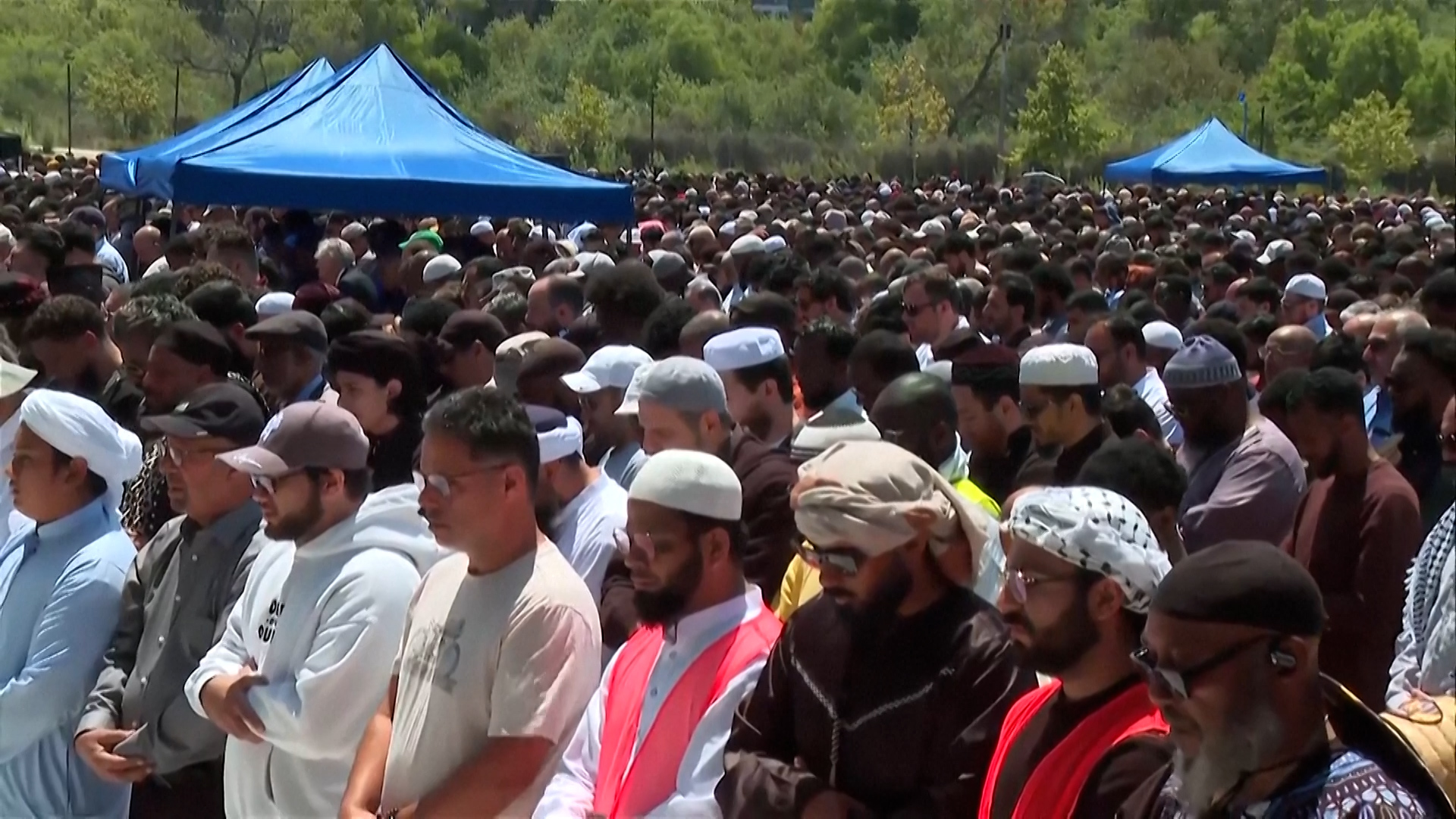

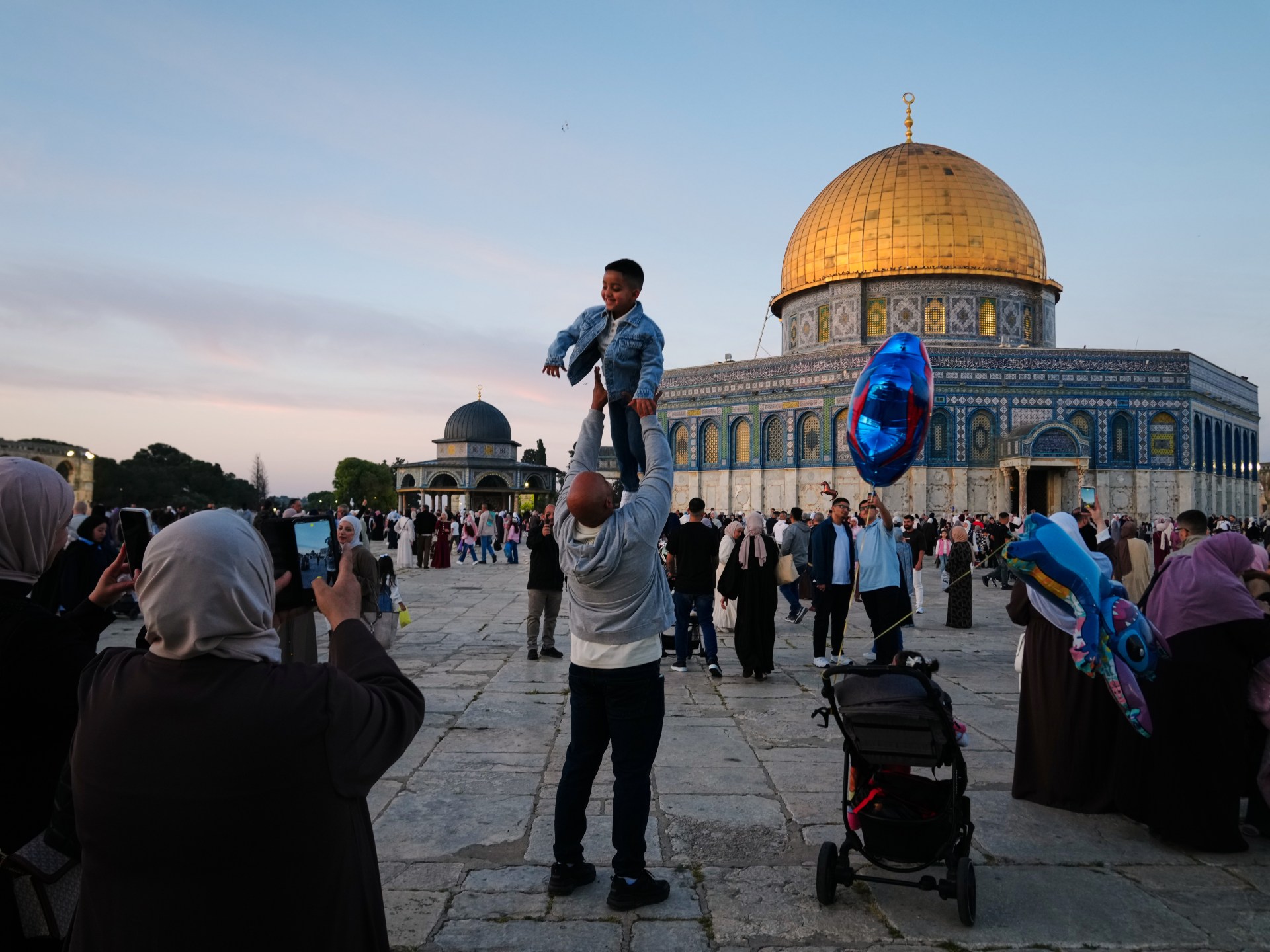

Muslims around the world have begun celebrating Eid al-Adha, the “Festival of Sacrifice”, which falls on the 10th day of Dhul Hijjah, the 12th and final month of the Muslim lunar calendar.
One of the biggest holidays in the Muslim calendar, it coincides with the last day of the annual Hajj pilgrimage in Saudi Arabia.
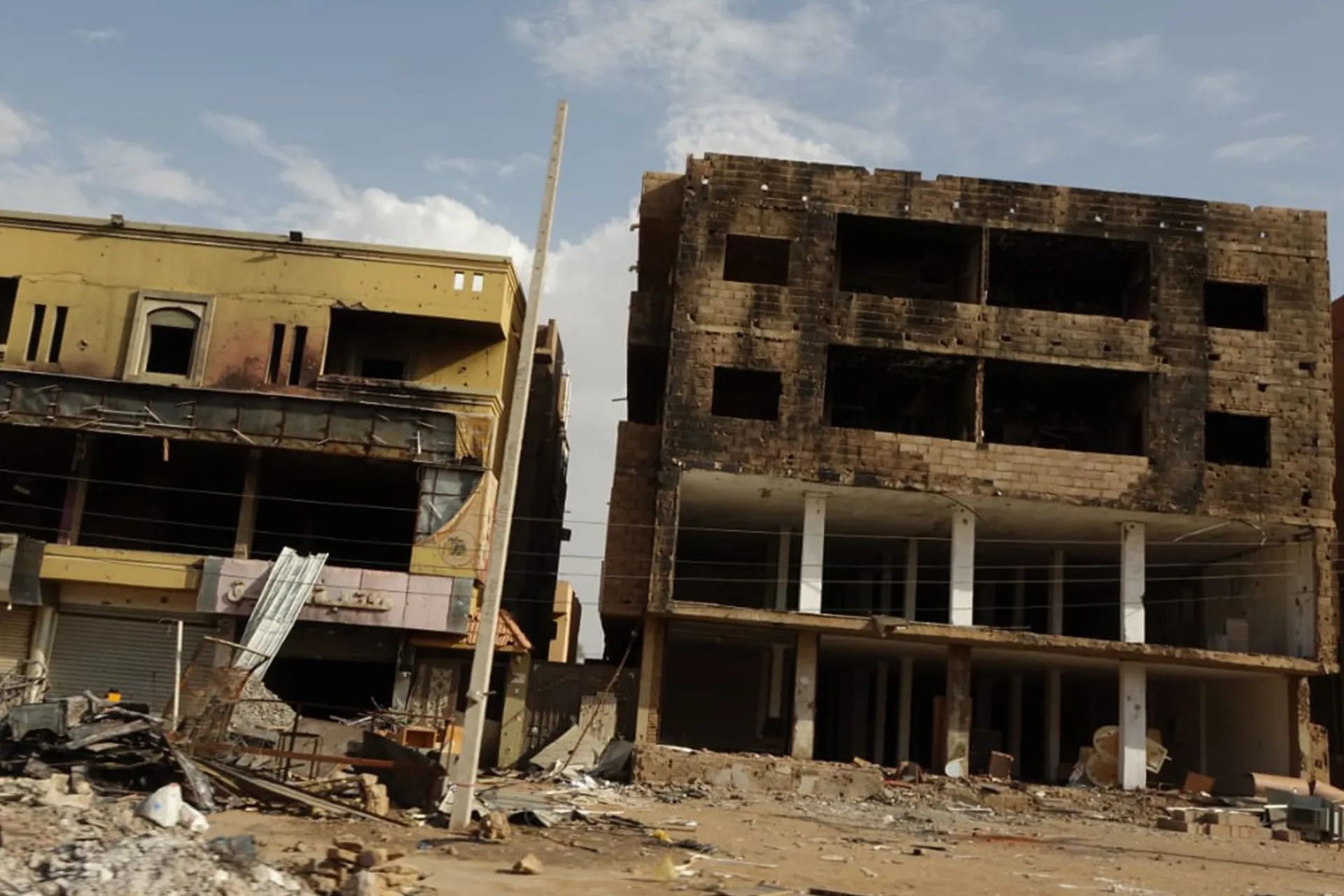
In Gaza, where Israel’s months-long offensive has devastated neighbourhoods and displaced most of the population, many families are marking Eid in tents and crowded shelters, with little meat or festive clothing.
More than 1.7 million people are taking part in the Hajj this year, slightly up from 2025, even as a war pitting the United States and Israel against Iran casts a long shadow across the Middle East.
On Tuesday, pilgrims prayed on Mount Arafat, where Prophet Muhammad is believed to have delivered his final sermon. They then spent the night out in the open at Muzdalifah, halfway between Arafat and Mina, where they collected pebbles for the symbolic stoning of the devil.
After the stoning ceremony in Mina, pilgrims return to Mecca for a final circumambulation of the Kaaba, the cube-shaped building at the heart of the Grand Mosque towards which Muslims around the world face when they pray.
Eid al-Adha commemorates the Quranic story of Prophet Ibrahim’s willingness to sacrifice his son Ismail as an act of obedience to God. Islamic tradition holds that God spared the boy, replacing him with a ram.
The day is marked with the sacrifice of an animal – usually a sheep, goat or cow – and the distribution of its meat among family, neighbours and those in need, underlining the festival’s themes of faith, charity and community.
Advertisement