


A few days ago, I overheard a conversation. Two people, strangers to each other, began talking about the present, about the difficulties, about what is lacking. And suddenly, one of them blurted out: "Before '59, with capitalism, at least things worked." A woman looked at him intently and replied with crystal clarity: "But Black people couldn't walk on the same sidewalk as white people." I was left thinking about how easy it is for them to sell us a past we didn't live through, and how dangerous it is to forget that that past also had its own infamy.
THE MECHANISM: SELECTING WHAT THEY WANT YOU TO REMEMBER
In the war of narratives, there are no cannons; millions are invested in ideology. The battlefield today is not only military or economic. It is memory. It is the way they tell us what we were in order to decide what we should be.
And in that trench, republican nostalgia has become the empire's most effective weapon of seduction. They don't want you to know the whole story. They want you to forget it. And then, in that void, they inject their version: the idyllic bourgeois republic, the dreamed-of past, the lost paradise that the Revolution—they say—stole from us.
How does it work? Very simple: they take a real fact (the existence of a bourgeois republic before 1959), erase its contradictions, embellish its facades, and return it to you as a mirage you can yearn for without having lived it. It's not history, it's propaganda with a sepia filter.
Just open Instagram, X, or Facebook to stumble across dozens of posts that extol the buildings of the era, the neon signs, the latest model cars parading along the Malecón. They show you a magazine-worthy Havana and present it as if it were paradise.
What they don't tell you is that this "shine" wasn't free, and certainly not for everyone. Cuba was then the United States' favorite testing ground: mafias, large estates, regulated prostitution, and a bourgeoisie that served as a mere accomplice to the empire. That neon light illuminated inequality, not collective prosperity.
The goal isn't for you to hate the present. That would be too obvious. The goal is subtler: to make you start questioning the very necessity of the Revolution. To ask yourself: "What if it wasn't so bad?" That "what if" is the crack through which amnesia seeps, ultimately leading to demobilization.
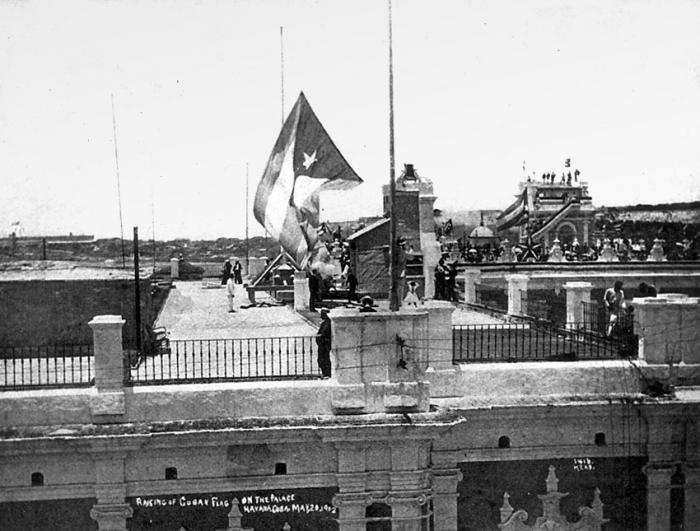
The game is to make you believe that the republic born on May 20, 1902, solved Cuba's problems, to eliminate the revolutionary situation of the 1930s or 1950s, to buy into the story that it was so perfect that a Revolution wasn't necessary.
THE DANGER: THE AMPUTATED MEMORY THAT SOWS DISORIENTATION
When they manage to make a Cuban—inside or outside the island—believe that the previous republic was a model to be rescued, they have won a decisive battle. Because then the consensus of a nation that sought justice ceases to exist, and it becomes the mistake that interrupted the supposed paradise.
And if the Revolution is the mistake, then the blockade is an understandable sanction, the coercive measures a deserved punishment, and surrender a reasonable option. That is the blank check they offer us. It is about emptying of meaning the project of social justice built over more than six decades of resistance.
Selective memory doesn't just lie about the past; it amputates your capacity to understand the present. Because if you become accustomed to seeing that Republic only through its brightly lit avenues and gleaming cars, you end up believing that inequality was a minor incident, that racial exclusion was an insignificant detail, that sovereignty shackled by the Platt Amendment was an acceptable price to pay for order and consumerism.
And that is precisely the true poison. When memory becomes selective, historical consciousness atrophies. You stop asking yourself why it was necessary to shed so much blood. You begin to think that it was all an excess, a violent interruption of a bourgeois idyll. And then, without realizing it, you become vulnerable to hate speech, to propaganda that justifies the blockade as "deserved punishment," to the idea that foreign intervention is "humanitarian aid."
Amputated memory also fractures generations. The young person who only receives the idyllic postcard image of the 1950s grows up without role models of struggle, without knowing that that republic was also the republic of the landless peasant, the worker without rights, the Black person without a sidewalk. And that person will end up talking about "lost freedom" without having the slightest idea what they're talking about.
Because selective memory doesn't just deceive: it disarms. It takes away the tools to defend what has been won. It makes you doubt your own heroes. It pushes you to look at the present through the lens of an invented past, and then you attribute any current difficulty not to external aggression, but to the Revolution itself. And that is the checkmate of cognitive warfare: that you end up blaming your shield for the wounds inflicted by the sword.
Behind every account that posts "Havana of yesterday" without context, there's a calculated operation. Behind every article that idealizes the bourgeois republic without mentioning its structural flaws, there's a lot of funding. Behind every person who repeats "we were better off before" without having been born then, there's a victory in the cognitive war.
Let's not allow them to infect us. Let's not let induced nostalgia rob us of our clarity. Let's not let selective memory erase the truth. Because Cuba wasn't built on some lost paradise. It was built on the decision of a people to cease being a colony and become a country with dignity. And that decision, precisely the one they want us to doubt today, remains the reason that keeps us standing. Let's read the past well and understand the present; that's the only way to build the future.
Related News

The Young Communists League calls for a day of celebration for Raúl

Cuban tobacco is also being rolled using solar energy

From university to industry: The best path for Artificial Intelligence
