
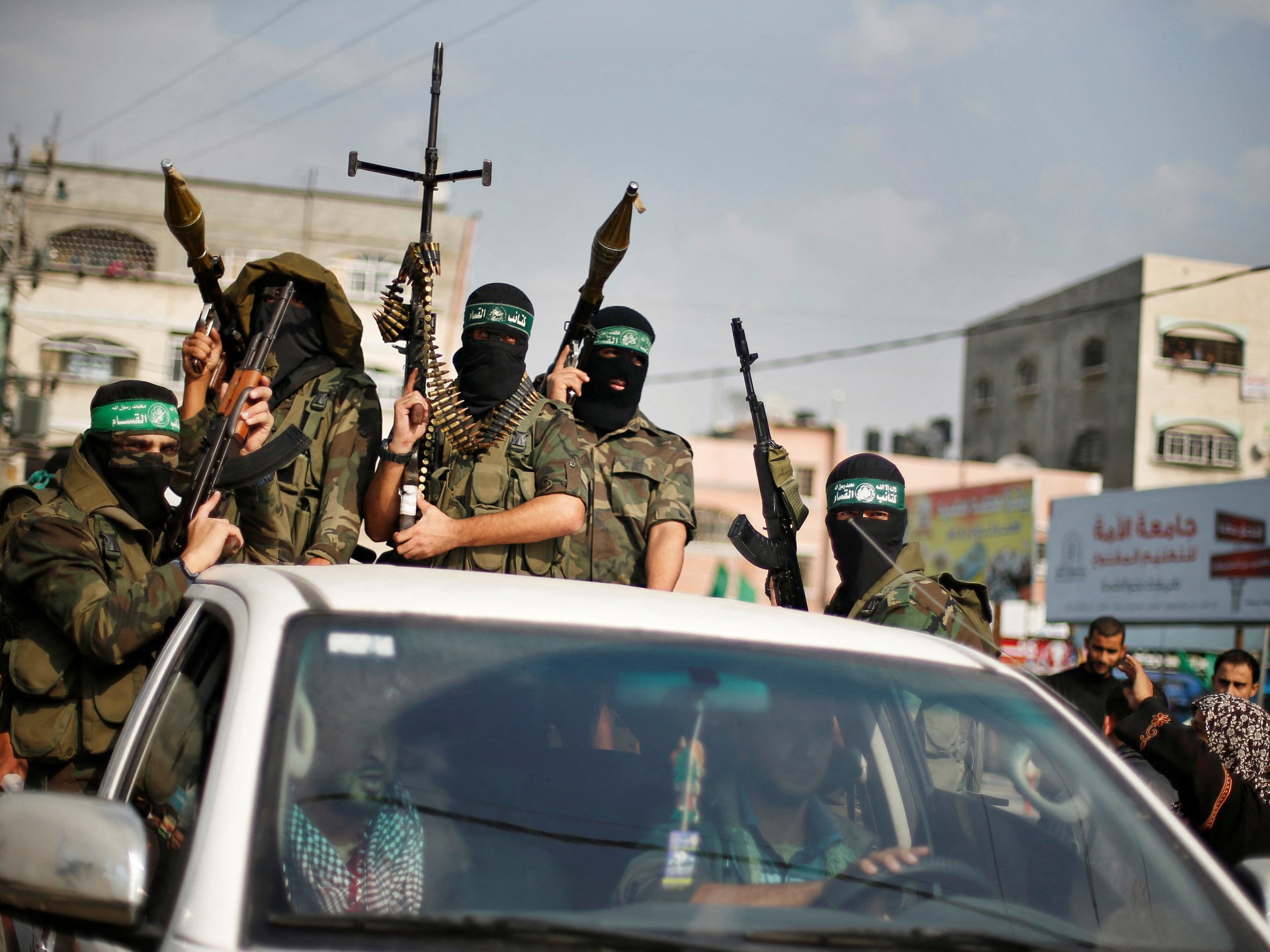

Palestinian group Hamas has announced that it has agreed to a deal aimed at fully ending Israel’s war on Gaza, which has inflicted death and destruction on the enclave for nearly three years.
The agreement, which was confirmed on Thursday and Friday by the United States and other mediators, requires Hamas to make provisions to disarm and surrender its weapons in stages. Meanwhile, Israel would withdraw its forces.
- list 1 of 3Her mother said no to a phone. Then came the Gaza genocide
- list 2 of 3Palestinians in Gaza are sceptical about the latest peace plan
- list 3 of 3Gaza Board of Peace announces Hamas disarmament agreement: What we know
end of list
The agreement was announced late on Thursday by President Donald Trump, after the US-led Board of Peace and International Stabilization Force for Gaza announced that mediators from Egypt, Qatar, Turkiye and the US had finalised a roadmap for moving on to the next phase of the ceasefire.
A truce deal was struck last October, but has failed to halt the hostilities, albeit the violence has been scaled back.
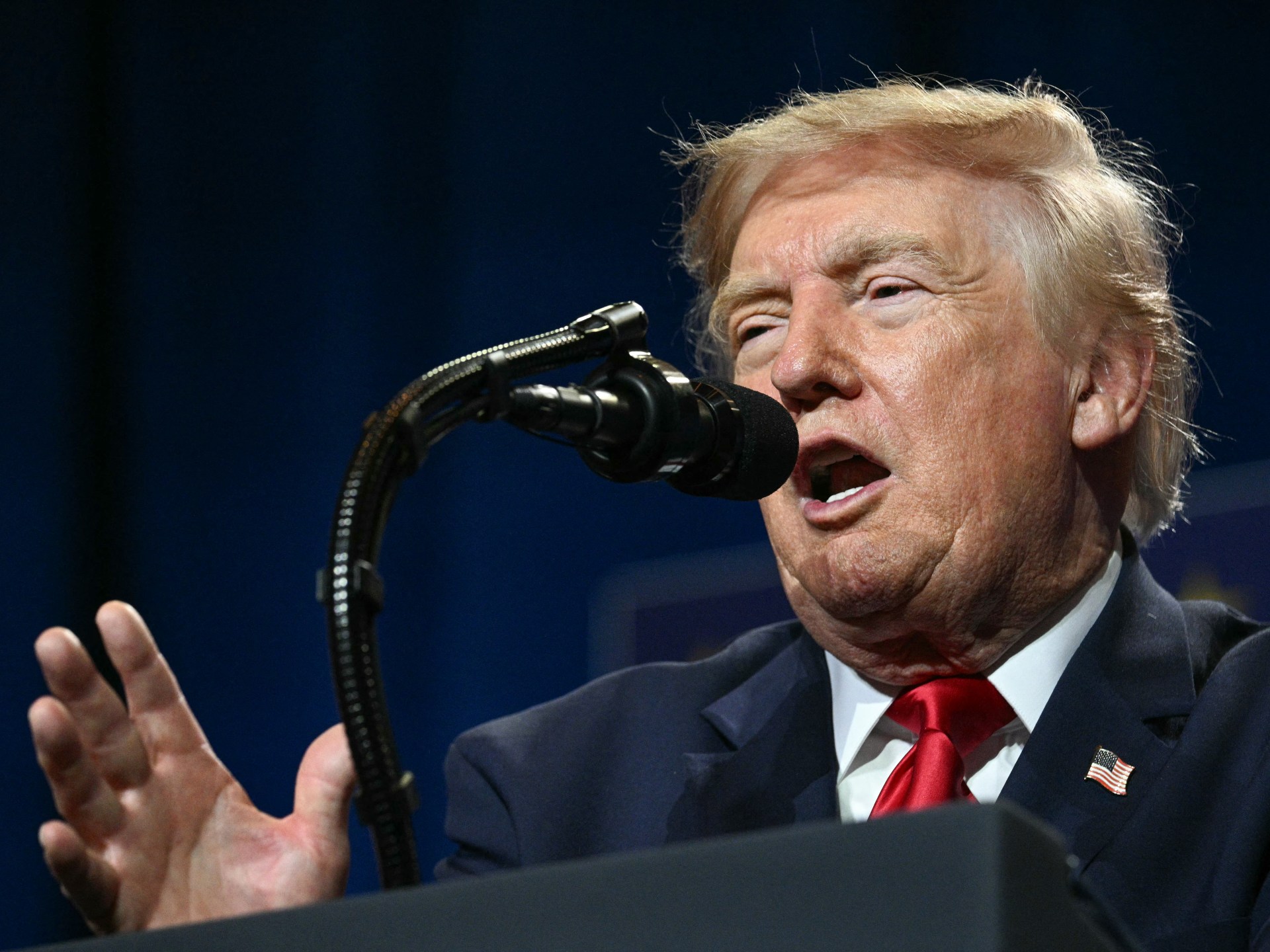
Trump heralded the deal as “a historic agreement for the complete disarmament of Hamas and all other armed groups in Gaza” and “a monumental step toward lasting peace and security”.
However, given the failure of the first phase of the ceasefire, and the deep mistrust between the Palestinian and Israeli sides, concern regarding the likely implementation of the agreement, and the potential for it to end the violence, is rife.
Here’s how the world and the key players have reacted:
United States
Trump framed the agreement as the turning point of his 20-point plan introduced last year, writing on Truth Social that it was “a critical step towards Gaza finally being governed by a new Palestinian government that will work closely with the Board of Peace”.
Advertisement
“Israel will have the security it deserves, with Gaza no longer used as a base for terror attacks,” he declared.
“Most people said that would be a deal that would be undoable. Now, will it go through its ups and downs? It’s a very complex situation over there,” he said, adding that Israel is “very happy” with the agreement.
Israel
The Israeli government had made no official response by Friday evening.
Far-right National Security Minister Itamar Ben-Gvir rejected the draft as “unacceptable to Israel,” and labelled the required commitment “to stop the assassinations” of Hamas members as “tantamount to agreeing to Hamas organising for the next massacre” – a reference to the October 2023 attack on southern Israel that resulted in the killing of 1,200 people, with 240 taken captive.
“The assassinations in Gaza must continue, the encouragement of immigration must happen, Israel must win,” Ben-Gvir declared.
Former army chief of staff Gadi Eisenkot, a leading contender to replace Prime Minister Benjamin Netanyahu, said the draft peace plan shows the “outrageous gap” between what the premier promised and reality.
“The State of Israel must not accept a reality in which Hamas survives, rearms and waits for the opportunity to carry out the next massacre,” he wrote on social media.
Hamas
Hamas has insisted that disarmament will depend on Israel ending hostilities and pulling back from Gaza.
“The occupation’s commitment to halting the killing is the fundamental prerequisite for proceeding with implementing and establishing a timeline for what has been agreed upon,” the group said.
It said the entry of the National Committee for the Administration of Gaza, the deployment of an international stabilisation force, and the disbanding of Israeli-backed militias were all necessary conditions.
Negotiator Ghazi Hamad told Al Jazeera the deal was a “comprehensive package” rather than a straightforward weapons handover, that will encompass an end to Israel’s offensive, a full troop withdrawal, the deployment of the National Committee and international forces, and reconstruction.
Hamad cast the movement’s position as a compromise. Hamas, he said, “made concessions for the sake of our Palestinian people”, with the “primary objective” being “to protect our people in the Gaza Strip from the ongoing hostile measures and criminal plans pursued by the Israeli occupation”.
Palestinian Islamic Jihad
The framework has not been uniformly accepted among Palestinian armed factions. Palestinian Islamic Jihad, a party to the original ceasefire alongside Hamas, said reports of an agreement between the factions and Israel were “inaccurate,” and that the movement had “reservations about it in its currently circulated form”.
Advertisement
National Committee for the Administration of Gaza
The technocratic body slated to govern Gaza following the end of the conflict welcomed the roadmap and declared its “full readiness” to assume governance of the enclave and restore essential services.
Board of Peace
Nickolay Mladenov, director general of the Trump-backed Board of Peace, and architect of the phased approach, acknowledged how close the talks had come to collapse over recent months.
“There were several points when I did not believe we would make it,” he wrote on X, adding that what happens next “matters even more” than the agreement itself.
Mladenov insisted the implementation and verification mechanisms must be “real and effective”, and reiterated that the Israeli withdrawal must proceed in parallel with the dismantling of weapons.
Egypt, Qatar and Turkiye
The three mediating states, alongside the US, brokered the framework amid intensive shuttle diplomacy. Egypt, which hosted the Cairo talks at which the deal was sealed, is preparing to convene further meetings with US, Qatari and Turkish representatives to lock in second-phase commitments.
Pakistan
European Union
EU foreign policy chief Kaja Kallas called the plan, “if fully implemented”, a “constructive step towards peace”. But she cautioned that success was far from assured: “A lot needs to fall in place for this to work,” she wrote, saying it depended on the parties’ full implementation of their commitments.
United Kingdom
British Foreign Secretary Ed Miliband said the focus must now be to “implement the 20-Point Plan in full”, which he stressed “includes the withdrawal of the [Israeli army] from Gaza and respect for the ceasefire by all parties”.
He noted that conditions for people in Gaza remained appalling, and pressed Israel to “immediately end the unacceptable restrictions on aid so that more food, medicine and support can reach those who need it”.
Germany
German Foreign Minister Johann Wadephul welcomed the roadmap, while insisting Hamas “must never again pose a threat to Israel”.
He praised “Israel’s steps to enable deployment of [the International Stabilization Force]”, argued that “additional crossings into Gaza should be opened without delay”.
Belgium
Belgian Foreign Minister Maxime Prevot welcomed the draft as a potential step towards ending the conflict and “towards lasting peace and security for Israelis and Palestinians alike”.
Writing on X, Prevot said it “must open the way to greater humanitarian access, the return of Palestinian governance in Gaza, and renewed momentum towards a negotiated two-state solution. Diplomacy deserves a real chance.”
Advertisement
Related News
‘Tit for tat’: Why is Trump cozying up to North Korea’s Kim Jong Un again?
Marco Rubio meets Libyan commander as US pushes to resolve Libya crisis
Indonesia closes national park in East Java as wildfire expands