
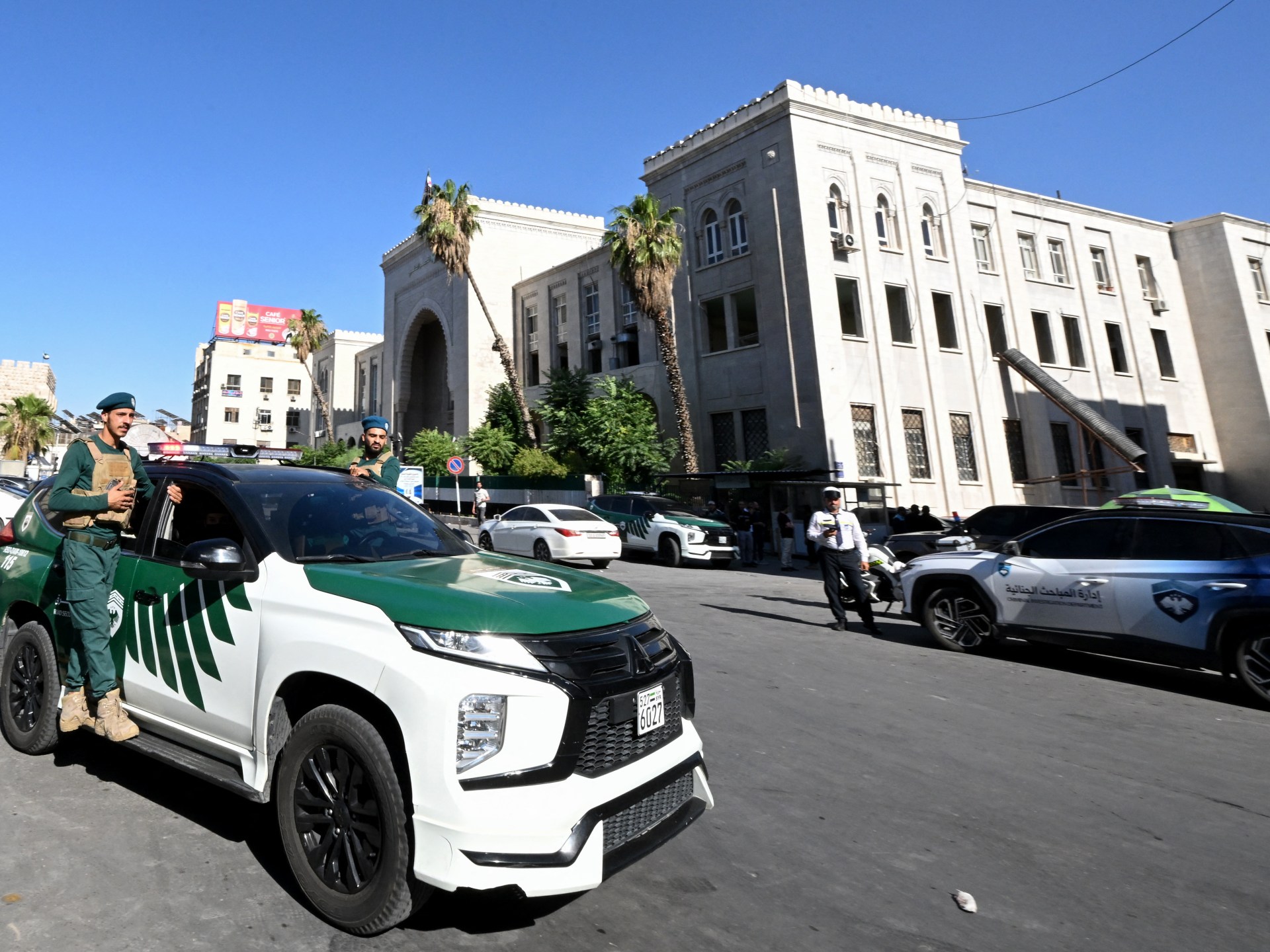

A bomb blast tore through a crowded cafe in central Damascus on Thursday, killing at least six people and wounding 22.
It is viewed by analysts as a major security breach in the heart of the Syrian capital, but one that was not entirely unexpected due to the number of opponents to Syria’s new government.
- list 1 of 3At least six killed in explosion inside central Damascus cafe
- list 2 of 3Syrians reject Trump’s call for Syria to combat Hezbollah in Lebanon
- list 3 of 3First Syrian parliament since al-Assad’s ousting begins legislative duties
end of list
What happened?
The explosion hit a popular cafe on Al-Nasr Street in the al-Hijaz area of Damascus, about 100 metres from the main entrance of the Palace of Justice.
Security sources told Al Jazeera that a person entered the cafe, placed an improvised explosive device (IED) under a table and left the building, possibly intending to reach the courthouse to carry out further attacks.
Immediately after the explosion, the Commander of Internal Security in Damascus, Osama Atika, and Interior Ministry officers arrived to investigate.
The café is popular with lawyers, courthouse employees and visitors, said Al Jazeera’s Obaida Hitto, reporting from the scene.
“The casualties are higher because it is such a busy area,” he said.
Officials have warned that many of the wounded being treated in Al-Mouwasa Hospital have severe injuries so the death toll could rise.
Who could be behind the bombing?
No group has claimed responsibility but Maher Marwan, the governor of Damascus, said “bad actors” were trying to destabilise the country.
“The coming hours will reveal everything and those who shed the blood of Syrians will pay, but Syria will be well as long as we are one hand and this will not shake the Syrian state,” the governor said on the courthouse steps.
Advertisement
Analysts point to elements opposed to Syria’s transition following the downfall of President Bashar al-Assad’s government in December 2024.
The Palace of Justice is currently holding high-profile trials of prominent figures in the previous government.
Among them are Atef Najib, the notorious former security chief accused of torturing schoolboys in Deraa in 2011 which sparked the nationwide uprising. Militia commander Wassim al-Assad and former Grand Mufti Ahmad Badreddin Hassoun have also recently stood trial at the Palace of Justice.
Political analyst Kamal Abdo, speaking to Al Jazeera from Idlib, said there has been anger among remnants of the former government about the trials.
Up to 10,000 individuals linked to the former government remain at large, including former military officers, Ba’ath Party functionaries, Shabiha (state-sponsored militia) remnants and intelligence personnel, says Abdo, who have “very long experience in carrying out such operations”.
Can the state contain the threat?
Thursday’s blast follows a string of recent security breaches, including the May 19 car bombing near the Armament Management centre in Bab Sharqi that killed a soldier and wounded 18.
A bombing on June 22 targeting the Mar Elias church in Dwelaa was claimed by the ISIL (ISIS) armed group.
“It will take some time for the Syrian state to attain stability,” the Damascus governor acknowledged.
He insisted that the Interior Ministry has made “a marked improvement” in the security situation since the downfall of the former government.
“Day after day, they will get those who have affected Syria’s security. The more Syria attains stability, the more there are those who want to damage it,” he said.
Analyst Abdo said the new administration has proven “highly effective even beyond expectations in imposing security”.
But he warned that Syria still faces a “very large security task” in countering similar attacks with other bad actors seeking to destabilise the country.
Related News
Venezuela and the Dominican Republic say they will work to restore ties
Saudi Arabia seeks international coalition against Houthis in Red Sea

Anti-terror police take over probe into death of UK politician Widdecombe