What is Iraq’s Jurf al-Sakhar and what is behind gov’t push to control it?
 18 November 2026
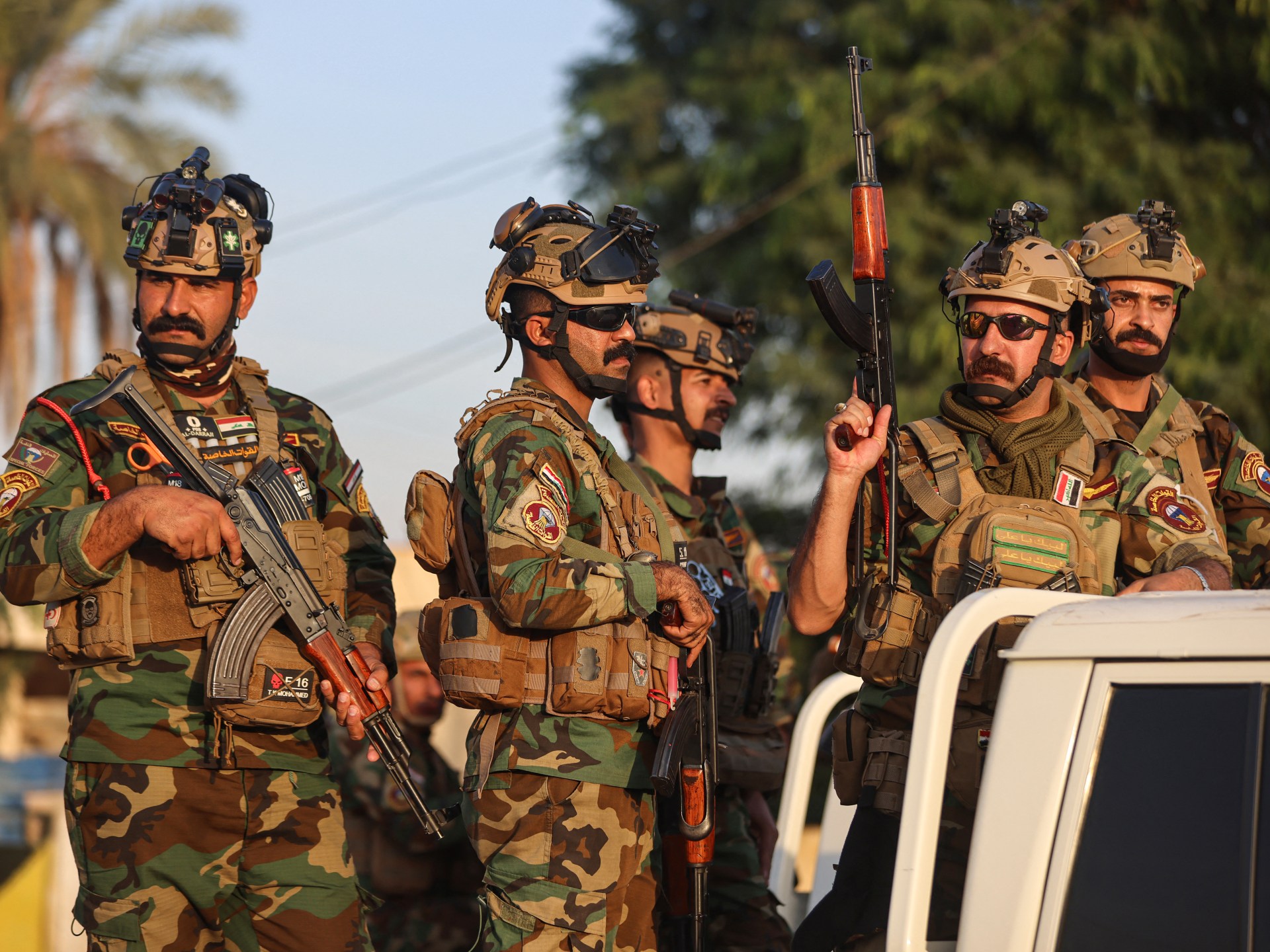

Jurf al-Sakhar, a stronghold of Iran-linked fighters in Iraq, has emerged as the focal point of a sweeping anticorruption campaign launched by Prime Minister Ali al-Zaidi’s government following accusations of oil smuggling.
Located some 60km (37 miles) southwest of Baghdad and spanning roughly 345 square kilometres (133 square miles), the area holds immense strategic significance along the Shia pilgrimage route between the Iraqi capital and the holy city of Karbala.
Recommended Stories
list of 3 items
- list 1 of 3US official says Hormuz insurance hits $64m: Is the strait really open?
- list 2 of 3Why has an NYT report on Iran’s dams ignited fierce pushback?
- list 3 of 3Piecemeal wars: A new kind of world war is already under way
end of list
It was once the site of former President Saddam Hussein’s military-industrial complexes, making its geography ideal for testing, building and concealing weapons.
Following the US-led invasion of Iraq in 2003 that toppled Hussein, it became a hotspot for armed confrontations before the ISIL (ISIS) armed group seized it in 2014. Later that year, the Iran-backed Popular Mobilisation Forces (PMF), an umbrella organisation of mostly Shia armed groups, recaptured the territory from ISIL.
Kataib Hezbollah, one of the largest groups within PMF, subsequently took full control, renaming the area Jurf al-Nasr and barring state institutions from entering. The militia sealed the town, citing security concerns, effectively preventing the return of approximately 140,000 displaced residents.
Oil scandal
Last week, a leaked intelligence report said millions of dollars’ worth of crude oil had been siphoned from two state pipelines passing through the closed area since 2021. According to the document prepared by the Iraqi Ministry of Interior, the perpetrators allegedly constructed makeshift underground refineries to process the stolen resources.
Advertisement
The information led al-Zaidi to form a high-level investigative committee that entered the restricted zone on November 13 with military backing to confirm the existence of the illicit facilities. Earlier this week, the committee said it had identified several locations linked to smuggling operations in the area, without naming those allegedly implicated. As part of the anticorruption crackdown, nine senior security and administrative officials in Babil province, including the provincial police chief and the director of the Oil Pipelines Company, have also been dismissed.
According to the state Iraqi News Agency, the government has “ordered the armed forces to enter” Jurf al-Sakhar, setting a deadline “for the armed faction to exit the area”. Reports say the deadline for the withdrawal is Friday.
Kataib Hezbollah has denied the oil-smuggling allegations and, in harshly worded statements, accused al-Zaidi of corruption and framed the crackdown as a political extortion campaign. In a major show of force, the militia also mobilised approximately 8,000 fighters from various provinces towards Jurf al-Sakhar ahead of the government committee’s arrival.
Iraqi writer and journalist Hamza Mustafa told Al Jazeera that the military posturing masks underlying vulnerabilities. “What the brigades are doing through field mobilisation is perhaps the last line of defence for them after their position appeared weak regarding the oil-smuggling operations,” said Mustafa, noting that the previous narrative of fighting “terrorism” no longer held.
Security expert Saif Raad said the militia’s fierce resistance is driven by economics amid allegations that the restricted zone is also used to run thousands of illegal fish farms. “The desperation over this area is not for security reasons but for financial reasons,” said Raad, a former military officer.
Military standoff
Since taking office in May, al-Zaidi has made the disarmament of all armed factions in the country, including Kataib Hezbollah, a priority amid pressure from the United States, which has long demanded the decommissioning of the Iran-backed fighters. An initial September 30, 2026, deadline to bring all weapons under state control has since been pushed to June 2027.
“The issue here comes in the context of removing all pretexts from the armed factions after it was revealed that they are smuggling oil,” said Mustafa.
Fadel Abu Ragheef, an Iraqi political analyst, told Al Jazeera that al-Zaidi is in a distinctive position to take such unprecedented steps against entrenched interests. “He did not come from a partisan or bloc background, so his decisions are characterised by boldness and daring,” argued Abu Ragheef.
Advertisement
The standoff has deeply divided Iraq’s ruling Coordination Framework, prompting leaders such as Nouri al-Maliki, Hadi al-Amiri, Qais al-Khazali and Ammar al-Hakim to frantically mediate behind the scenes. Abu Ragheef suggested these factions are highly sensitive to issues such as disarmament.
“They harden their position if they hear the word disarmament or containment, so the concepts have shifted from disarmament and containment to organisation and management,” said Abu Ragheef, noting that the change has provided a crucial negotiating window until the June 2027 deadline.
With Friday’s deadline looming, Iran has also stepped in to avert a direct military clash. Esmail Qaani, commander of the Quds Force of the Islamic Revolutionary Guard Corps, headed to Baghdad to mediate the crisis and push for a solution. Qaani and al-Zaidi reportedly held talks until dawn on Tuesday, reaching a tentative agreement that would see Kataib Hezbollah withdraw “soon”.
Still, Mustafa warned that the crisis is not fully resolved.
“Qaani has not been able to dismantle the scene so far like he used to,” he said, referring to Iran’s historical influence, noting that Tehran had come to realise the issue is larger than expected due to al-Zaidi’s insistence.
Raad echoed this, emphasising al-Zaidi’s determination to centralise state arms, comparing it to his recent successful pacification of armed groups in the Sinjar district.
“The prime minister will not be prevented by Qaani or anyone else from going and restoring the authority of the commander in chief of the armed forces over all Iraqi territories,” he said. “This crisis is a beginning to restore the sovereign decision of the state.”
Related News
Moscow summit tests Russia’s waning grip on former Soviet allies
Israel’s anti-Qatar campaign bleeds into elections
Paramilitary hitman linked to British right-wing group Turning Point UK