


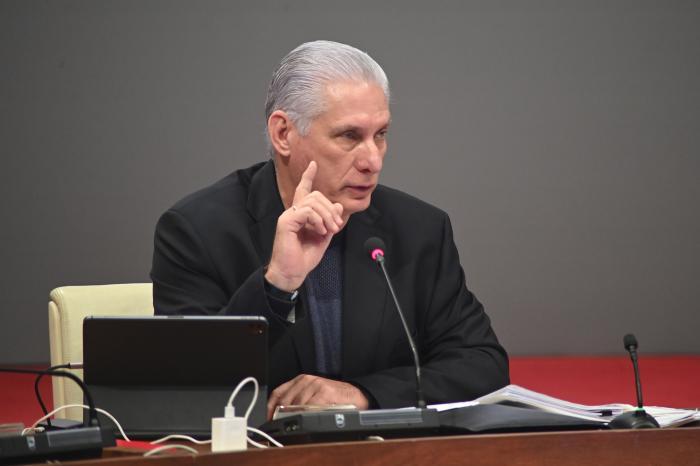
"We must focus immediately on implementing the most urgent and necessary transformations to the economic and social model," stated Miguel Díaz-Canel Bermúdez, First Secretary of the Central Committee of the Communist Party and President of the Republic, during his address to the Council of Ministers.
The president added that these transformations "are fundamentally related to business autonomy; municipal autonomy; the resizing of the state apparatus, the government, and institutions; national food production, with municipal balance sheets; the shift in the energy matrix, which includes not only renewable sources but also everything related to domestic crude oil; exports, linking them to the flexibilities approved for foreign direct investment; leveraging economic partnerships between the state and private sectors, especially at the municipal level; and promoting business with Cubans residing abroad."
All of this, the Head of State added, must contribute to the macroeconomic stabilization of the country, to increasing foreign exchange earnings, and to developing national production, with an emphasis on food.
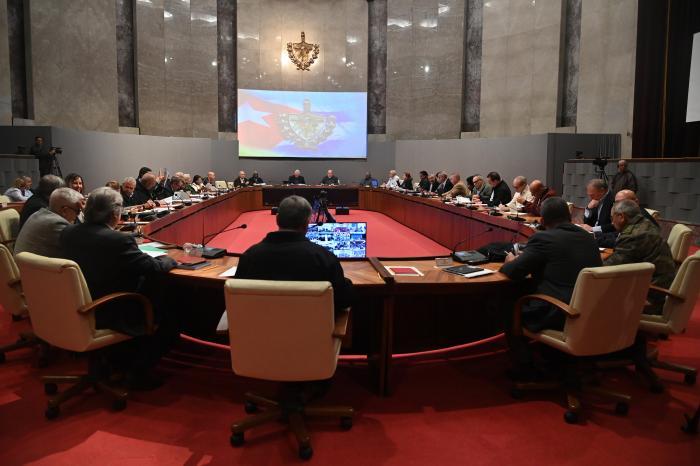
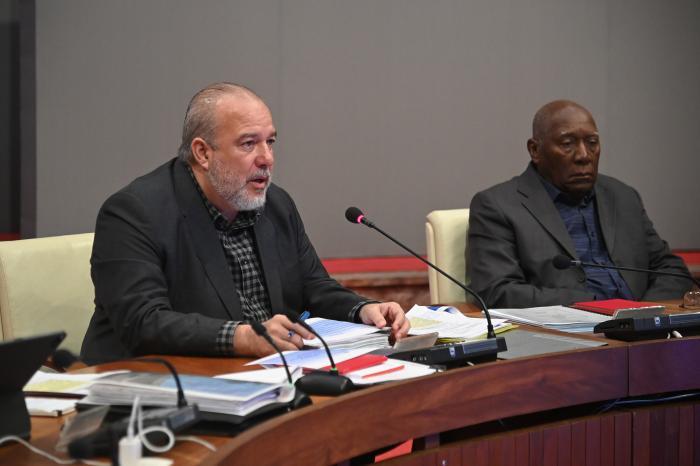
At the meeting of the highest governing body on the Island, which is led by Prime Minister Manuel Marrero Cruz every month from the Palace of the Revolution and via videoconference with all the provinces, the president stressed that "achieving this depends a lot on the performance of the business system, and also on the behavior of the municipalities."
Businesses, he said, must be prepared to use all the powers that have been granted. Many measures regarding business autonomy have been approved, but they are not yet being utilized; some are even unknown, he noted.
Díaz-Canel added that "municipalities must prepare themselves, as these processes we are opening will increasingly be implemented there."
"Municipalities must manage foreign direct investment; municipalities must manage their own closed-loop systems in foreign currency; municipalities must manage economic partnerships between the state and non-state sectors; municipalities must design and propose their local production systems; and they must manage investments from Cubans residing abroad," he explained.
We must prepare ourselves, he said, so that together we can contribute to national production, together we can boost food production, together we can contribute to macroeconomic stabilization, together we can contribute more foreign exchange earnings to the country, more exports, better use of productive capacities, the realization of the change in the energy matrix, and an adequate relationship between the state and non-state sectors.
The Cuban President called on the members of the Council of Ministers to work intensively, intelligently, with oversight, deeper analysis, high standards, and discipline, leveraging potential and questioning anything that isn't progressing.
GOVERNMENT'S ECONOMIC AND SOCIAL PROGRAM FOR 2026
In this session of the Council of Ministers, corresponding to the month of February, the member of the Political Bureau and Prime Minister, Manuel Marrero Cruz, presented information on the results of the updated Government Program, following the implementation of the agreements of the 11th Plenary Session of the Central Committee of the Party and the last session of the National Assembly of People's Power, as well as the extensive process of public consultation, and the recommendations of experts and academics.
As he explained, its ten general objectives were maintained, while some of its specific objectives were modified, and the actions to be carried out, as well as the indicators and targets that will measure them, were increased.
Marrero Cruz noted that the document's name was changed to "Government's Economic and Social Program for 2026" (previously it was the Government Program to Correct Distortions and Revitalize the Economy). It is expected to be made public this March and will be updated annually.
President Díaz-Canel stated that the document currently guiding economic activity is the Government Program, which was subject to public consultation and enriched by that process. He added that there are several elements for a more robust version, which must be disseminated immediately to both local and national government structures so that work can continue based on it.
CUBAN ECONOMY AT THE END OF JANUARY
The Minister of Economy and Planning, Joaquín Alonso Vázquez, presented a report on the performance of the Cuban economy at the end of January, a period in which exports of goods generally fell short of targets. Meanwhile, products such as honey, machine-made and hand-rolled tobacco, lobster, rum, and biopharmaceutical medicines did meet their planned commitments.
Regarding service exports, he reported that those related to the health sector were very close to 100% at the end of January, tourism was at 85%, and telecommunications exceeded its targets.
Alonso Vázquez commented on the progress of self-financing schemes in foreign currency, of which 86 have already been approved in sectors such as transportation, industry, oil, coal, fishing, tobacco, sugar, food production, and others. He pointed out that things are progressing well, although with challenges and risks that are being addressed, because the U.S. embargo is real and affects them.
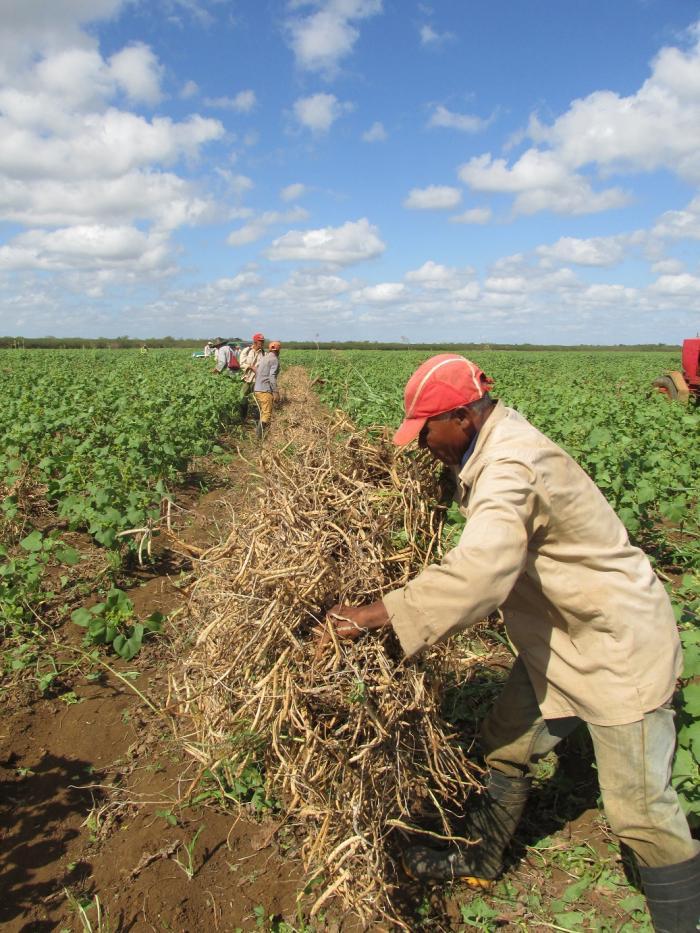
The Minister referred to agricultural production, which, despite all the effort being made amidst the complex situation Cuba is experiencing under the hostile U.S. policy, "still does not satisfy the population's demands, is insufficient, and does not cover the imported food deficits projected in the plan."
Prices at the end of January rose 0.67%, closing with a year-on-year index of 12.5%, driven by excess liquidity and a deficit in the supply of goods and services.
Regarding social assistance, he explained that 178,666 families, encompassing 303,298 beneficiaries, are being protected. 63,788 mothers with three or more children in vulnerable situations are receiving support. And social transformation initiatives are underway in 1,249 communities.
The Prime Minister reiterated that the country's priorities are focused on food production and transforming the energy matrix, for which leadership from the municipal level is crucial.
He emphasized that the Economic Plan approved for this year represents the minimum that can be achieved. Therefore, the provincial Party plenary sessions and meetings with provincial councils were held to establish new commitments and explore further possibilities.
Specifically regarding the decentralization of powers to municipalities, a process being accelerated, he reported that the authority to approve non-state economic actors could be transferred to municipalities in the first half of the year. He added that progress is also being made in drafting regulations for the approval of state-owned micro, small, and medium-sized enterprises (MSMEs) at the municipal level, and subsequently, for the creation of new businesses.
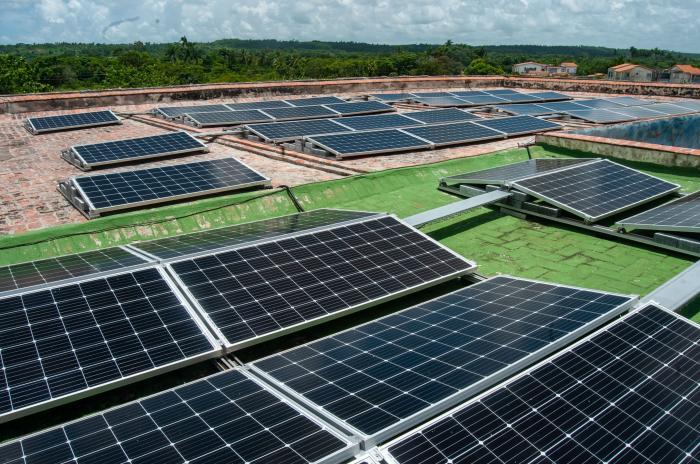
Regarding the energy matrix shift, the Minister of Energy and Mines, Vicente de la O Levy, noted that progress by municipalities in developing their complete transition strategies is still slow. While actions are being taken (such as the distribution of solar panels to doctors, teachers, and children who depend on electricity), municipalities must have a sustainability strategy using their own resources.
Nine municipalities already have a design in place, but we need to keep moving forward, he noted. We need to take stock of all the renewable energy sources being installed in the territories, whether by the state or private sector. The polyclinics that will have two-kilowatt photovoltaic solar systems, the maternity homes, the ATMs, the wind turbines that will be restored—all of this contributes to the municipality and is part of its strategy.
"We've been making progress, but concrete actions are still needed in each of the provinces and municipalities to make them more energy self-sufficient," he said.
STATE BUDGET
The Minister of Finance and Prices, Vladimir Regueiro Ale, informed the Council of Ministers that Law No. 76, "On the State Budget for the Year 2025," and the indicators set forth in the Government Program for this fiscal year were met, with strong performance in approved subsidies, tax collection, and a positive current account balance.
He stated that local budgets as a whole show a surplus, due to exceeding allocated revenues. All provinces improved their budget results, with Artemisa, Havana, Mayabeque, Matanzas, and Villa Clara achieving surpluses.
Regarding the execution of the State Budget for 2026 as of the end of January, the Minister explained that the deficit is lower than planned. The current account balance is positive and exceeds projections.
Regueiro Ale was also tasked with presenting to the highest governing body the proposal to allocate to local governments a percentage of the surplus in revenues transferred by the end of 2025, news that the Prime Minister described as positive and which must be monitored to ensure it benefits the municipalities, he said.
It was learned that since 2021, the State Budget laws have mandated the allocation to municipalities of a portion of the surplus in revenues transferred from the previous year, to be earmarked for territorial development, in accordance with the Local Budget Strengthening Program. In 2025, the most recent year, 111 municipalities benefited from this measure.
The resources allocated for surplus revenues are transferred to the territorial development bank accounts of each municipality, along with the collections from the Territorial Contribution, Regueiro Ale explained.
At the close of 2025, 141 municipalities exceeded their allocated revenue targets; in nine provinces, more than 80% of their municipalities exceeded their respective revenue plans.
Referring to the impacts of this decision, the Minister pointed out that "municipalities will have a greater amount of financial resources to fund projects and actions approved in the Territorial Development Strategies; and this will encourage local governments to manage their revenue plans."
He emphasized that in 2026, including the Territorial Contribution, with this extraordinary allocation of resources, municipalities will be able to dedicate more than 9 billion pesos to local development.
OTHER AGENDA ITEMS
The Council of Ministers also analyzed the situation of accounts receivable and payable that were due at the close of 2025, an issue under constant monitoring by the highest governing body. While some steps have been taken to address this situation, they are still insufficient.
Marrero Cruz pointed out the need to objectively evaluate the causes of payment defaults, eliminate existing distortions on this issue, and demand compliance with contracts.
As part of the agenda, the accountability reports of the President of the Institute of Information and Social Communication, Alfonso Noya Martínez, and the Governor of Matanzas, Marieta Poey Zamora, were presented.
In addition, the policy proposal and draft decree "For the Strategic Management of Territorial Development" were evaluated and approved. This decree would repeal the one approved in 2021 and aims to regulate the management of territorial and local development strategies to promote sustainable development, based on the utilization of resources, primarily endogenous, and local opportunities.
The results of the 2025 National Employment Survey were then presented. Juana Pantoja Hernández, head of the National Office of Statistics and Information, explained that the survey has been conducted for over 40 years and, among other data, demonstrated the high educational level of the employed population: 77.9% have a pre-university, intermediate technical, or higher education.
Finally, the Council of Ministers was briefed on the results of the Mariel Special Development and Business Program for the end of 2025. This important economic enclave of the nation, despite the tense situation in Cuba, reaffirms its strategic value for attracting national and foreign investment.
Related News

More than 32,000 pregnant women at risk due to fuel blockade against Cuba
"Cuba has the duty and responsibility to protect its territorial waters"

The example of a man for difficult paths