

News Americas, NEW YORK, NY, Fri. Jan. 23, 2026: The Caribbean is entering a new growth cycle, according to the latest regional forecasts from the World Bank. After years of uneven recovery, several economies are projected to expand through 2026 and 2027. Yet, a closer look at the data reveals a striking imbalance: while growth is spreading across the region, only one country is fundamentally reshaping the Caribbean’s economic trajectory: Guyana.
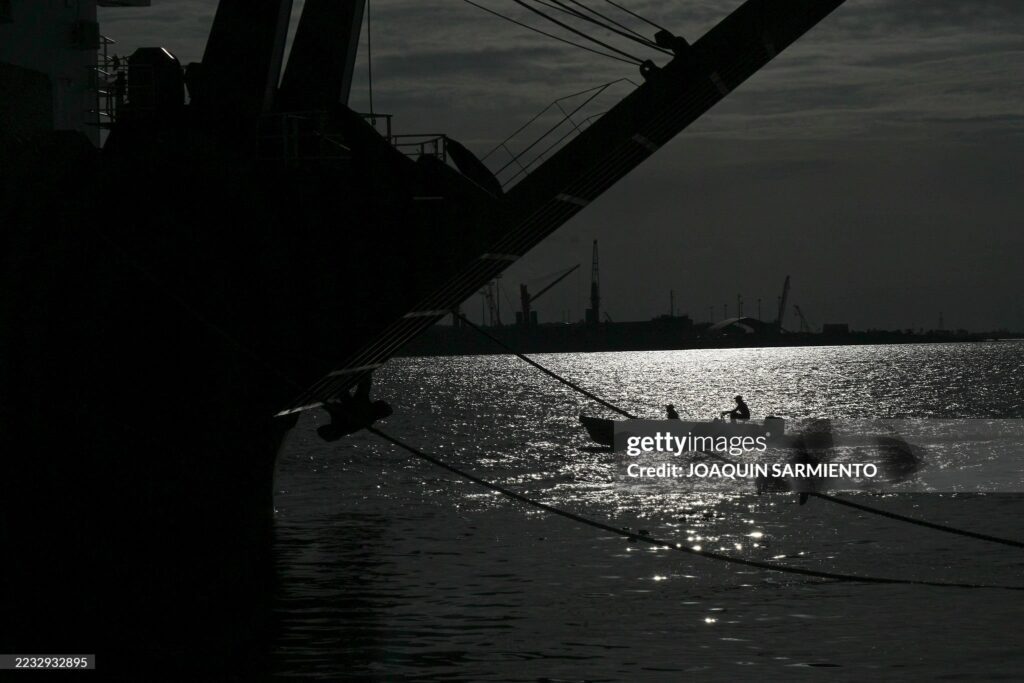
World Bank projections place Guyana far ahead of its regional peers, driven almost entirely by offshore oil production. The country’s economic expansion has pushed regional averages upward, masking far more modest growth elsewhere. In effect, Guyana is not just growing faster — it is redefining what “Caribbean growth” means in global economic conversations.
But headline growth tells only part of the story.
Despite record GDP expansion, Guyana continues to face deep structural challenges. Poverty levels remain above 50 percent, highlighting a critical disconnect between national output and household prosperity. This tension — extraordinary growth alongside persistent deprivation — is emerging as one of the most consequential development questions in the Caribbean today.

Elsewhere in the region, growth remains steady but constrained. Tourism-dependent economies are stabilizing, helped by improved airlift and demand from North America and Europe. Financial services hubs continue to show resilience, while commodity-linked states benefit modestly from higher global prices. Yet none of these economies approach the scale or speed of Guyana’s expansion.
This divergence matters.
For policymakers, it raises difficult questions about regional integration and economic planning. For investors, it reframes how opportunity should be assessed. The Caribbean is no longer moving as a single growth story. It is becoming a region of sharply differentiated trajectories, where sector exposure and policy execution matter more than geography alone.
Guyana’s experience underscores both the promise and the peril of rapid expansion. Oil revenues have the potential to fund transformative investments in infrastructure, healthcare, education, and diversification. At the same time, without disciplined fiscal management and long-term planning, resource-driven growth risks entrenching inequality rather than alleviating it.
That balance — between extraction and inclusion — will define Guyana’s next decade.
“The risk for the Caribbean is mistaking growth for transformation,” said Felicia J. Persaud, CEO of Invest Caribbean. “Guyana’s numbers are extraordinary, but the real test is whether that growth is converted into diversified economic activity, human capital development and opportunities that reach beyond a narrow slice of the economy.”
The World Bank’s projections suggest that while other Caribbean economies are improving, none are positioned to drive regional performance in the same way. This creates a new regional dynamic: Caribbean growth is increasingly concentrated, not collective.
For smaller states, the challenge is staying competitive in a landscape shaped by one dominant outlier. For development partners and lenders, it complicates regional policy approaches that assume uniform conditions. And for investors, it demands sharper analysis — distinguishing between cyclical recovery and structural change.
Growth, after all, is not inherently transformative. It must be managed, distributed, and reinvested.
Guyana’s rise has altered the Caribbean’s economic narrative. The next chapter will be written not by oil alone, but by choices — about governance, diversification, and inclusion. Whether the country becomes a long-term regional anchor or a cautionary tale will depend on how effectively today’s gains are translated into tomorrow’s resilience.
One thing is already clear: the Caribbean is growing again. But only one country is truly changing the game — and the consequences will be felt well beyond its borders.
| Rank | Country | 2026 Growth (%) | 2027 Growth (%) | World Bank–Cited Drivers |
|---|---|---|---|---|
| 1 | Guyana | 19.6 | 21.9 | Oil production, investment |
| 2 | Dominican Republic | 4.5 | 4.5 | Tourism, domestic demand |
| 3 | Suriname | 3.5 | 3.7 | Investment recovery |
| 4 | Jamaica | -2.3 | 3.7 | Post-contraction rebound |
| 5 | Grenada | 3.3 | 3.0 | Tourism, services |
| 6 | Dominica | 3.0 | 2.9 | Public investment, tourism |
| 7 | St. Vincent & the Grenadines | 2.9 | 2.7 | Tourism, reconstruction |
| 8 | Trinidad & Tobago | 0.3 | 2.5 | Energy sector recovery |
| 9 | Haiti | 2.0 | 2.5 | Fragile stabilization |
| 10 | St. Lucia | 2.0 | 2.1 | Tourism recovery |
| 11 | Barbados | 2.0 | 2.0 | Tourism-led stabilization |
| 12 | Belize | 2.4 | 2.2 | Agriculture, tourism |
| 13 | Bahamas | 2.1 | 1.8 | Tourism normalization |
Related News

Why This Caribbean Territory’s Crypto Bet Isn’t About Bitcoin
Oil-Rich CARICOM Nation Guyana Still Faces High Poverty Levels, Data Shows
The Caribbean’s Middle Class Is Being Built —And Broken — At The Same Time