World News

Ten years after its 2016 peace deal, Colombia faces a return to conflict 

24 November 2026
This content originally appeared on Al Jazeera.
An image that links to News Americas Now to promote your business
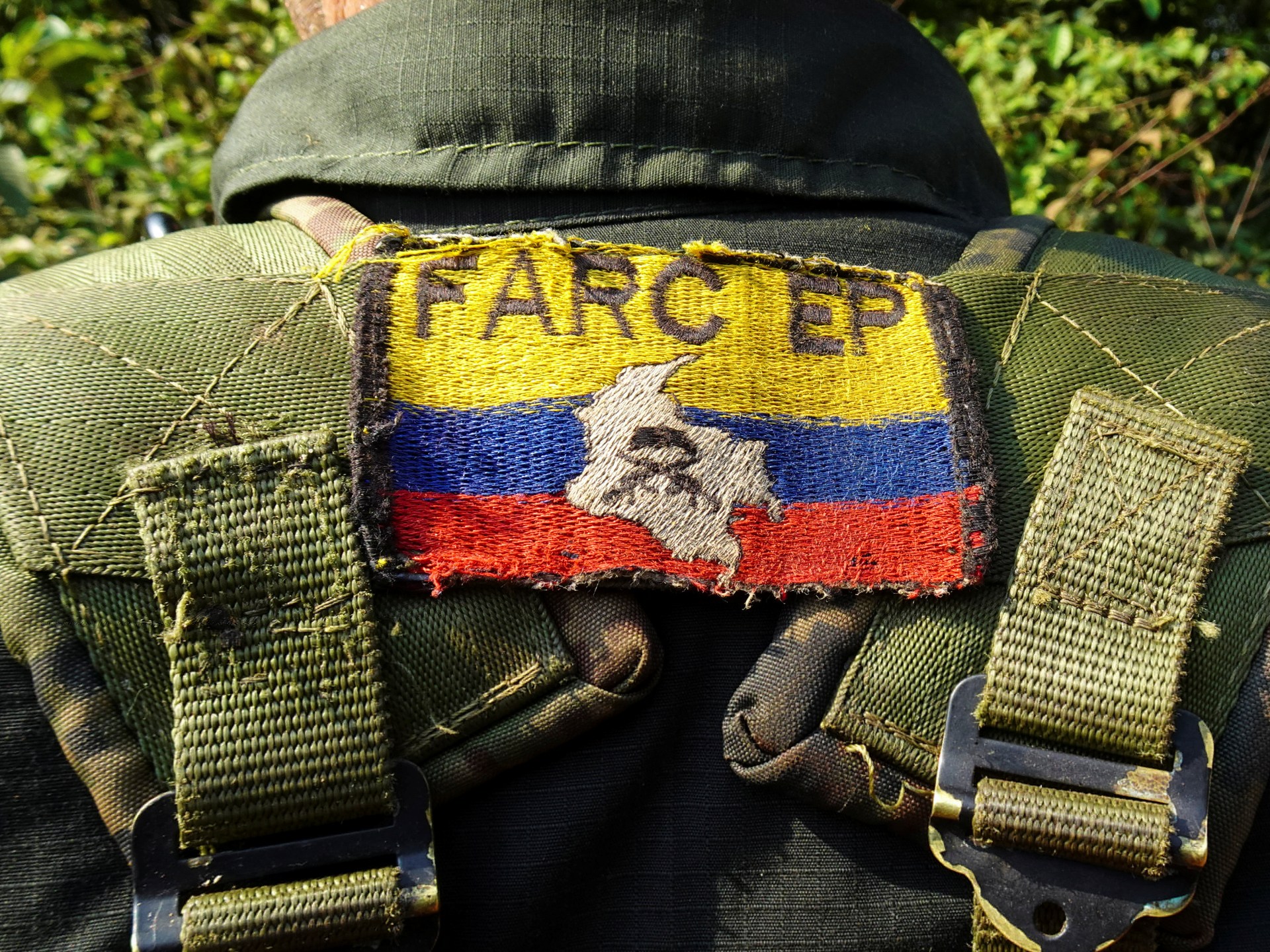
A guerrilla from the Central General Staff (EMC), a faction of the FARC that rejected the 2016 peace agreement and continued the armed struggle, carries the FARC flag on his uniform while standing guard at a checkpoint installed on a highway in Llanos del Yari, Colombia April 12, 2024. REUTERS/Luis Jaime Acosta
A rebel fighter with the Central General Staff, a group that splintered off from the FARC, wears the group's former flag on his uniform on April 12, 2024 [File: Luis Jaime Acosta/Reuters]A rebel fighter with the Central General Staff, a group that splintered off from the FARC, wears the group's former flag on his uniform on April 12, 2024 [File: Luis Jaime Acosta/Reuters]

Published On 24 Nov 202624 Nov 2026

Colombia's President Juan Manuel Santos and Marxist FARC rebel leader Rodrigo Londono, known as Timochenko, shake hands after signing a peace accord in Bogota, Colombia November 24, 2016. REUTERS/Jaime Saldarriaga
Colombia's former President Juan Manuel Santos and FARC rebel leader Rodrigo Londono embrace after signing a peace accord in Bogota, Colombia, on November 24, 2016 [Jaime Saldarriaga/Reuters]Colombia's former President Juan Manuel Santos and FARC rebel leader Rodrigo Londono embrace after signing a peace accord in Bogota, Colombia, on November 24, 2016 [Jaime Saldarriaga/Reuters]
Supporters rallying for the nation’s new peace agreement with FARC stand under a banner reading "for peace" during a march in Bogota, Colombia, November 15, 2016. REUTERS/John Vizcaino
People rally in support of the FARC peace deal in Bogota, Colombia, on November 15, 2016 [John Vizcaino/Reuters]People rally in support of the FARC peace deal in Bogota, Colombia, on November 15, 2016 [John Vizcaino/Reuters]

But a decade later, some 43 percent of the stipulations of the accord have seen little or no implementation, according to the Kroc Institute for International Peace Studies, which monitors the deal.

Some of the least-implemented parts of the accord relate to projects promoting gender equality and political representation for ethnic minorities.

Florez supports the “instruments” designed to build peace under the 2016 deal, but he argues that a lack of resources and political will scuttled their implementation.

“Every new government enters office and, instead of following the established roadmap, comes up with something new,” Florez said.

State support for the accord first collapsed when right-wing politician Ivan Duque succeeded Santos as president in 2018, campaigning on a pledge to dismantle the deal.

Though Duque was constitutionally barred from scrapping the accord, his administration neglected to pursue key tenets of the peace deal, like land restitution and transitional justice.

Duque’s successor, Gustavo Petro, was the first left-wing president in Colombia's history — and a former rebel fighter himself.

But while he promised to implement the 2016 deal in full, he too fell short of meeting its commitments.

His "Total Peace" strategy — which sought to expand peace negotiations to other groups — also fell flat. Critics say Petro’s failed negotiations simply gave criminal organisations more time to recruit, regather and resupply.

Colombia's President Abelardo de la Espriella speaks during a reparation event for victims of the armed conflict in Medellin, Antioquia, Colombia, on November 21, 2026. (Photo by Jaime SALDARRIAGA / AFP)
President Abelardo de la Espriella speaks during a reparation event for victims of the armed conflict in Medellin, Colombia, on November 21 [Jaime Saldarriaga/AFP]

De la Espriella, meanwhile, has been one of the deal's most vocal critics.

Ahead of its 10th anniversary, he described the accord as "insufficient". In a social media post on Monday, he also accused it of failing the FARC's victims and costing Colombia trillions in pesos.

"On the 10-year anniversary of the pile of trash that the Havana Agreement with the FARC narcoterrorists turned out to be, it’s worth reminding Colombians how much this false peace has cost us," de la Espriella wrote.

He pointed to costs for projects like the Special Jurisdiction for Peace (JEP), a transitional justice court established under the peace deal. De la Espriella has suggested he would like to see it shuttered.

The president has also pledged to scrap the Office of the High Commissioner for Peace, which advises the president on peace matters, declaring “the complete dismantling of the perverse system of impunity that currently prevails”.

Having dismissed peace talks as ineffective, de la Espriella has instead ramped up the government's military offensives against armed groups.

De la Calle, however, fears that turning away from the 2016 peace deal will backfire.

“I am very concerned about the message coming from the government," said the former negotiator. “I believe that failing to implement the agreement is a monumental mistake for Colombia."

Candles and portraits stand in front of coffins containing remains of 14 people who were killed during armed conflict by paramilitary fighters and rebel fighters, during a ceremony in Medellin, Colombia. November 17, 2016. REUTERS/Fredy Builes
A memorial in Medellin, Colombia, honours people who were killed during the country's armed conflict, on November 17, 2016 [File: Fredy Builes/Reuters]A memorial in Medellin, Colombia, honours people who were killed during the country's armed conflict, on November 17, 2016 [File: Fredy Builes/Reuters]