

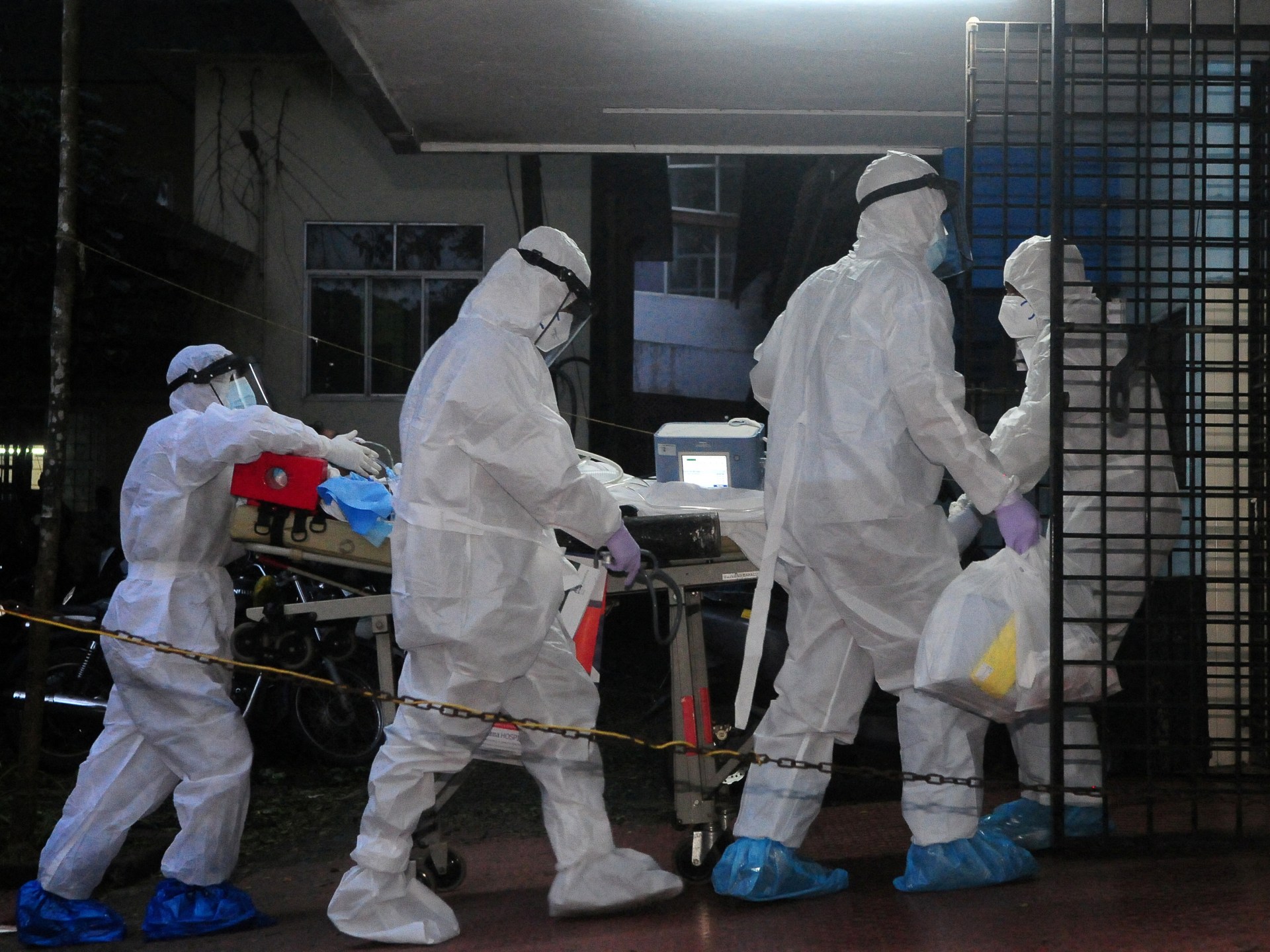

Seeking to dampen alarm in the region, Indian officials have declared that an outbreak of the deadly Nipah virus has been contained.
The Ministry of Health and Family Welfare said late on Tuesday that it has ensured “timely containment” as it confirmed two cases in West Bengal state. Several Asian countries have introduced screening procedures for travellers arriving from India.
- list 1 of 2India shuts Kashmir medical college – after Muslims earned more admissions
- list 2 of 2What is the Nipah virus and is it spreading in southern India?
end of list
The ministry said 196 contacts linked to the confirmed cases had been “identified, traced, monitored, and tested”, with all tests for the virus negative. It said the statement was intended to clarify “speculative and incorrect figures” in the media.
“The situation is under constant monitoring, and all necessary public health measures are in place,” it said, adding that “enhanced surveillance, laboratory testing, and field investigations” had been undertaken.
The zoonotic Nipah virus, first identified during a 1990s outbreak in Malaysia, spreads through fruit bats, pigs and human-to-human contact.
There is no vaccine to treat the virus, which can cause raging fevers, convulsions and vomiting. The only treatment is supportive care to control complications and keep patients comfortable.
The virus has an estimated death rate of between 40-75 percent, according to the World Health Organization, making it far more deadly than the coronavirus.
As India sought to assuage regional concerns, a number of Asian countries announced measures at airports and land crossings.
China said it was strengthening disease prevention measures in border areas. State media reported that health authorities had begun risk assessments and special training for medical staff.
Advertisement
Indonesia and Thailand increased screening at major airports, with health declarations, temperature checks and visual monitoring for arriving passengers.
Myanmar’s Ministry of Health advised against nonessential travel to West Bengal and said fever surveillance introduced during the coronavirus pandemic at airports has been intensified.
Vietnam’s Ministry of Health on Tuesday directed local authorities to increase monitoring at border crossings, health facilities and communities, according to state media.
Similarly, Malaysia’s Ministry of Health said it was introducing health screening at international ports of entry.
The first Nipah infection to affect humans was recorded in 1998, when pig farmers and butchers from Malaysia and Singapore contracted the virus from infected pigs, resulting in more than 100 deaths.
Since then, there have been outbreaks in Bangladesh, the Philippines and India. The Indian state of Kerala has reported Nipah cases almost every year since 2018.
Related News

Guinea-Bissau sets election date following last year’s coup
Syrian army takes control of camp holding thousands linked to ISIL
Syrians greet extended army-SDF ceasefire with guarded optimism