
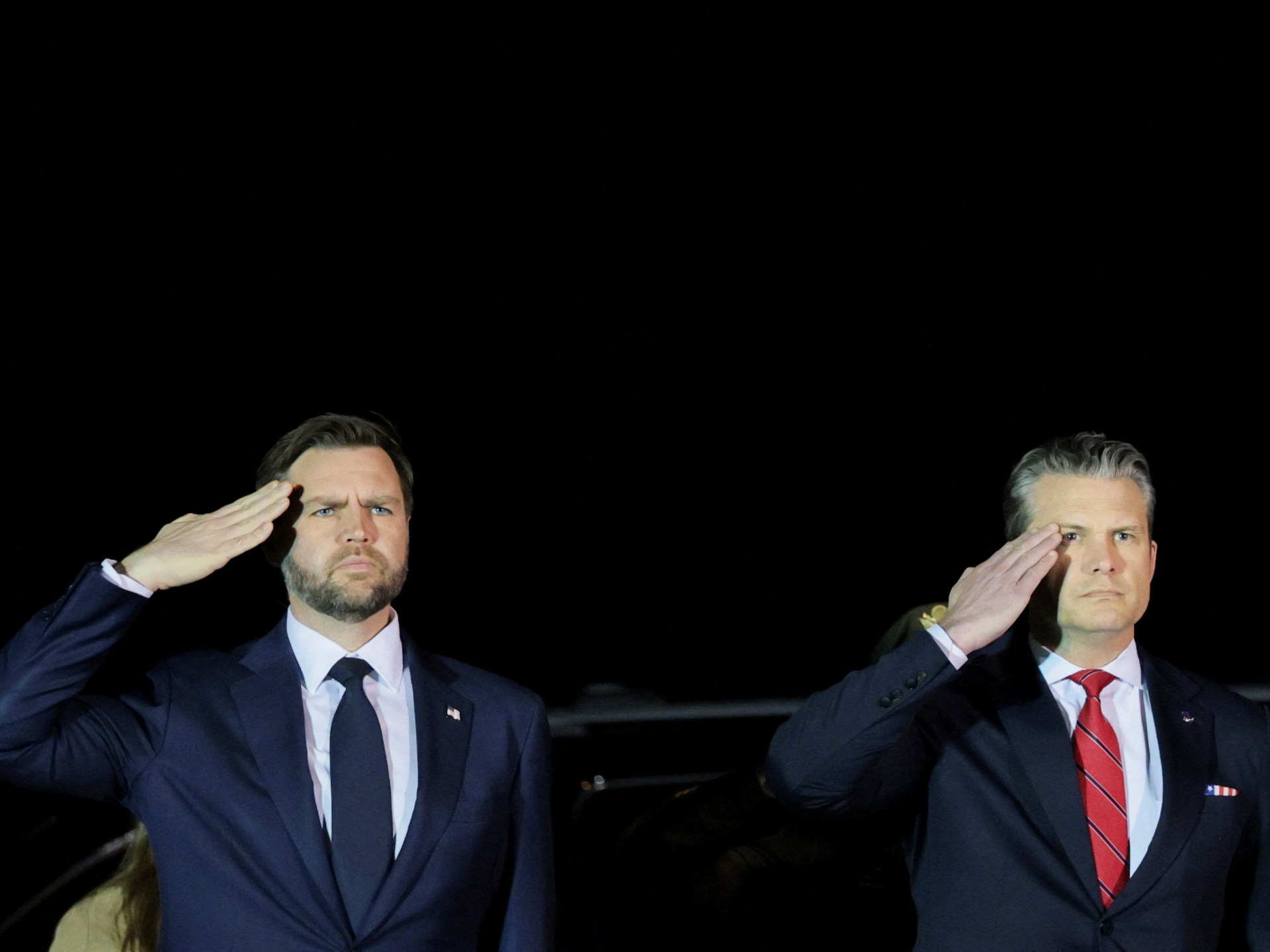

Pentagon chief Pete Hegseth has declared that the United States is “winning” in the fight against Iran, but he declined to provide a timeline as to when the war would end, stressing that decision lies with President Donald Trump.
Hegseth told reporters on Tuesday that the US is focused on three main objectives: to neutralise Tehran’s missile capabilities, destroy its navy and “permanently deny Iran nuclear weapons forever”.
- list 1 of 3Could Trump ‘take over’ the Strait of Hormuz as oil prices rise?
- list 2 of 3How will soaring oil prices caused by Iran war impact food cost?
- list 3 of 3What is the Hezbollah-linked financial institution Al-Qard Al-Hassan?
end of list
“We will not relent until the enemy is totally and decisively defeated,” Hegseth said.
“We do so on our timeline and at our choosing. For example, today will be yet again, our most intense day of strikes inside Iran – the most fighters, the most bombers, the most strikes.”
Despite Washington’s repeated assertions that Iran is being defeated, Iranian leaders have projected defiance, promising to continue to fight back.
“Those mightier than you have not been able to eliminate our nation. Those who have tried have become eradicated themselves,” top official Ali Larijani said in a social media post on Tuesday.
Iran has consistently denied seeking a nuclear weapon and says its programme is peaceful. Following US strikes on several key Iranian nuclear facilities in June 2025, Trump claimed that the US had “obliterated” the Iranian nuclear programme.
Iran has responded to the US-Israeli strikes, which have killed the country’s Supreme Leader Ali Khamenei and more than 1,250 other people, with missile and drone attacks against Israel and across the entire region.
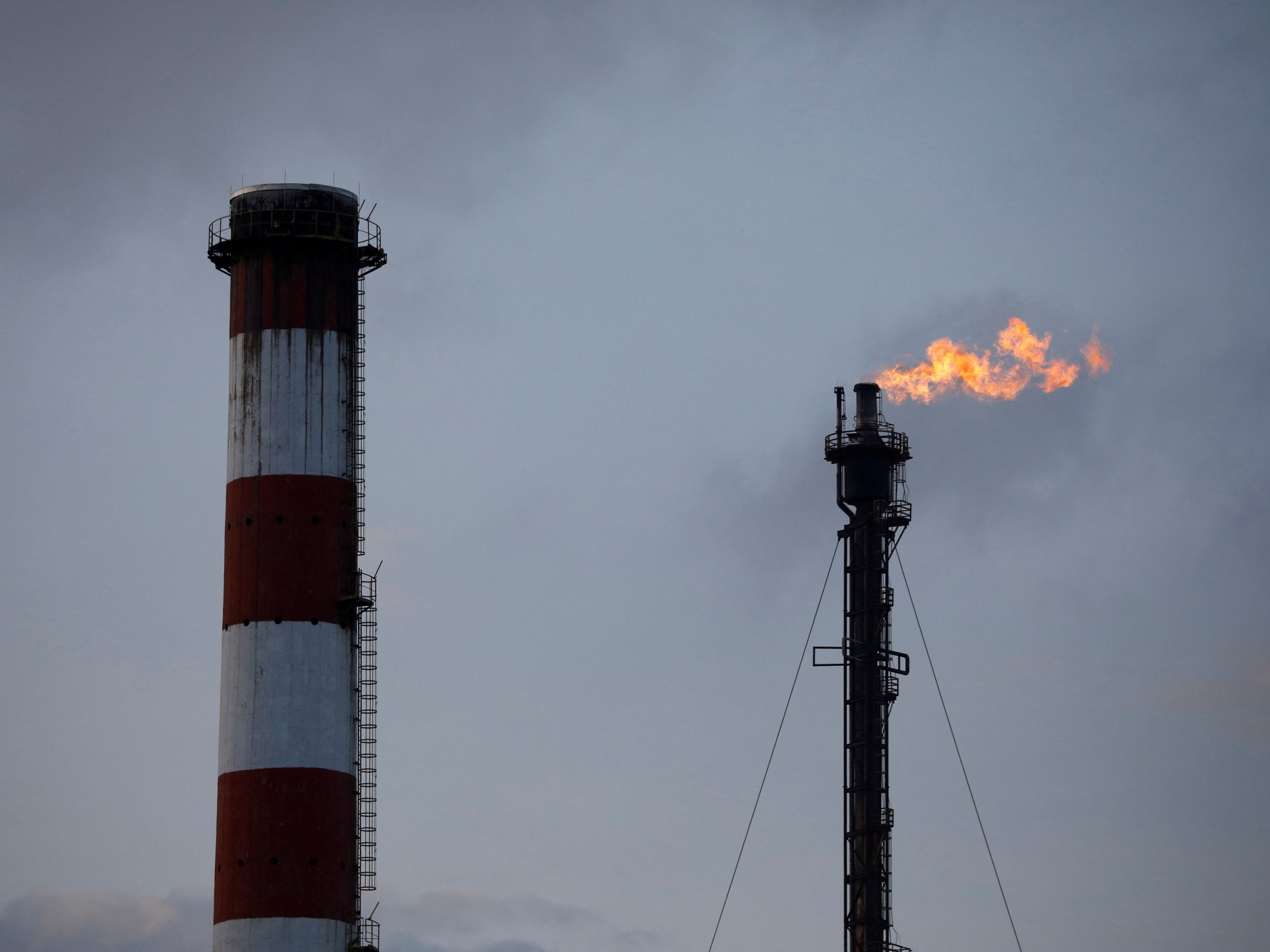
The Iranian military has also attacked oil facilities in Gulf countries and largely succeeded in closing the Strait of Hormuz, a major shipping lane for the energy trade, sending fuel prices soaring.
Advertisement
Late on Monday, Trump threatened Iran with “death, fire, and fury” if it does not allow oil shipments to pass through the strait.
Larijani, who serves as the secretary of the Supreme National Security Council of Iran, hit back at the US president, saying that the Strait of Hormuz “will either be a Strait of peace and prosperity for all or will be a Strait of defeat and suffering for warmongers”.
Top US General Dan Caine said that US forces are continuing to “hunt and strike mine-laying vessels” in the Gulf.
Trump suggested last week that the US Navy may accompany oil vessels through the strait to ensure their safety.
But Caine suggested on Tuesday that the decision to use the US military to reopen the waterway has not been taken.
“If tasked to escort, we’ll look at the range of options to set the military conditions to be able to do that,” he said.
Last week, Israel struck oil depots in Tehran, sparking fires and massive plumes of smoke across the city. The move has been criticised by some staunch supporters of the war.
Hegseth acknowledged that Israel has its own goals for the conflict.
He said the attack on Iranian energy infrastructure was not “necessarily” a US objective.
“Israel has been a really strong partner in this effort. Where they have different objectives, they pursued them. Ultimately, we’ve stayed focused on ours,” the Pentagon chief said.
Although Hegseth spelled out specific aims for the war, Trump has been shifting the goals – ranging from “freedom” for Iranians to installing an Iranian leader from within the governing system who is willing to answer US and Israeli demands.
Asked how long the war would last, Hegseth said: “The president has set a very specific mission to accomplish, and our job is to unrelentingly deliver that. Now, he gets to control the throttle. He’s the one deciding.”
Related News
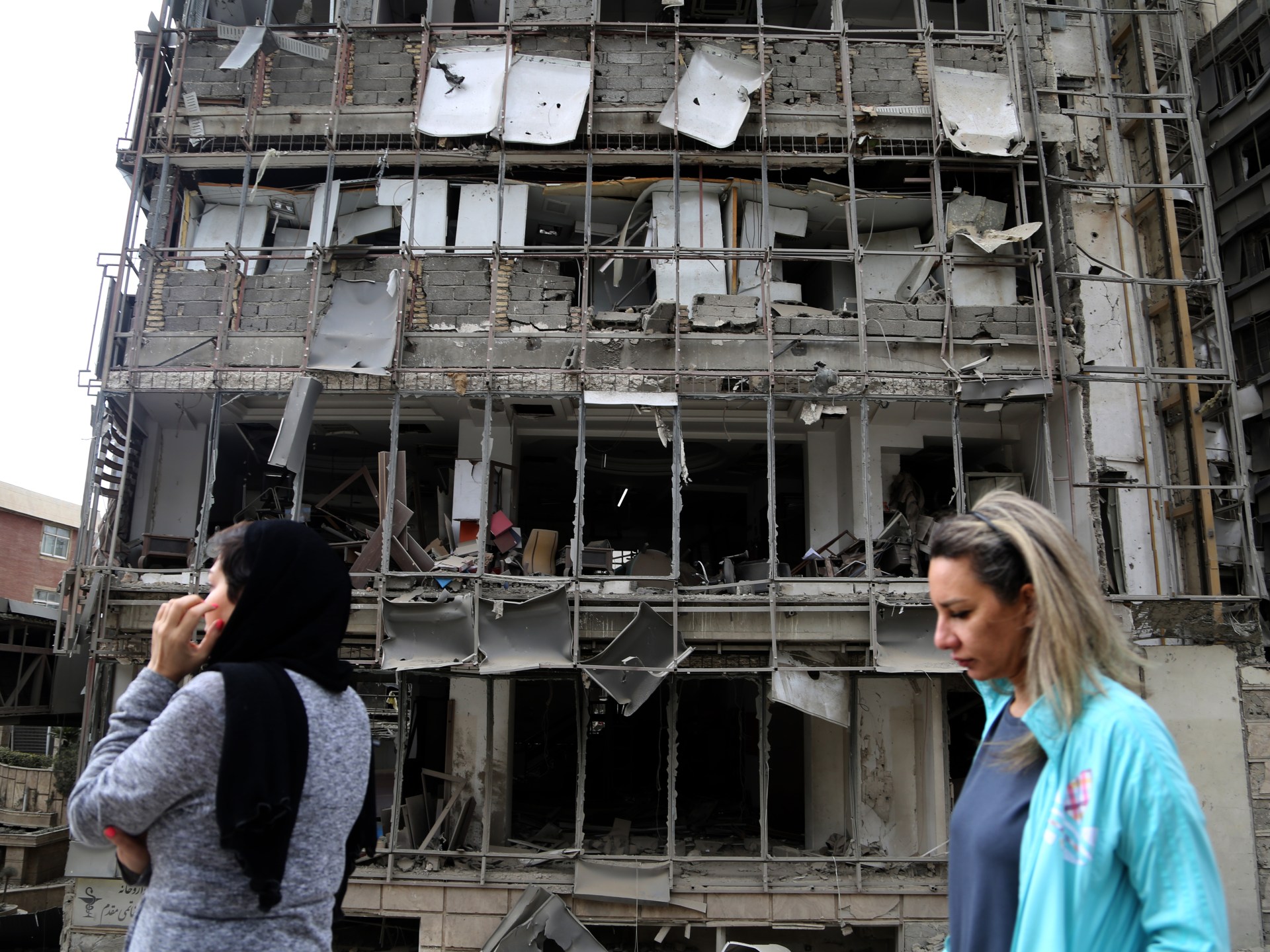
The aftermath of ongoing Israeli and US strikes on Iran’s capital, Tehran

US-Iran talks conclude with claims of progress but few details
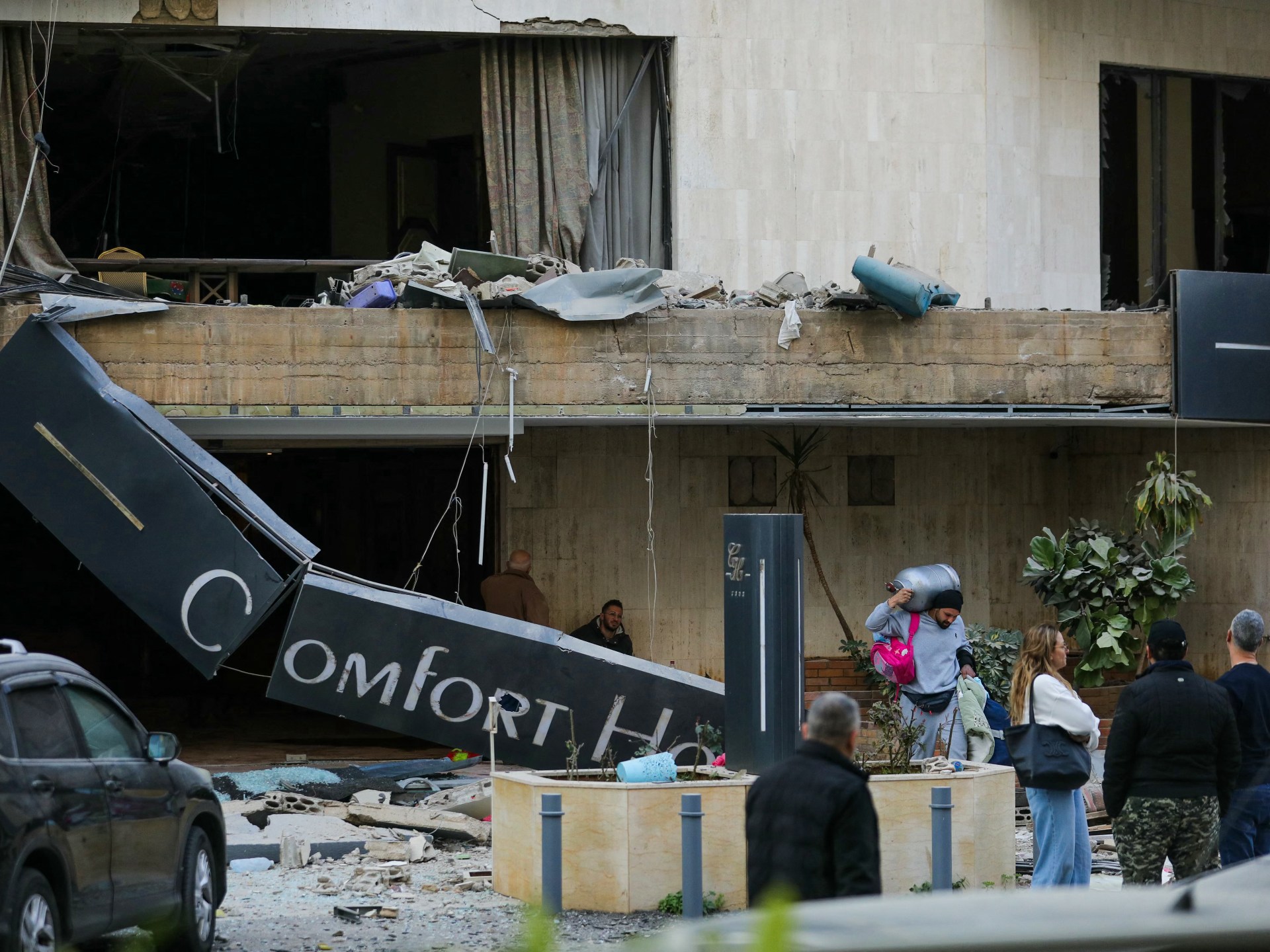
Israeli attack on hotel in Lebanon’s Beirut kills four