
Israel’s top court allows aid groups facing Gaza ban to continue working
 27 February 2026
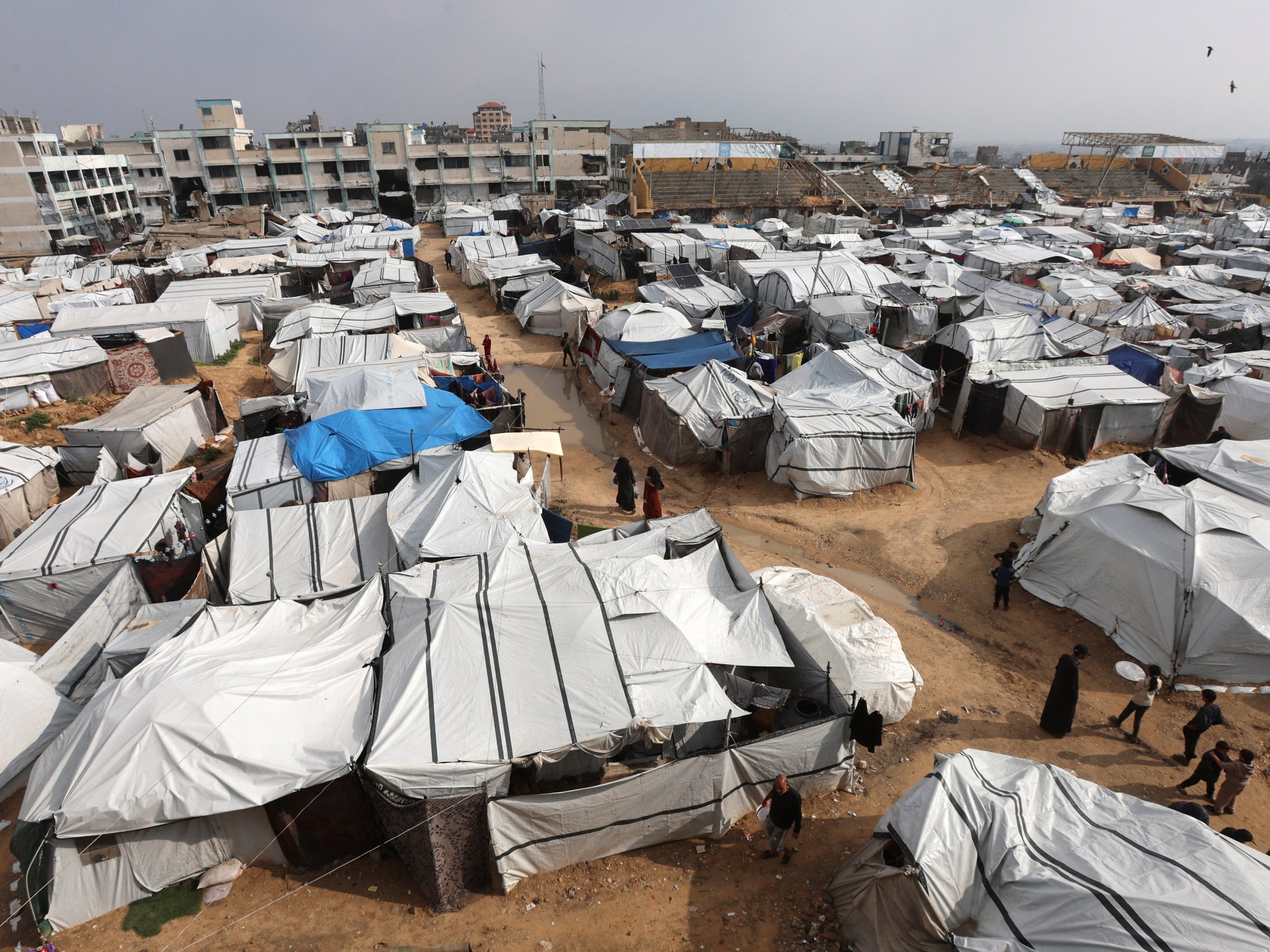

Israel’s Supreme Court has ruled that dozens of international aid agencies can continue to operate in the Gaza Strip and other Palestinian territories, freezing an earlier government decision that barred aid groups that failed to comply with new rules.
In a ruling on Friday, Israel’s top court issued a temporary injunction to allow the NGOs to continue most of their activities while it considers a petition from 17 aid agencies against the government ban.
- list 1 of 4International doctors forced to leave Gaza over Israeli demands
- list 2 of 4Journalists demand Israel end Gaza entry ban
- list 3 of 4In Gaza, when money is scarce, every choice counts: Bank, cash, or credit?
- list 4 of 4Israeli attacks on police sites kill six in southern, central Gaza
end of list
Israel had announced it will ban 37 aid groups from war-torn Gaza, the occupied West Bank, and occupied East Jerusalem on March 1, a move that experts warned could have potentially devastating consequences for Palestinians.
Aid agencies – including Doctors Without Borders, known by its French initials MSF, Oxfam, the Norwegian Refugee Council and CARE – were notified by Israeli authorities in December that their Israeli work registrations had expired and that they had 60 days to renew them and provide lists containing personal details on their Palestinian staff.
The organisations say compliance with the Israeli orders would expose their Palestinian staff to potential retaliation, undermine the principle of humanitarian neutrality and violate European data protection law.
In a statement after Friday’s ruling, Shaina Low, communication adviser for the Norwegian Refugee Council, said the decision was welcome, but pointed to the difficulties that aid agencies continue to face in Gaza.
“The injunction pauses immediate closure. It does not restore visas, reopen access or resolve the wider restrictions that continue to affect aid delivery.
Advertisement
“Despite a ceasefire agreement, conditions in Gaza remain catastrophic, and humanitarian needs in the West Bank continue to grow,” said Low.
Athena Rayburn, executive director for the Association of International Development Agencies, said they were “still waiting to see how the injunction will be interpreted by the state and whether or not this will mean an increase in our ability to operate,” adding that the situation inside Gaza remained “catastrophic”.
In Gaza, at least six Palestinians were killed in Israeli drone attacks targeting two police posts in the Bureij refugee camp in the central Strip and the al-Mawasi area in Khan Younis in the south on Friday.
Medical sources at Nasser Medical Complex in Khan Younis reported the arrival of four bodies and several wounded individuals following an Israeli military strike on a police checkpoint at the al-Maslakh intersection in al-Mawasi.
The sources said that the strike occurred in an area outside the Israeli military’s control, and described the condition of some of the wounded as critical.
In the central Gaza Strip, two Palestinians were killed, and others were injured, in a similar Israeli drone strike that targeted a police post at the entrance to the Bureij refugee camp.
The attacks overnight into Friday were condemned by Hamas as undermining mediator efforts during a “ceasefire” phase that Israel has violated almost daily since October 10.
Reporting from Gaza City, Al Jazeera’s Tareq Abu Azzoum said it was a “bloody night. Israeli forces carried out a series of deadly air strikes, this time primarily focusing on police checkpoints that have been deployed too close to areas where armed militias are operating in the eastern communities of the Gaza Strip, in particular in … Khan Younis and Bureij refugee camp.
“Six police members have been killed as a result … But also here, the timing and location are critically reshaping the whole equation between both sides. Israel has made clear that Israel will not be responsible for reorganising the remnants of life in Gaza. That’s why we can see that any kind of restoration of previous services, including police … will be thwarted,” he added.
Related News

White House says Iran would be ‘wise’ to take deal amid military buildup
US deploys 100 soldiers to Nigeria as attacks by armed groups surge

Humanoid robots perform advanced martial arts at Chinese New Year gala