

Threats, fines, and vetoes defined the relationship between Viktor Orban, Hungary’s now-outgoing prime minister, and the European Union for years. That seems to be about to change.
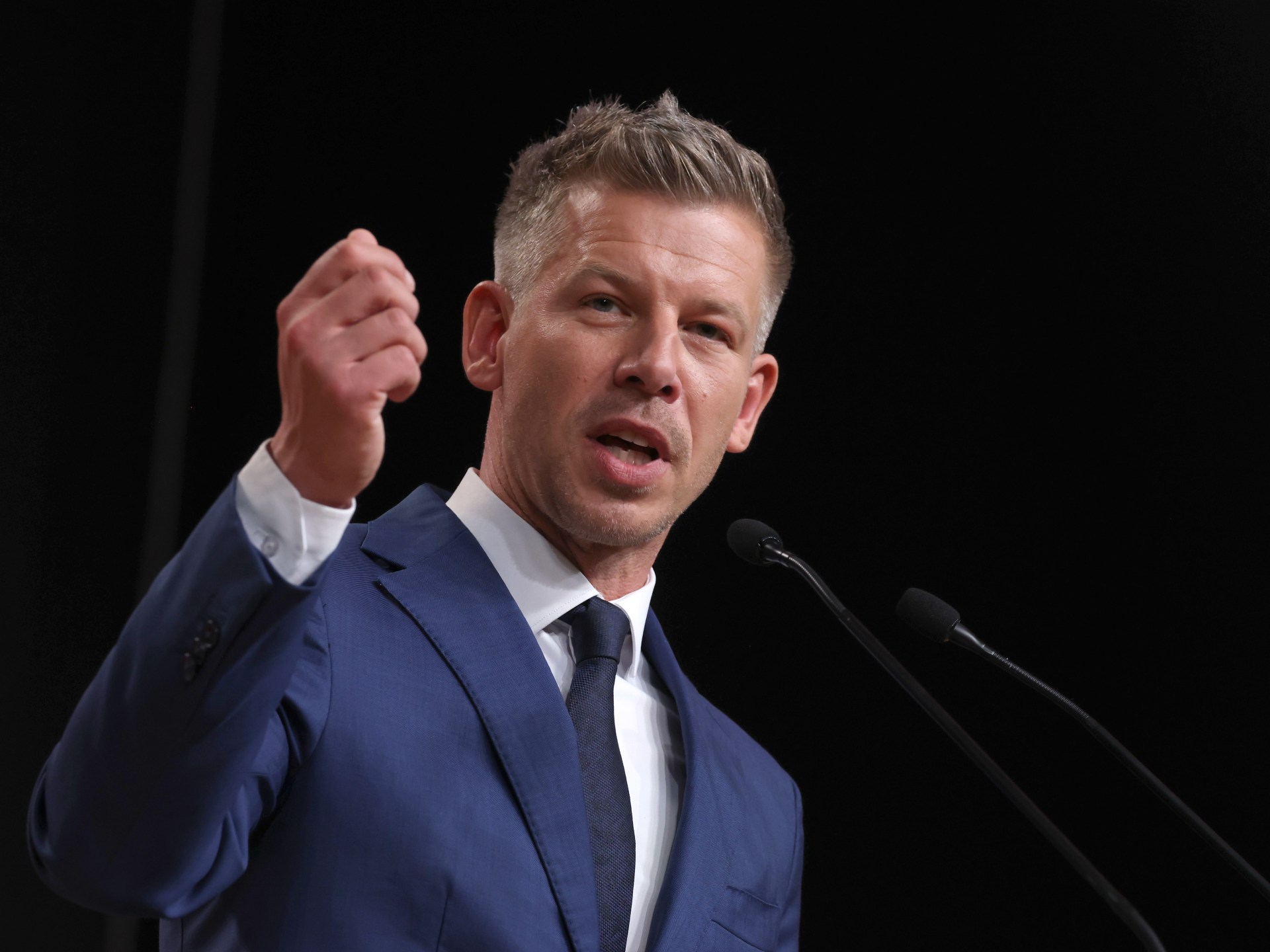
On Sunday, Peter Magyar of the Tisza party won parliamentary elections by a landslide – and a mandate to access money from the European bloc and get the country’s economy back on track.
- list 1 of 3Ukraine sends advisers to Gulf as it counterattacks Russian forces in south
- list 2 of 3‘Orban constantly vetoes’: Europe braces for Hungary election
- list 3 of 3Vance visits Hungary to shore up Orban’s support before Sunday vote
end of list
Orban, who ruled the country for more than 16 years, was in a constant battle of attrition with the EU, from staunchly supporting Russia and blocking sanctions against it, to opposing funds for Ukraine. But that approach translated into sanctions, no access to European funds, and diplomatic isolation.
Now, European countries will have a partner to negotiate with, experts say.
“He [Magyar] does not want Hungary to be a pariah state; he sees Hungary’s pace as inside the EU and not outside of it; he wants Hungary to be part of the important decision-making process in Brussels,” said Orsolya Raczova, an analyst at Eurasia Group.
Voters cited the economy and the cost of living as among the main concerns that need to be addressed, and “this is what Magyar used in his campaign, promising to kick-start the economy”, ” said Razcova, noting that in this process, “unlocking EU funds is a priority”.
Hungary has faced three years of almost zero economic growth. It had the highest inflation in the EU in 2023, and has had among the highest in the years since.
Ukraine and Russia
The EU allocated more than 16 billion euros ($18.7bn) to Hungary following the COVID-19 pandemic. But the country has not yet satisfied the criteria required to unlock that money.
Advertisement
To do so, the incoming prime minister will have to approve laws before an August deadline to address a number of EU concerns, including the independence of the judiciary, the rule of law, and corruption.
The urgency to get this money could be a factor in pushing Magyar to adopt a collaborative approach when it comes to Ukraine. The new leader, a conservative and former Orban ally who broke with the prime minister in 2024, opposes Kyiv’s accelerated accession to the bloc, and has said he would continue to oppose military support for Ukraine.
But he will likely play a less confrontational role on the issue compared to his predecessor, and is expected to remove a veto against a 90-billion-euro ($105bn) loan to Ukraine, which Orban had placed in February over accusations that Kyiv was delaying repairs on a pipeline that brings Russian fuel to Hungary and Slovakia.
“There will be a tradeoff, money for Ukraine for money for Hungary,” said Pawel Zerka, senior policy fellow at the European Council on Foreign Relations (ECFR).
Magyar has vowed to bring Budapest back into the Western fold over Russia. But he has also insisted that Russian imports should remain an option. “This does not mean that by ending dependence on someone you no longer continue to buy from them,” he said in an interview.
Hungary is heavily reliant on Russian fuel and does not have many alternatives to it, especially now that there is a global shortage of fuel and gas due to the war in Iran, said Zerka. “He will keep buying Russian fuel to secure the country’s energy security while distancing himself [from Moscow] as a political ally,” Zerka said, noting that such an approach would be in line with what most of its voting base wants.
Still, Zerka said, the political exit of “the blocker in chief of EU policies”, referring to Orban, won’t mean European unanimity on Ukraine and Russia. Other EU members that had qualms over the accession of Ukraine or continued sanctions against Russia were comfortable hiding behind Orban’s loud opposition, allowing them to not expose themselves. “They will now be forced to come out of the shadows,” Zerka said.
Migrants
On migration, Tisza is expected to tone down what has been Orban’s vitriolic rhetoric on refugees’ rights and may be willing to compromise on certain issues to remove a 200-million-euro ($234m) fine that Hungary is paying over Hungary’s refusal to uphold the rights of asylum seekers, in breach of EU law.
But Tisza has signalled it will retain a hard line on border protection, including maintaining a controversial border fence and opposing relocation quotas.
Advertisement
“We won’t see Orban’s high-profile anti-immigration campaign and civilisation rhetoric, but also we will not see him rushing to the border to get rid of the fence that Orban built as his first act,” said Gabor Scheiring, a former member of Hungary’s National Assembly and an assistant professor of Comparative Politics at Georgetown University Qatar.
“He was supported by all kinds of voters and politicians, so while he is more right-wing, he will have to consider different needs. He will tone down on symbolic issues, on culture and migration, but he is unlikely to move towards major liberal measures,” Scheiring said.
“Many voted against Orban but not in favour of Magyar,” Zerka said, “so this result should not be seen as a complete show of confidence towards him nor a vote for a more liberal candidate”.
Related News
Pope Leo heads to Algeria as he starts four-country Africa tour
Israeli attacks on Lebanon aimed to undermine ceasefire, critics say
Polls close in Benin with finance minister expected to win election