
Iran says won’t allow US warships to get close as Trump ponders new attacks
 24 October 2026
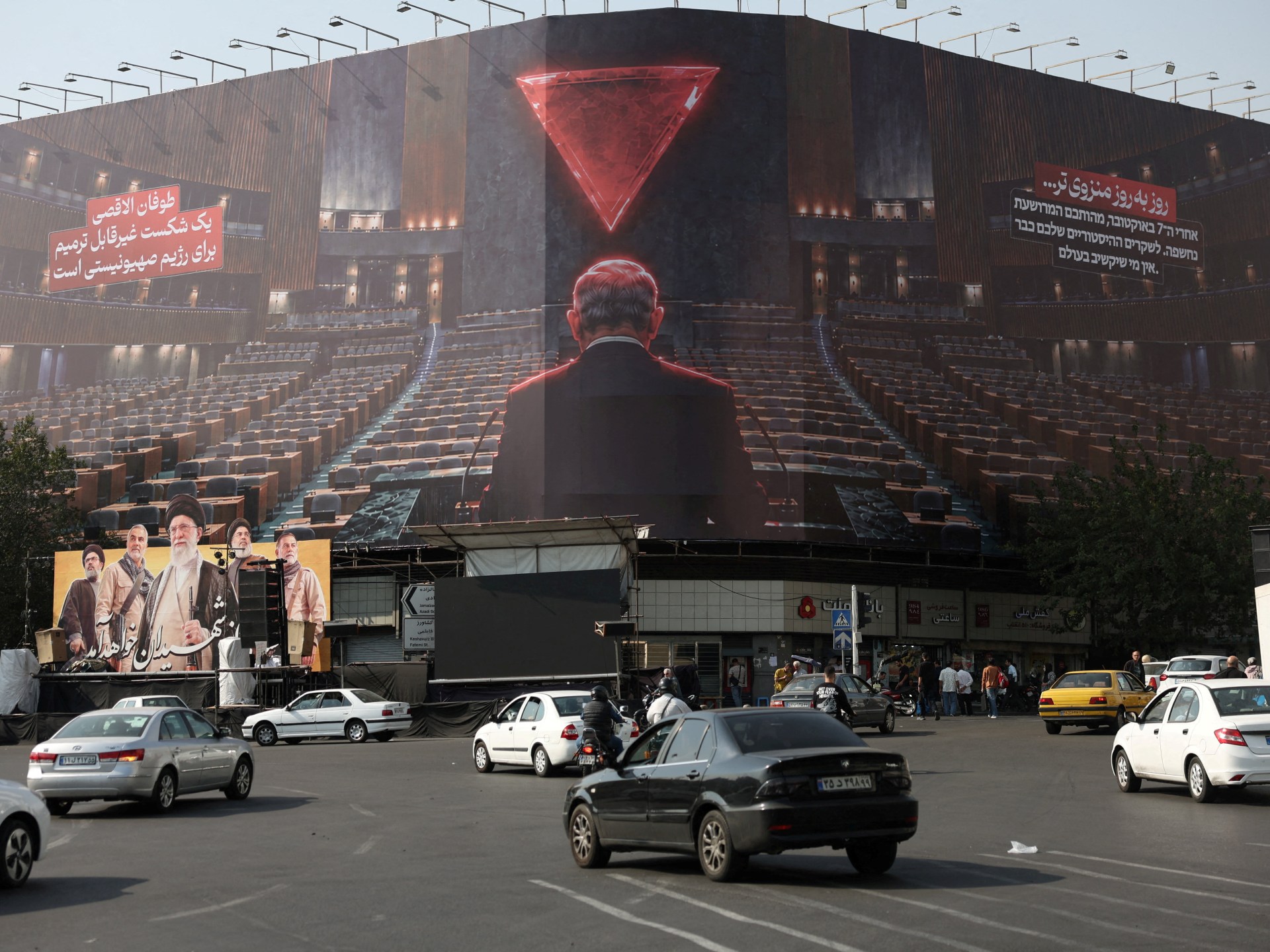

Tehran, Iran – Iran’s armed forces say they are prepared to fire on United States warships as President Donald Trump said Washington was still deliberating new attacks or continued pressure on Iran.
Trump told supporters at a rally in Florida on Friday that the US military “may do another Epic Fury”, in reference to the extensive bombing campaign against Iran at the start of the war. He had earlier questioned whether to end the conflict quickly through huge attacks on Iran or let pressure on Tehran from a naval blockade and sanctions persist.
- list 1 of 3Lebanese sceptical Israeli polls will bring change, end occupation of south
- list 2 of 3Keeping the world safe when no one is in charge
- list 3 of 3Why is Israel launching a new military operation in the occupied West Bank?
end of list
But Ali Abdollahi, chief of general staff of the Iranian armed forces, asserted that the US Navy is incapable of re-entering Iran’s territorial waters or its periphery due to Iran’s ability to target any vessel in the region.
“The US president can only dream of their soldiers and military again entering the Persian Gulf. They will take this wish to the grave for good,” he said in a statement carried by state media on Saturday morning.
Abdollahi also said US rhetoric about the war pointed to a basic contradiction: US claims that Iran’s military capabilities have been mostly destroyed during the war were nullified by its refusal to bring its aircraft carriers and support vessels closer to Iranian territory.
He added that Iranian forces were determined to “drown” the US and Israel in a “quagmire” in retaliation for their surprise attack on Iran on February 28, starting an eight-month war and plunging the whole region into instability.
Strait of Hormuz
Vessels in and around the Strait of Hormuz continue to be attacked by Iran. Together with the increased odds of renewed war, this has driven up oil prices and sent Brent crude to its highest price since April, at about $117.
Advertisement
The Islamic Revolutionary Guard Corps (IRGC) said seven tankers were attacked or hit mines overnight into Thursday. It then claimed on Friday that two supertankers struck mines. The IRGC has said its military doctrine is now more offensive, and Washington has reportedly ordered many diplomatic personnel to leave Saudi Arabia, with others set to depart other countries in the region.
The Iran-allied Houthis in Yemen also continued to exchange attacks with Saudi Arabia, hitting Riyadh again on Saturday, with the international airport in Dammam and the Shaybah oilfield targeted in recent days. Saudi forces have bombed Marib, Taiz and several other Yemeni provinces under Houthi control.
In southern Lebanon, Friday brought further reported Israeli air attacks around Nabatieh and artillery fire near Zawtar ash-Sharqiyah. Iran has linked this front to its war with the US and Israel, in the past demanding that any ceasefire with Washington also cover Lebanon.
Israeli Prime Minister Benjamin Netanyahu, facing an election on October 27 which comes days before the November 3 mid-term elections in the US, also ordered a lockdown of the occupied West Bank after a Palestinian attack killed two soldiers in Hebron. The Houthis have also launched attacks on Israel linked to events in Gaza and the West Bank, highlighting how wider regional peace now depends on events in multiple theatres, including Lebanon, the occupied West Bank and Gaza.
Netanyahu has reiterated his desire to overthrow the Iranian government, leading several state-linked media and analysts in Iran to claim that Tehran has activated a “dead hand” doctrine. That allegedly enables military attacks against US, Israeli and regional interests to continue from across the country’s 31 provinces if senior Iranian figures are again assassinated as at the start of the war.
The IRGC has threatened seabed internet and communication cables if Iran’s civilian infrastructure is again targeted by the US and Israel. US-based Axios on Saturday cited US intelligence claiming that Iranian authorities had “substantially increased” efforts to strike American officials in the Middle East and beyond.
Diplomacy in Istanbul
Mediated negotiations between Iran and the US are no closer to yielding results. But regional and European powers held a coordination meeting in Istanbul on Friday and announced their expectations for the future of the war.
Top diplomats from Turkiye, Saudi Arabia, Pakistan and Egypt met with the United Kingdom, France, Germany and Italy, with neither the US nor Iran participating.
Advertisement
“We agree that a new attack on Iran would widen the war and spread the conflict across the region,” Turkiye’s Foreign Minister Hakan Fidan said after the meeting. “Military intervention in Iran is by no means a solution. No one is endorsing it at this point.”
German Foreign Minister Johann Wadephul said his government held Iran and the Houthis responsible for instability in the Middle East.
But the foreign ministers of the four regional countries issued a joint statement that said “Israeli occupation was the main source of instability in the region and beyond.”

In line with resolving the US-Israel war on Iran, the four regional countries supported the Islamabad memorandum of understanding signed in June and a negotiated settlement, while demanding unrestricted passage through the Strait of Hormuz. The group said they opposed attacks on civilians and commercial vessels, and condemned Houthi attacks on Saudi Arabia and its Red Sea shipping interests.
The Istanbul meeting once again displayed a “gap between diplomatic claims and realities in the field”, Nour News, an outlet affiliated with Iran’s Supreme National Security Council, argued in an analysis on Saturday.
It said the US and European powers – not Iran – must make concessions first. The outlet presented reopening the Strait of Hormuz as conditional on the US accepting Tehran’s demands and acknowledging responsibility for attacking Iran and Yemen.
Most Iranian newspapers on Saturday focused on signs of war, including rising oil prices.
The headline from hardline Vatan-e Emrooz reported that the price of a barrel of Brent crude rising above $117 was “evidence of disgrace for Trump”. Reformist Etemad said US and Israeli actions were signalling that the “zero hour” of another intense round of the war was approaching.
Reza Nasri, a Tehran-based foreign policy analyst with links to the Ministry of Foreign Affairs, said that after being subject to decades of attacks, nuclear sabotage, sanctions and violated deals by the US, Iran’s strategy was now “enough is enough.
“Iran has reached its verdict. It will no longer negotiate under bombardment, honour agreements the other side treats as optional, or accept the killing of its children and the penury of its people as routine instruments of policy,” he wrote on X. “It will put an end to this cycle, and it will do so by all necessary means”.
Related News
Pope Leo recovering well after cancer surgery, Vatican says

How protests have shaped India: From anti-Hindi agitation to farm laws
France’s Macron declines minister’s resignation after violent protests