
Iran determined to keep uranium amid increased war odds, flurry of meetings
 21 October 2026

Tehran, Iran – There has been a flurry of diplomatic activity in the Middle East in recent days, with hopes of a diplomatic breakthrough to end the United States and Israel war on Iran.
Pakistan’s army chief Asim Munir was in Tehran on Wednesday to discuss the war and recent tensions in Yemen. It comes against the backdrop of fears of a new breakout in conflict in the region.
- list 1 of 3Iran’s enriched uranium re-emerges as point of contention in US talks
- list 2 of 3UK approves development of Jackdaw gasfield in North Sea
- list 3 of 3Putin and Zelenskyy back three-way US peace talks on Ukraine
end of list
Despite this, Tehran has held firm to its position that the war will not end, and the Strait of Hormuz will not reopen, until the US accepts its conditions.
Iran maintains an unyielding stance on its contentious nuclear programme, which was a factor in the Trump administration’s decision to launch the war on February 28.
“Not a single gram of enriched uranium will be removed from Iran,” Mohsen Rezaei, secretary of Iran’s Supreme National Security Council, said late Tuesday after meeting Munir.
But he did not rule out downblending the highly enriched uranium inside the country under supervision from monitors, something Iran has offered before.
Iran’s authorities present the decades-old nuclear programme as a sovereign right and an achievement gained despite strikes, sabotage and assassinations. Rezaei described it as “national wealth” on Tuesday.
Iran has also used low-enriched uranium for civilian purposes like manufacturing radiopharmaceuticals and for power generation at the Bushehr plant in cooperation with Russia.
The authorities argue that surrendering the nuclear programme under military pressure would amount to capitulation, if it did not guarantee that Iran would not be left exposed to more attacks.
Advertisement
US President Donald Trump has repeatedly emphasised since the start of the war that he wanted to dismantle the Iranian nuclear programme. US Vice President JD Vance, however, suggested earlier this month that a “meaningful” reduction in the level of enrichment capacity may satisfy US demands.
Before Israeli and US attacks on Iran’s nuclear facilities in June 2025, the International Atomic Energy Agency (IAEA) estimated that Tehran possessed 440 kilogrammes (970 pounds) of uranium enriched up to 60 percent. A nuclear bomb would need enrichment of more than 90 percent.
The attacks, followed by further US-Israeli strikes on nuclear sites in 2026, severely damaged Iran’s nuclear infrastructure. With the IAEA unable to inspect key facilities, the current size, condition and whereabouts of much of Iran’s enriched uranium stockpile remain unverified.
Tehran has refused access to the IAEA to inspect its nuclear facilities since the war started, accusing the agency of advancing Western interests through adopting resolutions and referring the nuclear file to the United Nations Security Council.
Iranian authorities maintain they are not pursuing a bomb. But senior Iranian officials, like Rezaei, have publicly questioned the validity of being a party to the international nuclear Non-Proliferation Treaty if Iran’s nuclear facilities and other infrastructure continue to be attacked.
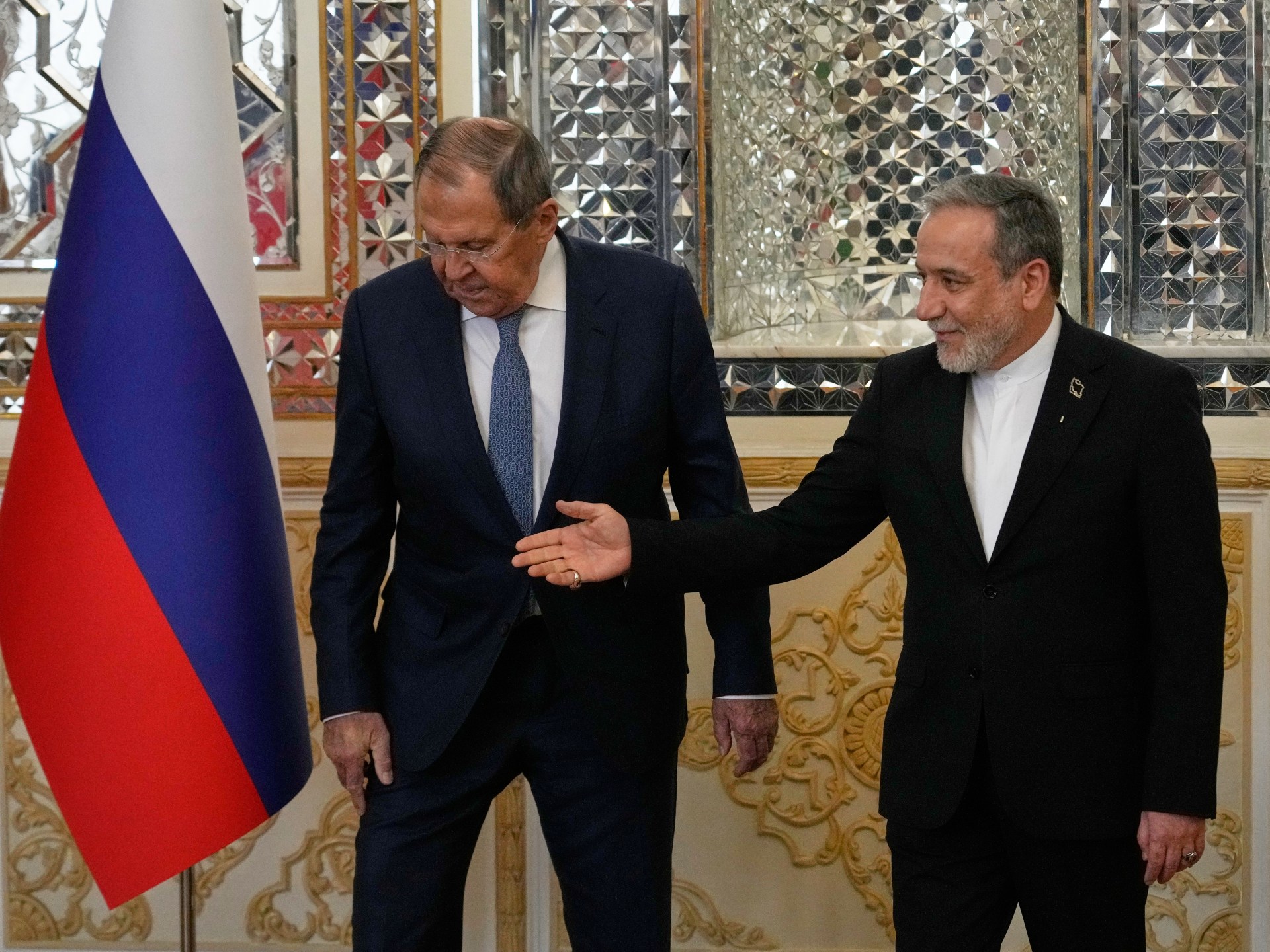
Still, Iranian officials have hosted numerous foreign diplomats this week. Russian Foreign Minister Sergey Lavrov was in Tehran on Monday after attending a meeting with Gulf Cooperation Council (GCC) countries a day earlier. There were also indications of visits to Tehran by other Arab officials.
US Secretary of Defense Pete Hegseth is also reported to have met Israeli security officials earlier this week. These meetings did not appear to have decreased the prospects of renewed war.
But speaking at a conference for Iranian exporters in Tehran on Wednesday, Iranian Foreign Minister Abbas Araghchi cautioned that the country faces threats of more attacks and expansive economic sanctions.
“The reality is that the country is truly in war conditions and the war continues. We have not reached peace conditions and are away from it, so all decisions must be made within war conditions,” he said.
Parliament speaker and chief negotiator Mohammad Bagher Ghalibaf told Munir that Iran had “nothing new” to tell Washington and expected realisation of conditions offered in New York last month to reopen the Strait of Hormuz within seven days.
Advertisement
Mediators did not publicly divulge details of their proposals to Tehran this week, but were told the US needed to build trust by accepting Iran’s conditions. These include returning to the June memorandum of understanding and recognising an Iran-Oman deal over temporary transit in the Strait of Hormuz.

In addition to a pledge for immediate talks on a bigger deal regarding Iran’s nuclear issue, the memorandum included removing the US naval blockade on southern Iranian ports, waivers for oil sanctions, unfreezing Iranian assets and halting military action in Lebanon and other regional hotspots.
Ellie Geranmayeh, a senior policy fellow and deputy head of the Middle East and North Africa programme at the European Council on Foreign Relations, said it was clear that Tehran would be unwilling to give up its enriched uranium without guarantees of sanctions relief.
“The Iranians have made it very clear, and I see no evidence that’s changing, that they are willing to negotiate over the fate of the highly enriched uranium or access for international monitors, but that has to be directly linked with a very clear implementation protocol for US sanctions relief,” she told Al Jazeera. “We are very far from those types of negotiations at this stage.”
US media cited unnamed officials as saying on Tuesday that the Pentagon was sending the USS Theodore Roosevelt carrier strike group and a Marine unit to the Middle East. That would present President Trump with a range of strike options after the US midterm elections on November 3.
Over recent weeks, Trump and his officials have further discussed a range of military operations, including hitting Iran’s Pickaxe Mountain to diminish nuclear facilities inside, and dropping the “mother of all bombs” on nuclear and energy facilities. They have also previously raised the idea of seizing Iran’s southern islands on the Strait of Hormuz and assassinating more Iranian officials.
Iran’s state-run Press TV cited an unnamed security official as saying on Wednesday that decision-makers in Tehran have chosen to advance “without any limitations or restraint” if there are more US and Israeli attacks or assassinations.
Geranmayeh pointed out that Tehran had also helped its ally, the Houthis in Yemen, with their advances along the Bab al-Mandeb strait, and even considered potential preemptive strikes to rattle the US ahead of the election.
“One thing we should be watching out for is Israel and the US combining forces on military attacks after the Israeli elections and the US midterms,” she said, after Trump backed Netanyahu’s election bid.
Related News
HIV prevention drug hailed as breakthrough, but who gets access?

Saudi-led coalition intercepts Houthi missile launched towards Riyadh
Three injured in third school attack in Poland in less than a week