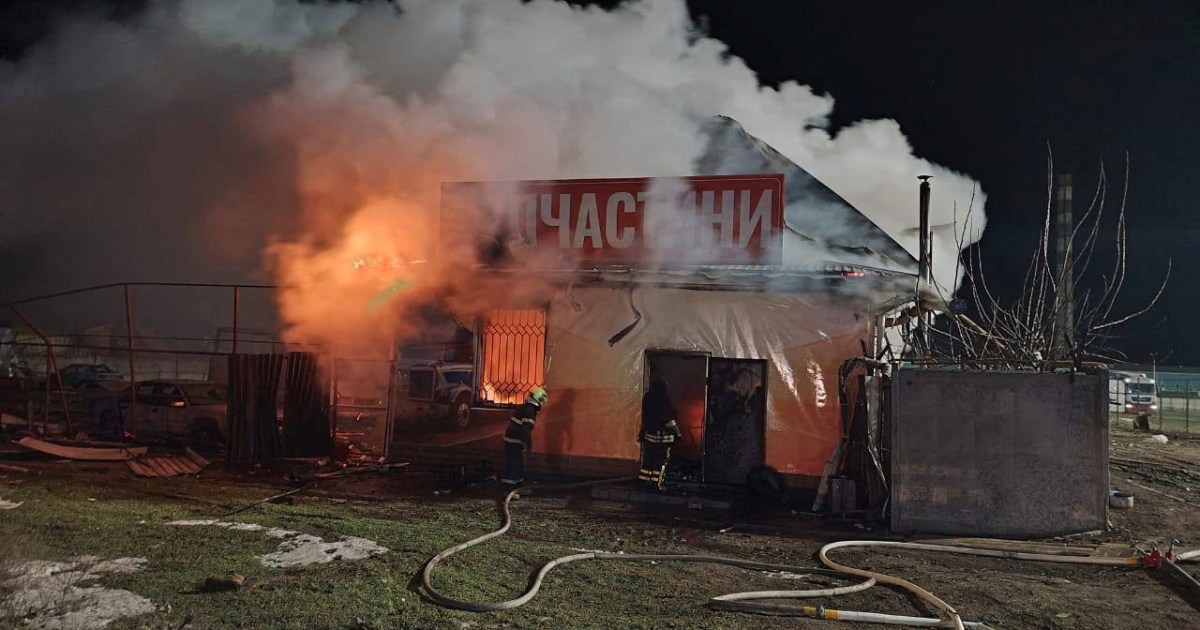


Authorities in Tehran have called for international action and solidarity after several hospitals and schools were impacted by United States and Israeli air strikes on the country as Iran continues to fire missiles and drones across the region.
Iranian Ministry of Foreign Affairs spokesman Esmaeil Baghaei said on Monday that the two countries “continue to indiscriminately strike residential areas, sparing neither hospitals, schools, Red Crescent facilities, nor cultural monuments”.
- list 1 of 3Why killing Khamenei isn’t the death of Iran’s Islamic Republic
- list 2 of 3Three US fighter jets ‘mistakenly’ shot down over Kuwait
- list 3 of 3What is Iran’s military strategy? How has it changed since June 2025 war?
end of list
“These actions constitute the deliberate commission of the most heinous crimes of international concern. Indifference to this ongoing and extreme injustice will only further darken the future of humanity by jeopardising the shared values upon which our global community stands,” he wrote in a post on social media.
Pir Hossein Kolivand, the head of the Iranian Red Crescent Society, wrote a letter publicised late on Sunday to the president of the International Committee of the Red Cross (ICRC), demanding an explicit condemnation of attacks impacting children and educational and medical centres.
He also said monitoring and support mechanisms outlined in the Geneva Conventions must be invoked, adding that the ICRC must “adopt immediate measures” to stop similar incidents from taking place again as the war rages.
“The Red Crescent Society of the Islamic Republic of Iran, as a member of the global Red Cross and Red Crescent movement, declares its full commitment to the fundamentals of humanity, impartiality and independence, emphasising that damaged centres had no military applications,” Kolivand wrote.
Advertisement
ICRC President Mirjana Spoljaric said in a statement at the start of the war on Saturday that rules of war must be upheld as an obligation, not a choice.
“Civilian infrastructure such as hospitals, homes and schools must be spared from attack. Medical personnel and first responders must be allowed to carry out their work safely,” she said.
Hospitals sustain damage
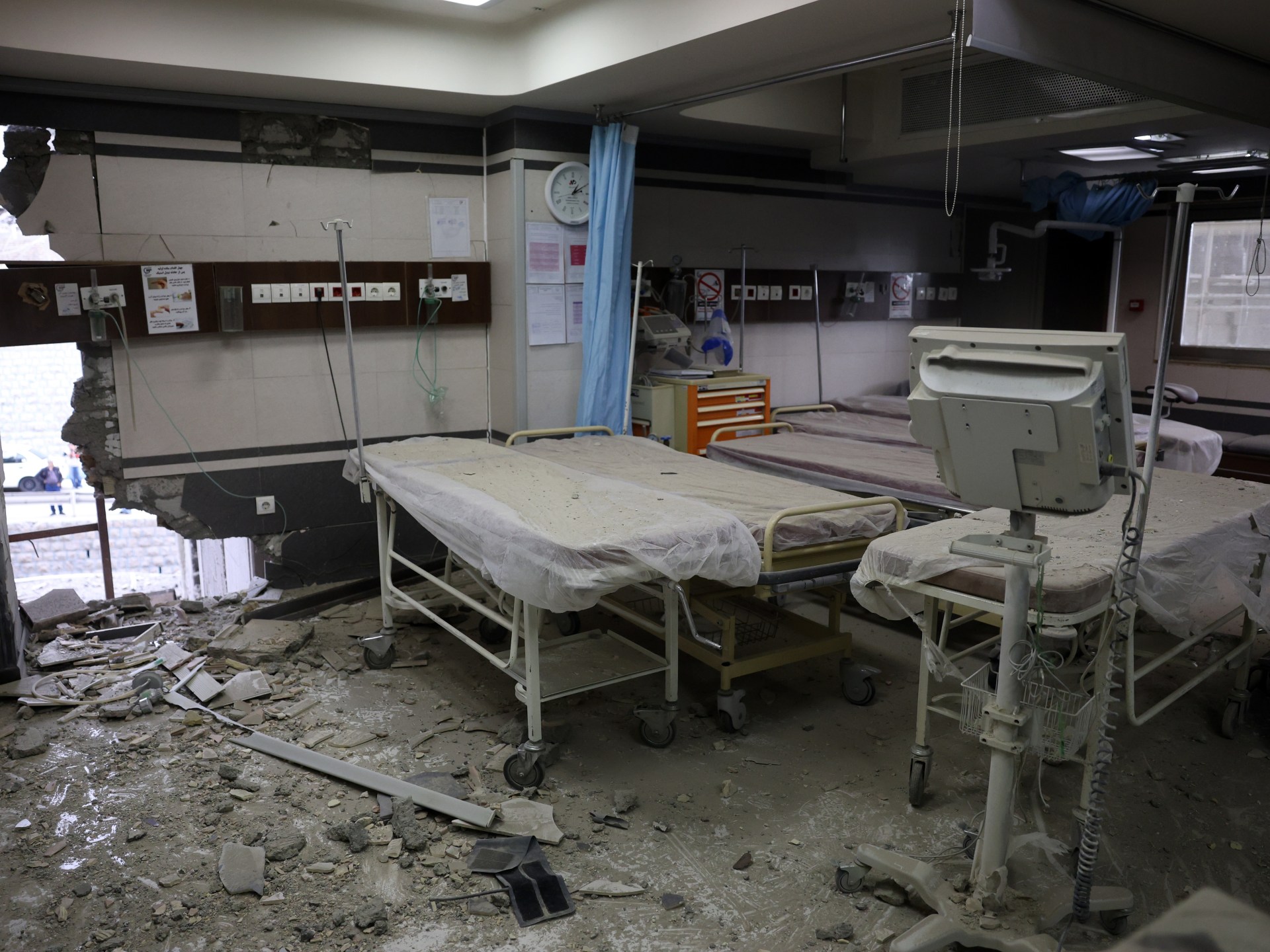
Multiple Iranian hospitals have been damaged as a result of air attacks and were evacuated by authorities, but there are not believed to have been any direct strikes on any hospitals yet.
In Tehran, major strikes on Sunday damaged multiple medical centres located in two areas, according to official accounts, footage circulating on social media and information geolocated by Al Jazeera.
Videos broadcast by state media from the entrance and surrounding area of Gandhi Hospital in northern Tehran showed significant damage after a projectile struck a nearby area.
Mohammad Raeiszadeh, the head of Iran’s Medical Council, told state media from the hospital on Monday that the in-vitro fertilisation department was destroyed along with its equipment, forcing staff to move cells and embryos. Footage also showed an infant being moved by nurses on Sunday night.
The hospital appears to have been damaged after the Israeli military struck buildings housing Iranian state television’s Channel 2 and a communications antenna nearby.
This led to state television programmes being disrupted for several minutes. The broadcaster confirmed that some of its departments were bombed on Sunday without divulging details.
World Health Organization Director General Tedros Adhanom Ghebreyesus said reports of damage to the hospital are “extremely worrying” and the United Nations agency is working to verify the incident.
After a separate attack on Sunday, the Iranian Red Crescent Society released a video showing the aftermath of strikes near one of its main buildings located near Khatam al-Anbiya Hospital.
[Translation: Right now. Direct attacks by the Zionist regime and America on the vicinity of the Red Crescent building, Khatam al-Anbiya Hospital, Welfare Organisation, and Motahari Hospital in Tehran]
Footage circulating online showed plumes of smoke rising and debris scattered after the strikes. According to the Red Crescent, the ICRC’s Spoljaric visited the site of the damaged medical treatment facility on Monday and condemned any strikes impacting humanitarian centres.
Khatam al-Anbiya Hospital, the Motahari Hospital specialising in helping burn victims and the Valiasr Hospital are all located nearby. They reported either sustaining some damage or having to hurriedly move patients out.
Advertisement
The main target hit by Israeli warplanes in the area appeared to have been the central headquarters of the Iranian police. Police Chief Ahmad-Reza Radan did not comment specifically on the targeting of the headquarters but confirmed that police buildings were receiving regular direct hits.
On Monday afternoon, fighter jets conducted bombing runs across Tehran once again. Attacks damaged the main building of the province’s medical emergency services, located in Iranshahr Street in the downtown area. Videos released by state-affiliated media showed staff evacuating, and the state-run Tasnim news agency said several staff members were injured.
According to Iranian authorities, the Aboozar Children’s Hospital in western Iran’s Ahvaz and three medical emergency centres in the provinces of East Azerbaijan, Sistan-Baluchistan and Hamedan were also damaged.
The Iranian Red Crescent said that by noon on Monday at least 555 people had been killed after 131 counties across the country were attacked.
During and after the killing of thousands of people during January’s nationwide protests, Iranian authorities have consistently rejected calls for transparency and condemnations by the UN and international human rights organisations for attacks on hospitals by state forces to detain protesters and medical staff helping the wounded. A number of doctors and medical personnel remain incarcerated and face national security and other charges.
Schools, sports centre take hits
In Tehran, an air strike targeting 72 Square in the eastern neighbourhood of Narmak damaged a high school with authorities reporting that at least two children were killed.
Local media said the target of the attack was Mahmoud Ahmadinejad, the former populist president who may potentially have a role in shaping Iran’s political future after the killing of 86-year-old Supreme Leader Ali Khamenei and other officials. It was unclear whether Ahmadinejad was present at the site of the attack or was harmed.
There were also multiple casualties after a sports centre was targeted in Lamerd in the southern province of Fars, local authorities said on Saturday.
But the single largest casualty incident announced by Iranian authorities was from a girls school in the southern city of Minab.
After two days of working through the debris, authorities said 165 people were killed and 95 wounded, most of them children. The governor on Monday afternoon released a handwritten list of 56 of the victims but did not provide further information.
The US said it was aware of civilian casualty reports from the school and was investigating. The Israeli army said it was not aware of any Israeli or US strikes in that area.
Education International, a global federation that brings together organisations of teachers and other education employees, condemned the school attack.
“Children, teachers, and schools must never be military targets. The killing and wounding of students and educators is an intolerable violation of human rights and a grave breach of international humanitarian law,” it said.
Related News
Ten skiers missing, 6 trapped after avalanche in north California mountains
Ayatollah Ali Khamenei: The leader who shaped Iran’s defiance
Sweden confirms Russian drone intercepted near French aircraft carrier