Hebron governor says Israeli forces withdraw from city after 10-day siege
 02 November 2026

DEVELOPING STORYDEVELOPING STORY,
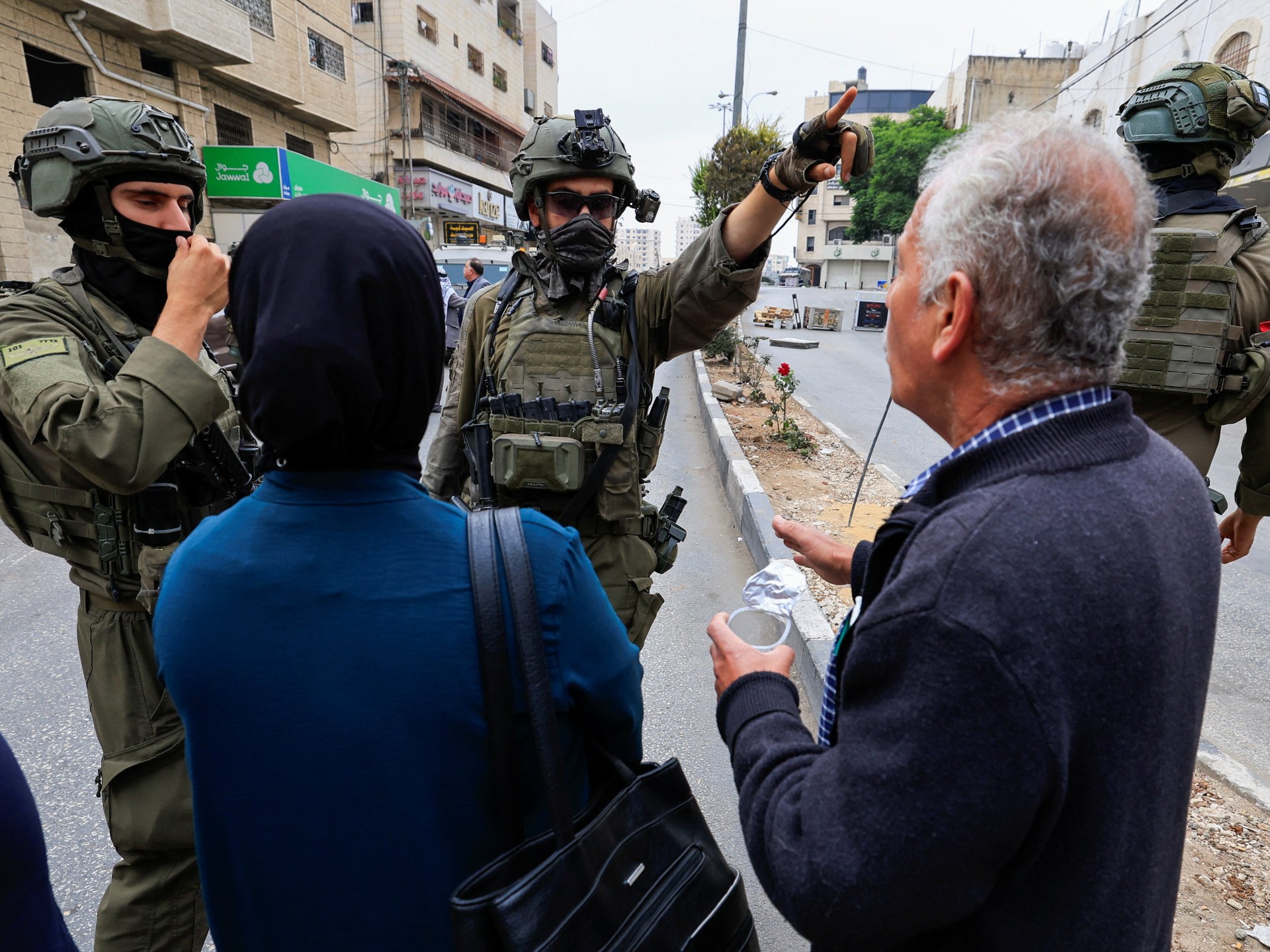
The governor of Hebron says Israeli forces have withdrawn from the city in the southern occupied West Bank after a 10-day siege, allowing displaced families to return home.
“Palestinian security forces have taken full control of the area following the Israeli withdrawal,” Governor Khaled Dudin announced on Monday.
- list 1 of 3Hebron economic losses in millions as Israeli siege continues for 10th day
- list 2 of 3Israel’s war on homes
- list 3 of 3Israel demolishes homes of Palestinians blamed for attack on soldiers
end of list
“Relevant authorities and Palestinian security forces are monitoring developments on the ground and working to provide the necessary conditions for residents to return safely,” he said.
The Israeli military imposed a siege on Hebron on October 23 after a shooting attack by two Palestinians that killed two Israeli soldiers and wounded three others. Israeli forces later killed the two attackers.
Hebron Mayor Youssef al-Jaabari told Al Jazeera the municipality was officially informed of the withdrawal at 6am (04:00 GMT).
“For the first time in 10 days, schoolchildren are going to their schools; university students are now on their way to their universities,” he said, adding that five universities had been closed during the siege.
“There was a complete closure, no entry or exit from the city, and all aspects of life, whether economic, educational, health, or even those related to municipal work, had completely stopped.”
Reporting from Hebron, Al Jazeera’s Mohamed al-Atrash, said vehicles carrying displaced families began arriving minutes after the governor’s announcement.
Some returning residents said soldiers had wrecked the interiors of homes used as military posts, while others said money and personal belongings had been taken.
Advertisement
Al-Atrash said the Israeli military destroyed the the homes of the two attackers during its operation. Civil defence teams at the site of one home warned that its walls were on the verge of collapse.
During the operation, Israeli forces imposed closures on the city and surrounding villages, seizing homes and converting them into military posts. Al-Atrash said the siege displaced more than 537 families and forced at least 317 shops to close, while checkpoint closures affected the wider governorate of about 800,000 people.
More than 3,300 Palestinians were displaced or otherwise affected, particularly in Al-Jalda and Ein Deir Baha, while 15 homes and other structures were demolished, according to the Hebron Governorate. It said the siege also damaged the local economy and infrastructure and disrupted education.
Ibrahim Rabaia, a political researcher in Ramallah, told Al Jazeera the operation was “part of the collective-punishment system pursued by Israel”, but marked a shift by targeting entire urban neighbourhoods rather than attackers’ families or refugee camps.
“Israel attempted to establish a new pattern, testing international and local reactions,” he said.
Mohamed Helles, an expert on Israeli affairs, said the operation was launched days before Israel’s general election last month and was partly “an attempt to harvest electoral points at the ballot box” for Prime Minister Benjamin Netanyahu and his right-wing allies.
Netanyahu’s electoral bloc secured the most seats but failed to win a majority in the vote, leaving Israel without a clear path to a new government.
Related News
France protests live: Macron admits ‘failures’ after days of violent unrest
At least five people missing as flash floods in Nepal sweep away houses
Christa Pike was nearly taken off life support before waking, lawyers say