


News Americas, FORT MYERS, FL, Tues. April 14, 2026: A violent killing in Fort Myers, Florida, involving a Haitian immigrant has intensified scrutiny of the Temporary Protected Status, (TPS) program as the issue heads toward a critical legal battle in the United States.
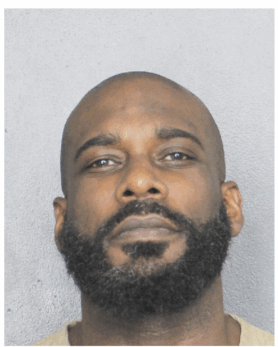
Authorities say Rolbert Joachin, 40, who entered the US via a smuggling operation, is accused of killing a Bangladeshi immigrant woman on April 3rd at a Chevron gas station on Dr. Martin Luther King Jr. Boulevard. The victim, identified as Nilufa Easmin, also known as Yasmin, was reportedly a mother of two teenage daughters.
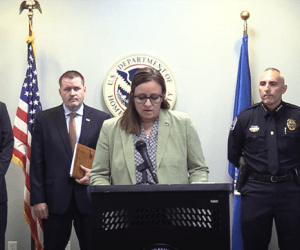
Law enforcement officials confirmed that Joachin’s Temporary Protected Status has been revoked, clearing the way for his deportation to Haiti following the case. According to the U.S. Department of Homeland Security, Joachin entered the United States in August 2022 via boat, and was later issued a final order of removal that same year. However, he was subsequently granted Temporary Protected Status in 2023, which expired in 2024.

Authorities say U.S. Immigration and Customs Enforcement assisted local police in locating Joachin earlier this month after a request from the Fort Myers Police Department. Investigators allege that Joachin targeted the victim and carried out the attack using a hammer. Surveillance footage reportedly captured the incident, which has drawn national attention.
Police say Joachin admitted to deliberately damaging the victim’s vehicle to lure her outside before attacking her. He was taken into custody after being read his rights in Creole and English, authorities said.
The case has quickly taken on national significance, as it intersects with the broader debate over immigration policy and protections for migrants. President Donald Trump has pointed to the incident as part of his call for stricter immigration enforcement, including ending TPS protections. The program is currently under review, with implications for an estimated 350,000 Haitians living in the United States.
Temporary Protected Status allows nationals from designated countries experiencing conflict or disaster to live and work in the U.S. temporarily. Critics argue it has evolved into a long-term protection mechanism, while supporters say it remains a critical humanitarian safeguard.
Immigration advocates warn that high-profile cases such as this risk shaping public perception and policy outcomes, particularly as legal challenges surrounding TPS move toward the U.S. Supreme Court. Executive Director Guerline Jozef of the Haitian Bridge Alliance stated: “Our hearts are with the family of the victim during this unimaginably painful time. We condemn this act of violence in the strongest possible terms. But we must also be clear: one individual’s actions do not define an entire people. The exploitation of this tragedy to demonize Haitian immigrants and dismantle humanitarian protections is both unjust and deeply harmful. Haitian TPS holders and immigrant families in the United States are workers, caregivers, students, and neighbors. They deserve dignity, protection, and policies grounded in truth – not fear.”
HBA called on elected officials and public leaders to exercise restraint, accuracy, and compassion in addressing matters of public safety and immigration. Amplifying graphic violence and linking it to entire populations fuels division, perpetuates racial bias, violence and distracts from meaningful solutions.
While Murad Awawdeh, President and CEO, New York Immigration Coalition added: “The tragic situation that happened in Florida should not be used to demonize entire communities or dismantle protections that thousands of families rely on to live safely and work legally under programs like Temporary Protected Status. The escalating rhetoric from the Trump administration fuels this harm by distorting individual incidents into justification for broad, punitive policy changes that scapegoats all immigrants and puts a target on their backs. Trump has repeatedly shown that he will seize on any case to dismantle legal pathways, strip protections, and expand a deportation machine that operates with little accountability or regard for due process. We must uphold and strengthen TPS as a critical lifeline grounded in humanitarian protection, ensure everyone has access to due process, and reject any effort to weaponize isolated cases to justify policies that put entire communities at risk.”
The outcome of the case – both legally and politically – could have far-reaching consequences for Haitian migrants and the broader Caribbean diaspora in the United States.
Related News

CARICOM Rift Deepens As Trinidad Aligns Closer With U.S., Venezuela
Haiti News – Coral Springs Vice Mayor Nancy Metayer Bowen’s Voice Silenced In Florida ...

Kristi Noem Visits Guyana And Costa Rica Amid Regional Focus