


In response to the circulation of the Chikungunya virus and its painful consequences, the Cuban Health System is deploying a proactive strategy based on national science.
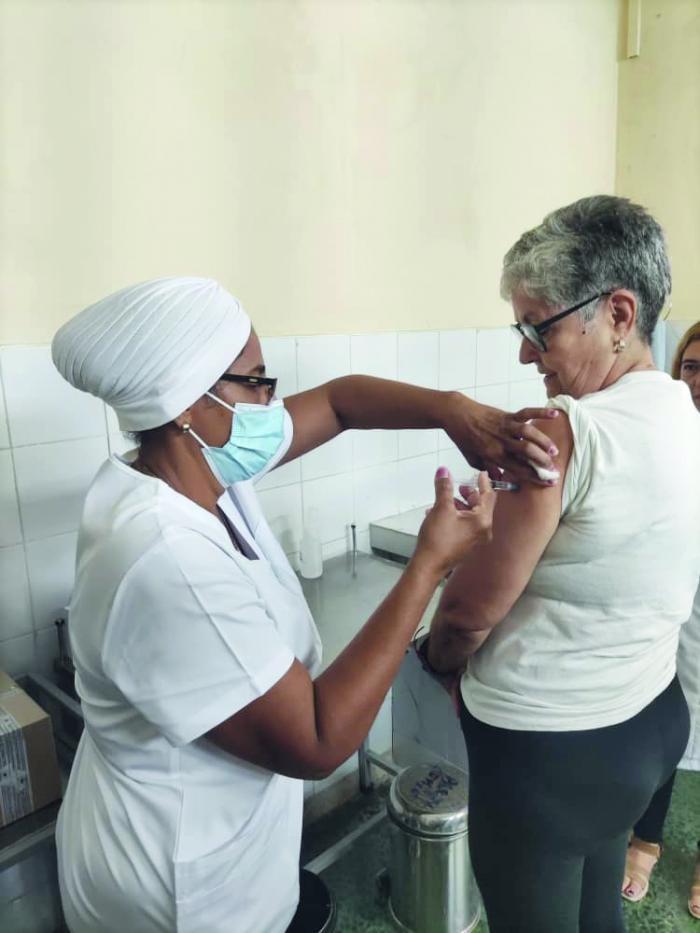
On December 8, a health intervention aimed at protecting the elderly population began in the health area of the Abelardo Ramírez polyclinic, in the municipality of Plaza de la Revolución.
The protagonist is Biomodulina T, a nationally produced immunomodulator whose purpose is to strengthen the body's natural defenses in this epidemic scenario.
The initiative, more than just a treatment, is an intervention study designed to evaluate, under real conditions, the drug's ability to prevent serious infections and mitigate the inflammatory sequelae that the disease often leaves behind.
WHY IS THIS INTERVENTION NECESSARY?
The fundamental reason for focusing on older adults is explained by Alexis Labrada Rosado, PhD, director of Research and Development at the National Center for Biopreparations (BioCen): "Older adults are characterized by a process called immunosenescence, which means aging of the immune system."
This natural phenomenon makes the body's defenses less effective at fighting infections and, at the same time, more prone to excessive inflammatory reactions.
Chikungunya, in particular, can trigger chronic and debilitating inflammation in the joints. Therefore, strengthening and modulating the immune system in this age group is not just an option, but a public health necessity.
THE MECHANISM: STRENGTHENING THE IMMUNE SYSTEM'S "MEMORY CELLS"
Biomodulin t acts as a powerful regulator of the immune system. Its key mechanism, detailed by Labrada Rosado, is its ability to "regenerate T cells, which are the fundamental cells of the adaptive immune system, the one that learns and remembers pathogens."
By stimulating these cells, the drug does not attack the virus directly, but rather "prepares the immune system to fight a viral infection" and, in this way, can "limit the damage."
The scientific hypothesis is that, by being better prepared, the body better controls viral replication (viremia), which translates into a shorter, less severe illness with fewer long-term sequelae.
STUDY DESIGN: COMPARISON AND INNOVATIVE SCHEMES
The intervention has a rigorous scientific design. It is led by Dr. Odalis María de la Guardia Peña, a second-degree specialist in immunology at the Institute of Hematology and Immunology (IHI), and Dr. Liz Caballero González, from the main polyclinic. Nearly 700 people between the ages of 70 and 74, a highly vulnerable range, are participating.
An innovative aspect is that Biomodulin t is compared with its analogue Timalin (of Belarusian origin), following two regimens:
Short regimen (5 days): This is being tested for the first time with Biomodulin t, which could offer a more practical therapeutic option in the future.
Long regimen (6 weeks): The same protocol successfully validated during the COVID-19 pandemic.
This comparison will generate solid evidence on the efficacy of both drugs and their administration regimens. The Health area was selected for its research experience, its large elderly population, and the recent suspicion of arbovirus cases, making it an ideal setting for this "real-world study."
THERAPEUTIC HOPE FOR THOSE WHO HAVE ALREADY SUFFERED FROM THE DISEASE
The intervention is not only forward-looking. One of its most humanitarian objectives is to evaluate the possible therapeutic effect in people who have already suffered from Chikungunya and are still experiencing sequelae.
"In these patients who have inflammatory sequelae, arthralgia, and joint inflammation, Biomodulin t could also have a therapeutic effect," said the Director of Research and Development at BioCen.
If the results are positive, it would open up a new avenue for alleviating the pain and functional limitations that affect the quality of life of thousands of Cubans after infection.
SAFETY AND EXPERIENCE: A DRUG WITH A TRACK RECORD
A fundamental pillar for applying this drug to a broad population is its safety profile. Biomodulina t is not a new product; it has been in production in Cuba for more than 30 years.
Dr. De la Guardia Peña stated that "it has a very good safety profile, with very few adverse reactions and of little magnitude."
This track record, coupled with its large-scale production capacity, makes it a reliable and available tool for public health strategies.
WHY THEN IS IT AN INTERVENTION AND NOT A TRIAL?
Dr. De la Guardia Peña explains it clearly: "We are conducting an intervention study because these are already known drugs and because it is a known disease."
The immediate goal is to improve the quality of life and health of the selected population group (adults aged 70-74) by taking advantage of the potential of a safe drug.
At the same time, scientific data is being collected to compare administration regimens and strengthen the evidence of their effectiveness in this specific context.
This intervention does not test a new product, he explains, but rather applies, in an organized and monitored manner, existing and safe treatments for protective and therapeutic purposes in response to a specific epidemiological need, while generating knowledge for future decision-making.
BROAD POTENTIAL: FROM PEDIATRICS TO ONCOLOGY
The potential of Biomodulin t transcends the current context. It is a versatile drug that is already approved for the treatment of thymic hypoplasia in children, a serious immune disorder. In addition, its use is being investigated in the recovery of cancer patients after chemotherapy and in combination with other cancer therapies.
A COMPREHENSIVE AND SCIENTIFIC RESPONSE
The intervention with Biomodulina t is an example of the comprehensive approach taken by Cuban science and public health: preventive, therapeutic, and evidence-based. It represents a commitment to a domestic product to protect the most vulnerable, seeking not only to prevent new infections but also to repair the damage caused by those that have already occurred.
Under the supervision of ethics committees and the regulatory authority, this study will generate vital knowledge to address not only Chikungunya, but also future epidemiological challenges.
Related News

Cuba denounced the direct attack against Venezuela: it is state terrorism

At the Anti-Imperialist Tribune today, the Cuban people condemn the military aggression ag...

There can be no silence or acceptance in the face of this act of state terrorism