Wars choke global food routes, threatening aid for 7.3 million, WFP warns
 24 November 2026
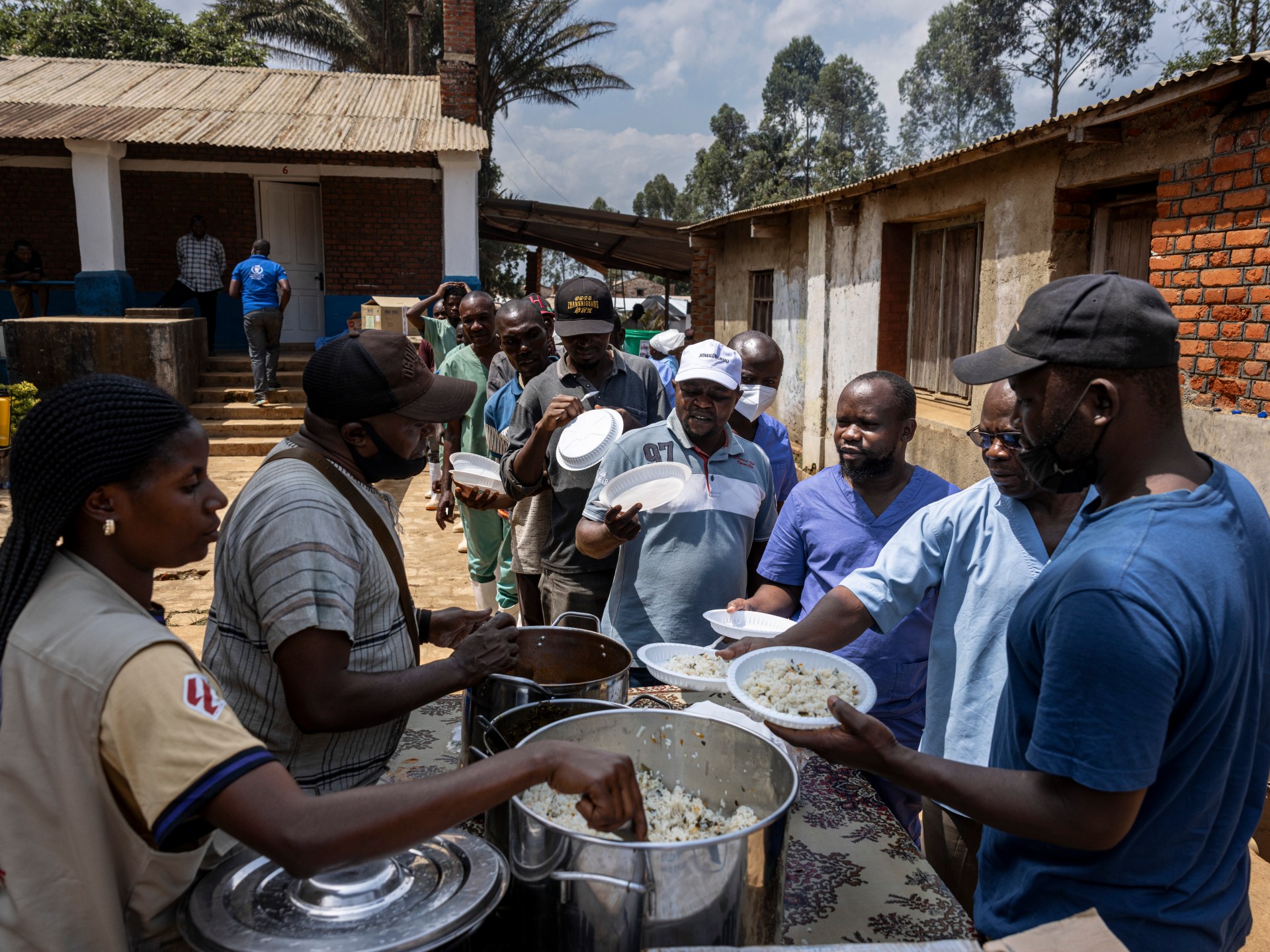

WFP Executive Director Luke Lindberg decries ‘political problem’ as grain is ‘not reaching the people who need it’.
The head of the World Food Programme (WFP) has warned that disruption to three critical trade routes is pushing up food and humanitarian costs, threatening assistance to millions of people.
Addressing the United Nations Security Council in New York on Monday, WFP Executive Director Luke Lindberg said a “triple chokepoint” in the Strait of Hormuz, the Bab al-Mandeb and the Black Sea had “dramatically tightened the supply of food exports and farming inputs”.
- list 1 of 3Grain under fire: Black Sea attacks threaten global food supplies
- list 2 of 3Global food security is under threat
- list 3 of 3Latvian farmers protest over ‘blood grain’ trade with Russia
end of list
“Combined with a surge in conflicts and climate shocks like El Nino, the effect on food production and prices has been very real,” he said.
If current conditions persist, the agency expects $727m in additional costs by mid-2027, potentially putting assistance for 7.3 million people at risk.
“This is taking money straight out of WFP’s operations, directly translating into less food for fewer families,” Lindberg said.
The warning comes as 266 million people worldwide face acute hunger, with a risk of famine in parts of Sudan, South Sudan and Somalia.
About 30 percent of global fertiliser supplies pass through the Strait of Hormuz. The Black Sea is a key source of grain for countries including Somalia and Yemen, which imports 90 percent of its food.
By mid-October, 63 percent fewer wheat and maize vessels were moving through the Bosphorus than a year earlier, the WFP said. About 10 million tonnes of Russian and Ukrainian wheat could fail to reach global markets, enough to feed an estimated 44 million people.
“This is not a problem of production. It is a political problem,” Lindberg said. “Grain is available, but it is not reaching the people who need it.”
Advertisement
In Sudan, the cost of a basic diet has risen by 130 percent since February.
Lindberg urged member states to commit to three “red lines”: no more famines, no more weaponisation of food and no more attacks on humanitarians.
Related News
At least 73 injured as Russia bombs Ukrainian hospital and power plants
Russia’s alleged sabotage campaign in Europe raises fears of escalation
‘One less gang leader’: Haiti’s prime minister celebrates police operation