Two years in, Dutch church’s nonstop service shields family seeking asylum
 19 November 2026
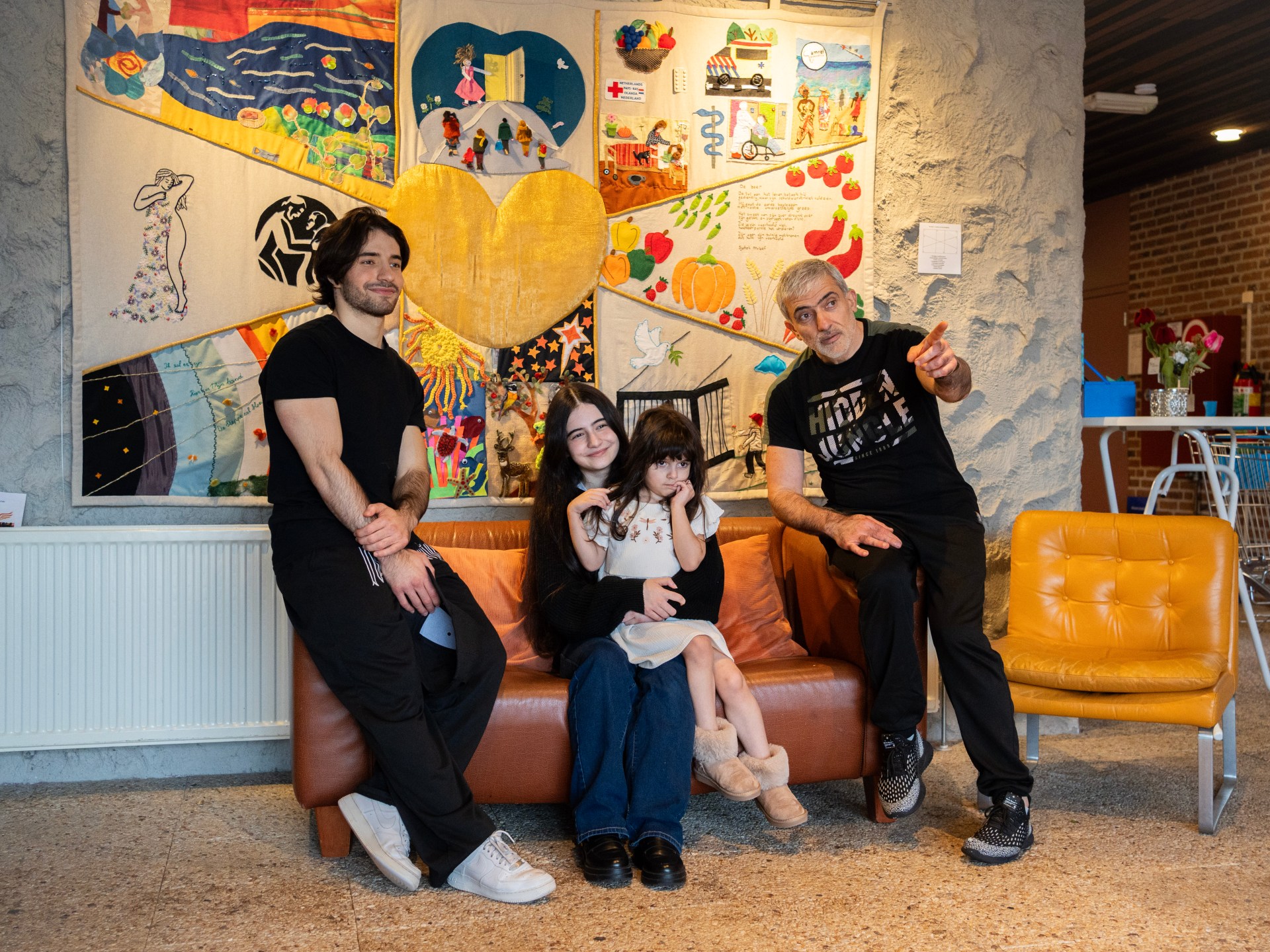

Kampen, Netherlands – “We have traded our freedom for safety,” said Aram Babayants.
The 22-year-old, his parents and three younger sisters have been living in a church in Kampen, the Netherlands, to avoid deportation to Uzbekistan. They have not set foot outside for more than 700 days.
Recommended Stories
list of 1 item
end of list
With the help of thousands of volunteers, the Open Hof Protestant church has been holding a nonstop service, day and night, since November 21, 2024. A Dutch law that prevents authorities from interrupting a religious service enables this so-called “church asylum”.
The Babayants family of six has been in the Netherlands for 13 years. The youngest children, Amelia, 12, and five-year-old Aleksa were born here, while 16-year-old Ariana said she has no memories of her time in Uzbekistan.
“This is the only country we know to be home,” Ariana told Al Jazeera.

While the family is grateful for the support of churches and volunteers, the circumstances have taken a toll, physically and mentally.
“The days often look the same,” Ariana said.
Every weekday, volunteer teachers come to the church to lead high school classes. But Ariana misses being in a classroom, seeing her friends and running “really fast” outdoors, in nature. To connect to peers, she and her sister Amelia started a TikTok account where they post dance videos.
“We are locked up, even though we have done nothing wrong,” Ariana said.
Hundreds of children awaiting asylum
Before taking refuge in Open Hof, the family lived in various refugee centres. In 2014, they applied for asylum in the Netherlands on the grounds that the father, Alexandr, feared persecution in Uzbekistan.
Advertisement
But their asylum applications have repeatedly been rejected.
“It is not about the asylum procedure,” said Herman Stompers, a coordinator of the church asylum. “This is about children’s rights.”
It is “absurd” that children who are rooted here, who speak the language and have been living here for many years, are at risk of deportation, Stompers said. Though children’s rights are anchored in family law and criminal law, they are not an integral part of Dutch immigration law, suggesting that “children’s rights only apply to white, Dutch children”.

It’s not a church’s job to get involved politically, he added, but “when politics falls below the baseline of human dignity, you have to do something”.
Stompers emphasised that the issue goes beyond the Babayants family. The church and volunteers advocate for the enshrinement of the rights of all children in Dutch law. The latest government figures show there are about 420 children in the Netherlands who have been awaiting asylum approval for more than five years.
‘Jesus was an activist’
When pastor Kasper Jager got the call, on October 28, 2024, asking if his church could host the Babayants family, he knew he had to say yes. After seeking approval from the other parishes in Kampen as well as the Dutch church council, he found overwhelming support. Three weeks later, the family moved in.
Although some other churches denounced the move as excessive activism, Jager said he is simply following an example. “Jesus was an activist. He was all about standing up for the most vulnerable,” he said.

The fact that the Babayants family are Christian is a “coincidence”, according to Jager, who said the church would have done the same for a Muslim family. “It is about justice and humanity,” he said.
More than 2,000 volunteers, both religious and non-religious, have filled the service schedule with prayers, sermons and hymns for the past two years. They travel from across the country, and sometimes even from abroad, to participate. At least three people are needed during each two-hour block, adding up to about 50 volunteers per day.
Anti-migration protests
The solidarity shown towards the Babayants family is in sharp contrast to the rising anti-migrant sentiment felt across the Netherlands. Recent months have seen a wave of anti-immigration protests, with far-right demonstrators chanting racist slogans, throwing fireworks at authorities and attacking refugee accommodation centres.
Advertisement
In February, a minority government led by progressive Prime Minister Rob Jetten took office, replacing the most right-wing government in the country’s history.
There was hope that the new, centre-right government would ensure the rights of so-called “rooted children”, who have spent most of their lives in the country or were born here, but this has not been the case, pastor Jager said. “Politically, not much is happening,” he added.
Still, there is a glimmer of hope.
In July, the highest administrative court in the Netherlands ruled that three families should be given residence permits, putting the children’s rights above the government’s aim to limit migration numbers.
Pastor Jager is “cautiously optimistic”, hoping the ruling will set a precedent. But even if it does, he warned it could take years before the Babayants family can safely leave the church.
‘We can’t keep doing this forever’
A previous church asylum case in The Hague that the pastor was involved in lasted 96 days. No one expected the Babayants’ case to go on as long as it has, he said.
“Of course, we can’t keep doing this forever,” coordinator Stompers told Al Jazeera. How much longer they can continue depends entirely on the church community, the volunteers and, first and foremost, the family itself. “As long as they can keep going, we can, too.”
Aram and Ariana want nothing more than to close this chapter and “finally start living”.
“We want to participate [in society], but we can’t,” Aram told Al Jazeera. When asked what he wishes his future to look like, Aram replied: “My dream is to get one of those blue letters from the tax office. That would mean I am allowed to stay.”
Related News

US and rivals spar over next UN boss as race lurches towards deadline

Russia-Ukraine talks in Abu Dhabi end with prisoner exchange agreement
Somalia’s constitutional overhaul tests its fragile federal bargain