
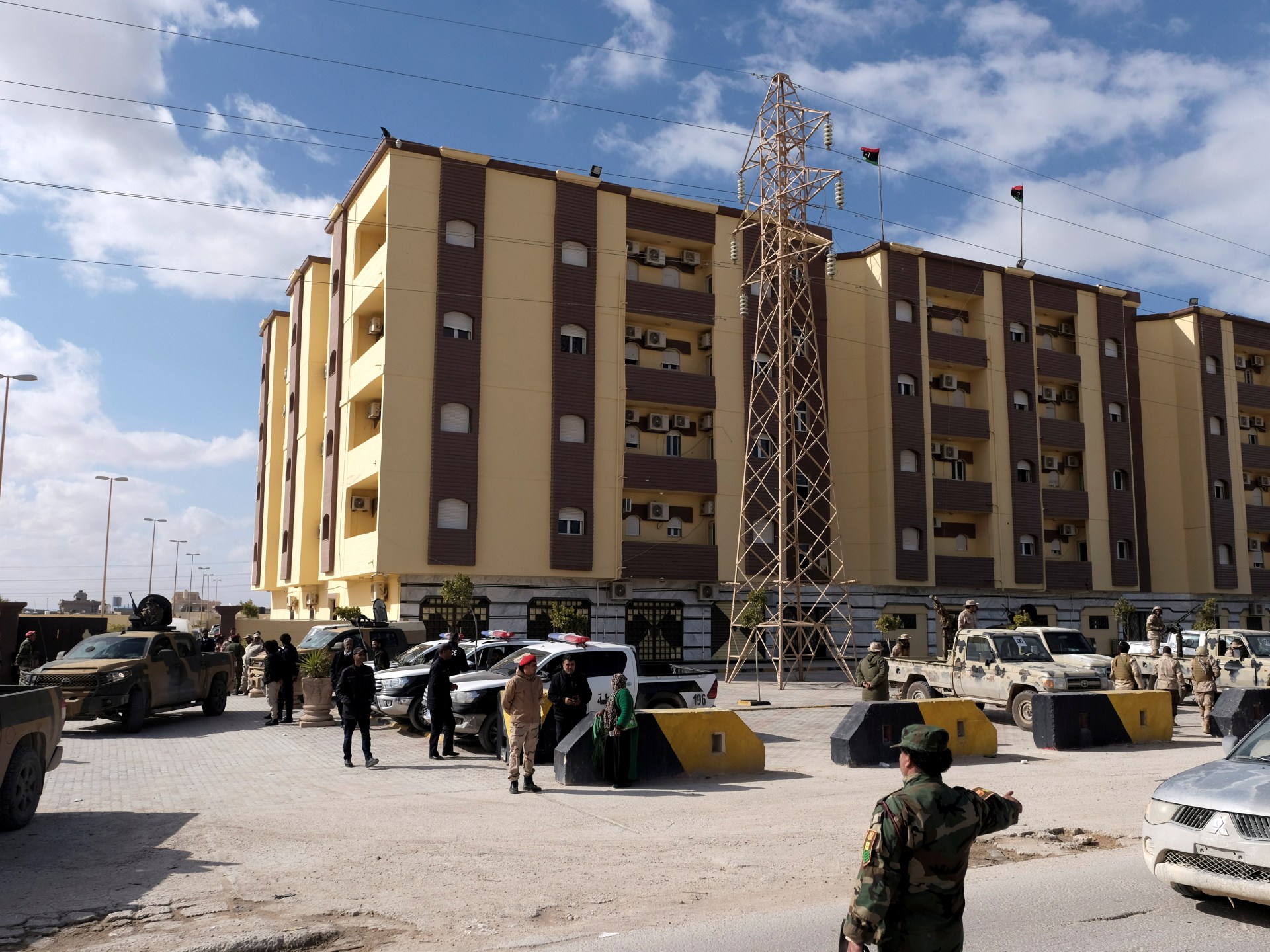

Libya’s eastern-based parliament, backed by military commander Khalifa Haftar, which runs as an alternative to the UN-recognised legislature in Tripoli, has approved a maritime deal with Turkiye, ending years of acrimony.
Haftar’s Benghazi-based government said in a statement on Tuesday that his Tobruk-based House of Representatives voted unanimously to approve the 2019 memorandum of understanding signed between Turkiye and Libya’s UN-recognised former Government of National Accord (GNA) on the delimitation of maritime boundaries between the two countries in the Mediterranean Sea.
Specialised committees presented a full and detailed explanation of the deal’s provisions, lawmaker Aisha al-Tabalqi told the Reuters news agency.
The approval came six years after the same parliament in 2020 unanimously rejected the ratification of the deal and cut political ties with Ankara.
The repealing of those moves on Tuesday consolidates a strategic shift in the works since last year, building on Ankara’s military-to-military contacts with Haftar’s self-styled Libyan National Army (LNA), including a deal in July to develop military facilities and advanced surveillance systems.
The LNA, long believed to have been supported by Egypt and other regional powers, has been in conflict with forces loyal to the Tripoli-based government since the start of the Libyan civil war in 2014.
In 2019, Turkiye signed an agreement with the Tripoli-based government delineating the maritime boundaries between the two countries in the Mediterranean, triggering protests from Greece and Cyprus.
Advertisement
Both European countries denounced the agreement, saying it was a serious breach of international law that disregarded the rights of other eastern Mediterranean countries.
“Some countries may be upset by this agreement, but what matters to us is our national interest,” said Tarek al-Jeroushi, a lawmaker in the eastern-backed parliament, adding that the agreement would strengthen Libya’s position as a political, military and economic partner to key powers.
In December 2019, Haftar’s LNA had nearly encircled Tripoli, threatening to overrun the
UN-recognised GNA, which at the time was led by Fayez al-Sarraj, before Turkiye decided to intervene, sending military advisers and drones to stop the LNA, and altering the trajectory of the Libyan civil war.
Seven years later, there is talk of Ankara setting up a military presence in areas under the control of Haftar’s LNA.
This eastern pivot is designed to secure Turkiye’s long-term geopolitical and economic interests, preserving its influence in Libya regardless of future political settlements between the government and eastern authorities.
Related News
Ex-UK army chef jailed for ‘terror’-related offence

Hardline Israeli rabbi ruling on stolen Palestinian olives prompts uproar
Russia’s attacks on Ukraine kill six after Zelenskyy-Trump talks