‘Weight of responsibility’: Promise and perils of covering Ethiopia’s war
 19 October 2026
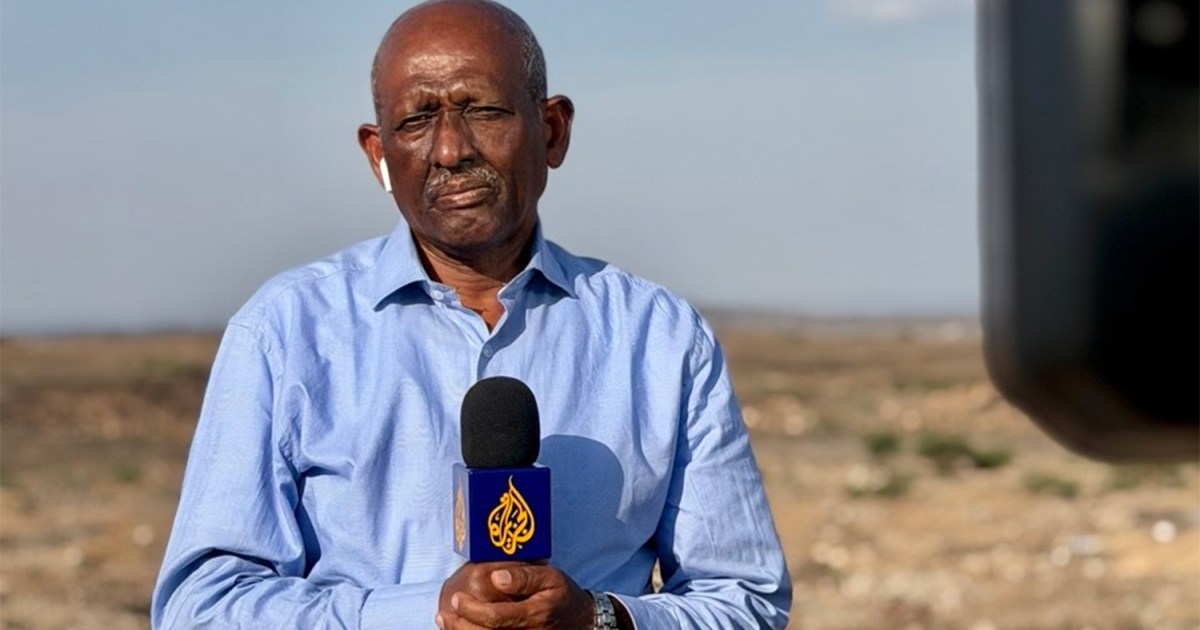

Addis Ababa, Ethiopia – On September 23, fighting erupted in Ethiopia’s northern region of Tigray, shattering the peace agreement between the Ethiopian government and Tigray People’s Liberation Front (TPLF) signed nearly four years ago.
The latest fighting between the federal government-backed Tigray Peace Force (TPF) and TPLF started in the Erbeti area of Ethiopia’s Afar region after the 2022 peace deal unravelled over disarmament and territorial claims.
- list 1 of 4Ethiopia’s Tigray war: Where do the UAE and Saudi Arabia stand?
- list 2 of 4Ethiopia announces instalment of interim government in Tigray
- list 3 of 4Can diplomacy resolve longstanding Ethiopia-Eritrea differences?
- list 4 of 4Residents recount drone strikes in Ethiopia’s northern Tigray region
end of list
For me, the latest war is more than a story unfolding on television. It brought back painful memories of what I had experienced during my reporting in November 2021. The previous episode of fighting killed more than half a million people and displaced about 2 million others by the time the rival sides signed a deal to end the war in 2022.
After I was assigned to cover the fighting, I was once again faced with the challenge any war correspondent faces: how to stand in the midst of active fighting as a witness to the truth.
Soon, our team set off from the capital, Addis Ababa, to the Afar region and then to Mekelle, the capital of the Tigray region, covering the journey by road.
When I reached Erbeti, about 900km (560 miles) northeast of Addis Ababa, I hoped to catch my breath for a few hours and organise our coverage. Instead, events overtook us immediately.
Residents were leaving the town, which, until the previous day, had seemed safe. Small trucks and cars were piled with belongings. Men hurried to load whatever they could carry as families tried to get away before the fighting drew closer.
Advertisement
As we were still figuring out what to do next, loud sounds of shelling shook us. We decided to leave Erbeti only hours after arriving as staying would put the team’s lives at risk.
That had not been the plan. But war pays little attention to a correspondent’s plans.
We withdrew towards Afdera, about 100km (60 miles) to the east via unpaved roads. Afdera is a small town that serves as the administrative centre for the district of the same name in the Afar region, known for its salt mining.
We spent the night inside our car in the middle of the desert with the temperature hovering above 35 degrees Celsius (95 degrees Fahrenheit).

Intensified fighting
The next day, we started early to review information, make calls, prepare footage for reports and coordinate with the newsroom in Doha, Qatar.
Meanwhile, the heat and humidity drained our remaining energy as the mercury hit 50C (122F). As we lay in the car trying to catch some sleep, my thoughts were still in Erbeti.
Early the next morning, we headed for Afdera. After arriving there at 7am, we found that breakfast choices were limited.
The town followed a different rhythm: Many residents ate breakfast after dawn prayers, then headed to work. It was part of a correspondent’s daily reality – arriving somewhere unfamiliar and learning its routines.
We headed north towards Erbeti again, only to find the fighting intensifying in the mountains between the government-backed forces and TPLF.
I couldn’t see the clashes directly, but their sounds filled the area. The sound of artillery firing became louder as we got closer. At one point, we were barely 3km (almost 2 miles) from the front line.
We put on body armour and helmets, picked up our cameras and approached the government troops stationed on the front line.
We managed to film some footage and record brief accounts from soldiers. Then the assignment ended abruptly when the soldiers ordered us to evacuate immediately.
There was no time to argue or capture a final shot. We gathered our equipment and left with the shelling still echoing through the mountains behind us.
For days, we travelled difficult mountain routes through the regions of Afar, Amhara and Tigray. Roads we travelled on in the morning couldn’t be used by evening. Reports received before noon needed checking again before sunset.
In villages near the front lines, fear was visible in the faces we encountered as mothers packed small bags and children watched the road with anxious eyes.
Advertisement
I made a point of listening with sensitivity, respecting their suffering without exploiting their emotions for the camera.

Journey to Mekelle
As our coverage continued, the journey led us towards Mekelle, Tigray’s capital. We arrived the day after Ethiopian federal forces and their allies entered the city. The TPLF forces had retreated.
But Mekelle was a different city. I had expected it to be alive with unfolding events. It looked exhausted, with the usual police and security presence absent. It seemed to be trying to absorb what had happened in the hours before.
Daily life continued cautiously. Cars moved quietly through the streets, and shops had reopened in some neighbourhoods.
We saw soldiers welcomed in some streets while others remained silent, fearful of what might come next.
Many people declined to speak on camera because they didn’t know how events would unfold. There was no disorder in the conventional sense, but apprehension was everywhere. It was difficult to establish who was maintaining order or what the coming hours might bring.
We had no assurances about what might lie ahead. The possibility that our exit routes might close weighed on every decision.
Still, we had to keep working. Our audience was waiting for pictures and news. As far as we knew, we were the only media team in Mekelle.
I felt the weight of that responsibility. When you are alone in a place like this, every word matters. You must distinguish between what you have witnessed, what residents tell you and what the warring parties announce.
In a city that has only just emerged from battle, verifying information becomes harder than obtaining it.
We maintained as normal a routine as possible, filming in the morning, returning to prepare reports and following developments hour by hour.
Preserving impartiality
The challenges extended beyond security. We also faced the demanding ethical task of preserving impartiality and professional distance in a deeply polarised war.
People in the Tigray region have historic grievances against the federal government. After coming to power in 2018, President Abiy Ahmed reformed political institutions, lifted media censorship and freed thousands of political prisoners. But ethnic tensions have since erupted in this diverse nation of 139 million people.
Documenting residents welcoming incoming government-backed troops without presenting those scenes as universal or reporting fears about withdrawing TPLF fighters without drawing definitive conclusions could expose us to accusations of bias from any party that wanted us to see the battlefield exclusively through its own eyes.
That’s why I went beyond what the camera captured, talking to residents and listening to those who preferred to speak off camera. I understood that our task involved listening not only to what people said but also to what remained unspoken.
Their accounts helped us understand the situation. With each hour in the city, we tried to weigh the different narratives, recognising that our observations and residents’ accounts offered distinct perspectives.
Advertisement
The exhaustion of days on the road had accumulated, but my mind stayed on the day just ended and the one ahead. Which road would we take? Where would we go? Would the events of the coming hours allow us to complete our plans?
After two weeks of moving between front lines, fatigue had become a constant companion.
While we kept reporting, rumours that we were arrested or trapped inside the city kept our colleagues and family members anxious. They searched for the smallest piece of information confirming we were safe.
Only after I appeared live on TV did I understand that it carried another meaning. For many who had been trying to reach us, it was more than a live report. It was an unintended reassurance that we were still there – and still alive.
I later learned that some Mekelle residents had discovered that government forces had taken control of their city from our broadcast.
With communications disrupted and information scarce, television was bringing people news of events unfolding close to their homes.
After three days of reporting, we left Mekelle, carrying testimonies and documented facts.
On the return journey, looking through the car window at the roads we had travelled over the previous two weeks, I reflected that memories of war are not confined to battlefields.
What remained were the faces of the people I had met along the way, the anxiety in people’s eyes and the persistent sense that life seeks to continue, even in the places closest to war.

Related News
Turkish FM says ready to meet Saudi defence needs
US and Iran both claim control of Strait of Hormuz amid attacks on vessels
Arab party leader forced to withdraw from Israeli elections