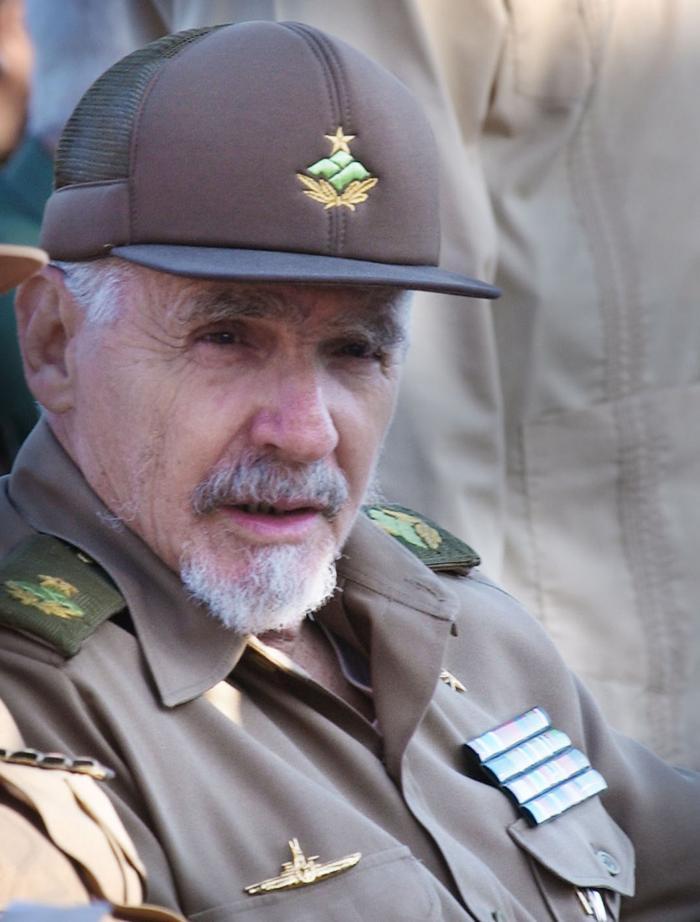
Santa Clara Sculpture Complex prepares for tribute to Commander of the Revolution, Ramiro Valdés Menéndez
 24 June 2026


SANTA CLARA.— Activity is in full swing at the Commander Ernesto Che Guevara Sculpture Complex as preparations are underway for the burial ceremony of the remains of the Hero of the Republic of Cuba, Ramiro Valdés Menéndez, which will take place this Thursday morning.
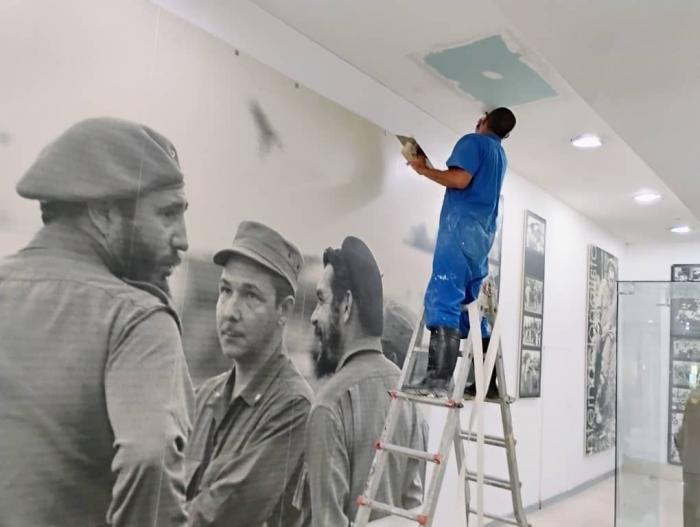
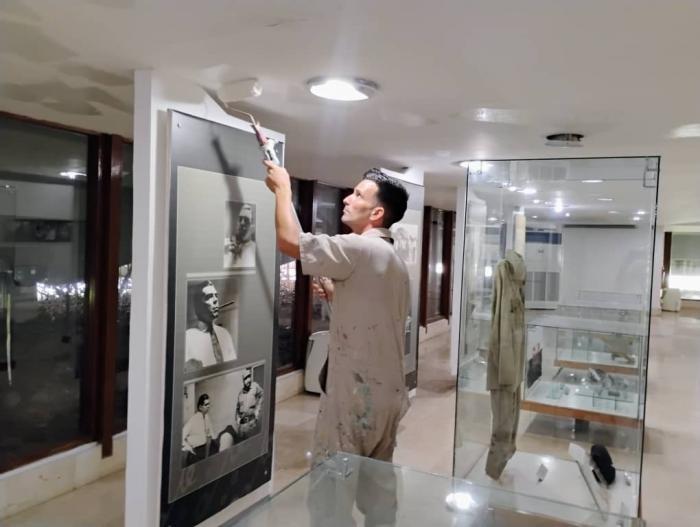
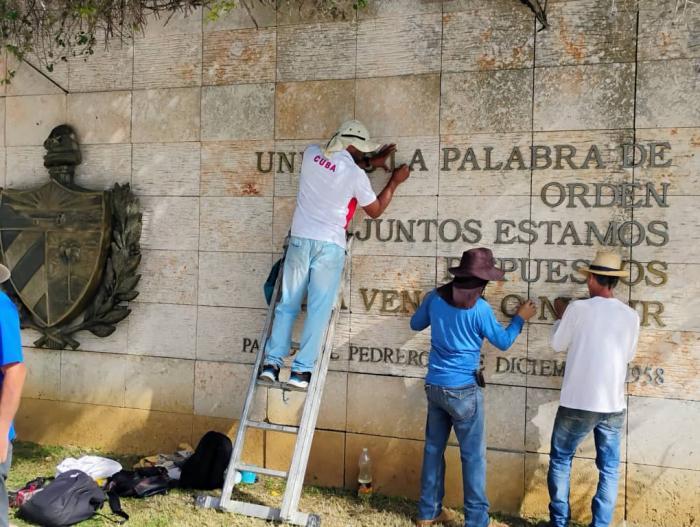
Companies and organizations in the region are carrying out cleaning activities, landscaping and lighting improvements, as well as painting and restoring some of the floors and roofs that were in poor condition, according to Reday René Armas Álvarez, director of the institution.
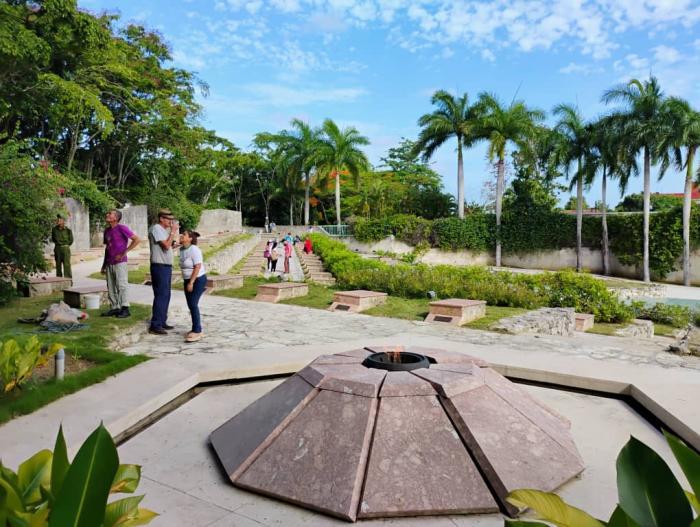
Special emphasis has been placed on the comprehensive rehabilitation of the Mausoleum to the Combatants of the Las Villas Front, the final resting place of Commander of the Revolution Ramiro Valdés Menéndez, along with other combatants from Column No. 8 "Ciro Redondo," the Revolutionary Directorate 13 de Marzo, and the Popular Socialist Party who fell during the struggle or died after the triumph of the Revolution.
Work is underway to clean and polish the marble and granite of each of the 220 ossuaries at the site, as well as to replace some of the landscaping, and to paint and refurbish the trusses that provide access to the area, Armas Álvarez explained.
Alongside these tasks, work is also underway to waterproof the museum, improve its roof and lighting, and upgrade the access doors to the area where hundreds of extraordinarily valuable objects related to Che Guevara and his comrades in arms are displayed.
Likewise, the vegetation in the memorial where the remains of the Heroic Guerrilla and the combatants of the Reinforcement Detachment rest is being replaced. This vegetation was designed to recreate the Bolivian jungle, noted the director of the Complex, who added that all the wooden paneling in the Multipurpose Room has been replaced with aluminum and glass.
Significant work has been carried out in the protocol area, which now looks brand new after the complete renovation of the plumbing, furniture, and the rest of the space.
...
Some features of the site where the remains of Commander of the Revolution, Ramiro Valdés Menéndez, will rest:
On December 28th, 1988, the Monumental Complex in homage to Commander Ernesto "Che" Guevara was inaugurated in Santa Clara. Guevara fought one of the most decisive battles of the Rebel Army in this city.
Construction of the Complex began on June 14th, 1987, and the Square, the Tribune, the Museum, and the Che Monument were inaugurated on December 28th, 1988, in a commemorative ceremony for the 30th Anniversary of the Battle of Santa Clara and to mark the 60th anniversary of Che Guevara's birth that year.
The role played by renowned architects, including Jorge Cao Campos, Blanca Hernández Guivernau, and José Ramón Linares Ferrera, as well as sculptor José Delarra, creator of the Che Guevara statue that stands at its center, was key to its realization.
The Square features two fountains symbolizing the star representing Che Guevara's rank of Commander and covers an area of over 17,550 square meters. Fourteen palm trees are planted on each side, symbolizing June 14th, 1928, the birthdate of the undisputed Latin American guerrilla fighter.
The grandstand, for its part, covers an area of 2,000 square meters and has a capacity of 900 people. The complex also includes other elements that lend sobriety and strength to the sculptural ensemble, among them the sculpture of Che Guevara, composed of a bronze statue of Commander Che Guevara, measuring 6.80 meters and weighing 20 tons, which stands on a 16-meter-high pedestal.
The statue faces south and depicts Che Guevara in motion, wearing his guerrilla uniform, his arm in a cast as it was when he entered Santa Clara, and holding the M-2 rifle that accompanied him during the battle.
After the construction of the Complex and the discovery of the remains of combatants on Bolivian soil, the remains of guerrillas who fell in that epic struggle began arriving at the Mausoleum erected for that purpose. Thus, on October 17th, 1997, the remains of Ernesto Che Guevara, Orlando Pantoja Tamayo (Olo), René Martínez Tamayo (Arturo), Alberto Fernández Montes de Oca (Pacho), Carlos Coello (Tuma), Simeón Cuba Sarabia (Willy), and Juan Pablo Chang Navarro-Levano (Chino) were laid to rest there.
Then, on December 30th, 1988, the following individuals were transferred to that site: Haydeé Tamara Bunke Bíder (Tania), Octavio de la Concepción y de la Pedraja (Moro), Manuel Hernández Osorio (Miguel), Roberto Coco Peredo Leigue (Coco), Julio Luís Méndez Korne (Ñato), Mario Gutiérrez Ardaya (Julio), Jaime Arana Campero (Chapaco), Francisco Huanca Flores (Pablo), Aniceto Reynaga Gordillo (Aniceto), and Lucio Edilberto Galván Hidalgo (Eustaquio).
On October 8th, 1999, the remains of Juan Vitalio Acuña (Vilo), Gustavo Machín Hoed de Beche (Alejandro), Israel Reyes Zayas (Braulio), Moisés Guevara Rodríguez (Moisés), Freddy Maymura Hurtado (Ernesto-Médico), Apolinar Aquino Quispe (Apolinar), and Walter Arancibia Ayala (Walter) were placed there.
Exactly one year later, the remains of Eliseo Reyes Rodríguez (Rolando-San Luis), Antonio Sánchez Díaz (Marcos-Pinares), José María Martínez Tamayo (Papi-Ricardo), Serapio Aquino Tudela (Serapio), Casildo Condorí Coche (Victor), Raúl Quispaya Choque (Raúl), and Restituto José Cabrera Flores (Negro) were transferred.
By decision of the Party leadership, since April 12th, 2006, the remains of internationalist fighter Hermes Peña Torres (Hermes), who fell in the guerrilla movement in Salta, Argentina, also rest in this place.
The Memorial holds the remains of 13 Cubans, including Hermes Peña; three Peruvians; and 13 Bolivians, in addition to Che Guevara, who was a Cuban-Argentine, and Tamara Bunke Bider, an Argentine-German.
The remains of Cuban Jesús Suárez Gayol and four Bolivian combatants have yet to be found; the remains of three others—Intí Peredo, Antonio Núñez Tardío, and David Adriazola—which have been located, remain in Bolivia at the request of their families.
As part of the Complex, a museum was also built, housing hundreds of documents, photographs, and artifacts belonging to Che Guevara's guerrilla fighters or related to that revolutionary epic.
Also featured is the Mausoleum to the Combatants of the Las Villas Front, designed by architect Blanca Hernández, which brings together the remains of combatants who fell during the war or died after the triumph of Column No. 8 "Ciro Redondo," of the Revolutionary Directorate 13 def Marzo and the 26th of July Movement, which operated in that territory.
Among the most important moments in the history of the Complex are September 30th, 1996, the day the people were summoned in the presence of Commander-in-Chief Fidel Castro in the province; April 16th, 1997, when the 5th Party Congress was convened in the presence of Raúl Castro; and October 17th, 1997, when the Memorial was inaugurated with Fidel present, the date on which the remains of Che Guevara and six of his guerrilla comrades arrived at this site.
Also noteworthy are the development of the "Aló Presidente" program, hosted by Venezuelan President Hugo Rafael Chávez Frías, and the moment when the ashes of the historic leader of the Cuban Revolution, Fidel Castro Ruz, spent the night at the Memorial during their transfer to Santiago de Cuba in November 2016.
Related News

Cuban President declares Official Mourning on the death of Commander of the Revolution Ram...

Commander Ramiro, protagonist of the extraordinary work that is the Revolution

Díaz-Canel: "The passing of Commander of the Revolution, Ramiro Valdés Menéndez, is dee...