
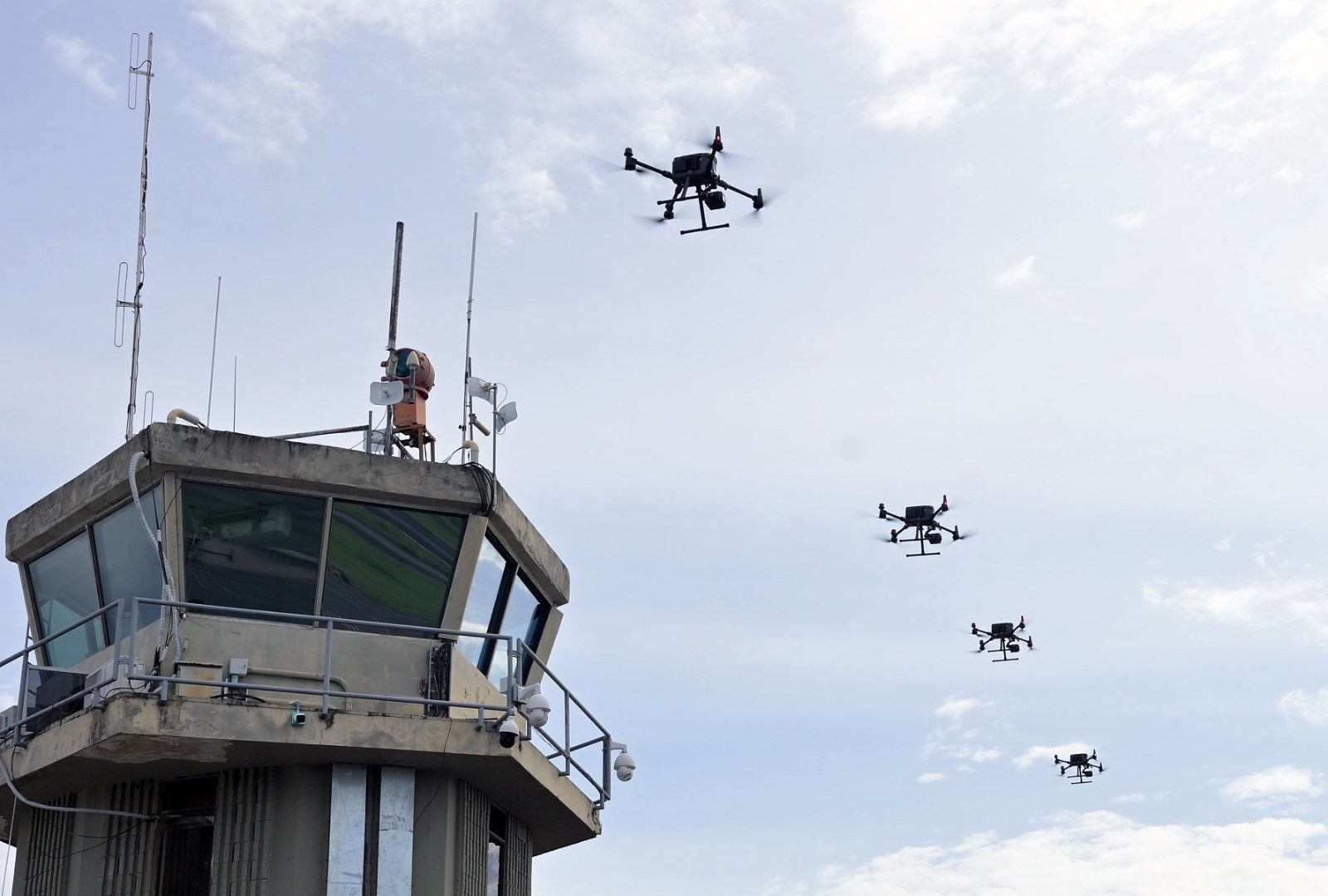

According to analysts, armed groups are using the aerial devices primarily for two purposes: attacks and surveillance.
"They target certain infrastructure, attack police and attack the army," Bonilla said. "But another very common use is territorial control through surveillance flights."
She points to the use of drones to survey farmland seeded with coca, the key ingredient for cocaine and a key source of revenue for armed groups.
There, drones are used to monitor crops and laboratories, replacing oversight conducted on foot or by motorbike.
Colombia's armed groups have sourced their drones through a mix of online purchases — including on consumer platforms such as Amazon and Temu — as well as through urban intermediaries and cross-border smuggling. Those devices are then modified for combat.
"Now they are buying commercial-type drones, like the Chinese DJI models, but not basic consumer ones, which only have a range of about three or four kilometres [1.8 to 2.5 miles]," said Camilo Mendoza, a defence analyst and author of the book Colombia Under Drone Threat.
"These are larger industrial drones used for inspections, with longer range, higher ceilings and the ability to carry heavier loads."
Mendoza estimates that most can lift an average of 1.5 kilograms (3.3 pounds), but some can carry cargo weighing 3 kilograms (6.6 pounds) or more.
Some are used to haul improvised explosive devices (IEDs), made from plastic tubes filled with industrial explosives and shrapnel.
Those explosives are then released via remote activation.
"They have learned through trial and error," Mendoza said. "There are even videos they have uploaded to their social media on TikTok and other networks where they do weight and balance tests. So they load a pound of rice, lift the drone and say: ‘No, this doesn’t work. Take it off. Add something.’ That’s how they have learned."
The models themselves are increasingly sophisticated. Some groups are even employing first-person view (FPV) drones, flown with goggles that give pilots an immersive direct view from the drone.
The use of drones in Colombia's armed conflict does not mean that armed groups have abandoned more traditional devices, like improvised explosive devices, grenades and landmines.
But drones have tactical advantages for the groups, which are often spread across rural terrain. They are also easier to operate.
"A pilot of a conventional aircraft takes about one or two years in their training phase, depending on the aircraft and on the missions," Mendoza said. "Learning to fly a drone — it takes a week."
He added that learning to build and operate drones for conflict has become a global enterprise.
Colombia's armed groups have reportedly learned from the war in Ukraine, which Mendoza describes as a "laboratory of modern warfare".
According to his sources, some Colombians — mainly linked to the FARC dissidents — have travelled to Ukraine posing as former soldiers or police officers, to pick up cutting-edge drone techniques.
Related News

Man killed in great white shark attack in western Australia
FBI’s lack of progress on Israeli killing of journalist ‘troubling’: CPJ
Iran reviews US proposal to end war as Pakistan steps up mediation efforts