

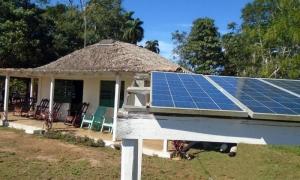

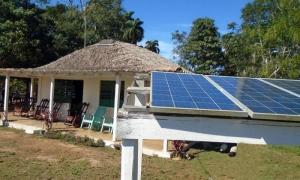
The National Electric Union (UNE) is implementing a program to install 5,000 2 kW photovoltaic systems, donated by the People's Republic of China, with the aim of diversifying the energy matrix and guaranteeing essential services amidst the current energy crisis. Of these, 2,671 were allocated to vital centers in all municipalities across the country, while the remainder will be installed in isolated homes, including those that have never had access to electricity.
Elena Maidelín Ortiz Fernández, head of the installation project for these systems, explained to Granma that the distribution was carried out collaboratively with all the relevant agencies at the national, provincial, and municipal levels.
"The decision was made to allocate 2,671 systems for installation in vital centers throughout all municipalities," he specified. Among the institutions that will benefit are maternity homes, nursing homes, senior centers, polyclinics (emergency rooms), funeral homes, bank branches (including exchange bureaus), municipal radio stations, radio transmitters, Etecsa communications facilities, and commercial offices of the National Electric Union.
Ortiz Fernández emphasized that the goal is not total self-sufficiency for these centers, but rather to guarantee their energy security during critical times.
"Installing a 2 kW system in a vital municipal center is the perfect tool to protect what is essential, what is truly needed to achieve the autonomy of that municipality," she stated.
"The goal of installing these 2 kW systems is not to achieve complete self-sufficiency in energy consumption, but rather the energy survival of that center, which in turn contributes to the vitality of the municipality and the province."
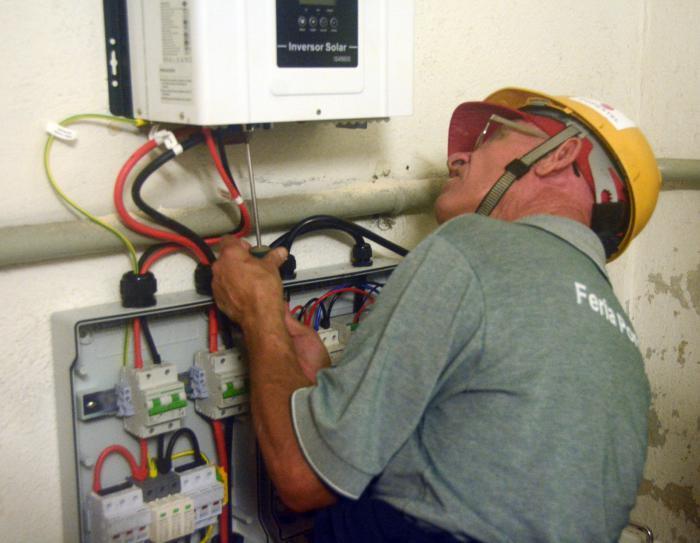
The project manager emphasized that these systems are isolated and not connected to the electrical grid, allowing the centers to continue operating even during power outages. This will enable activities such as administering vaccines, providing care for the elderly in nursing homes, and the operation of banks, which are currently affected by power cuts, she explained.
TRANSPORT AND LOGISTICS
The official explained that they have worked intensively with provincial electric companies and local governments to overcome fuel and transportation limitations. "Prior coordination was carried out with all the carriers who could help us transport these resources, and therefore meticulous planning was done to achieve what we have achieved today: having the resources in all the provinces to be able to install these systems," he stated.
ISOLATED HOMES AND REMOTE COMMUNITIES
The remaining 2,329 systems will be installed in isolated homes that have generators—with a four-hour supply—but cannot operate due to a lack of fuel. "It's very difficult to obtain this resource, both for delivery and transport to these communities," he explained.
Furthermore, these photovoltaic systems allow for greater autonomy because they will be able to connect more appliances for longer periods in hard-to-reach places where fuel is not regularly available.
Homes that have never had electricity, the so-called "zero-volt" homes, will also benefit, he specified.
He also highlighted the social impact of this measure: "If you install a 2 kW system for these people there, allowing them to have a refrigerator, a fan, a television, their lives change completely, and we prevent them from migrating from their communities."
OTHER RENEWABLE ENERGY PROGRAMS
In addition to this Chinese donation, the National Electric Union (UNE) is developing other renewable energy projects. Ortiz Fernández mentioned the charging station program for children dependent on electricity, which has 126 units, "which symbolizes a guarantee of life for them," he explained.
To date, 114 of these systems have been installed, which include solar panels for charging the batteries.
Likewise, in the province of Holguín, a project funded by a Canadian donation is underway to install 502 2 kW photovoltaic systems for isolated homes in the region. "This project includes other areas, but our role as the National Electric Union is the installation of these systems, and we have already installed 60% of them," he reported.
ENERGY RESILIENCE AND SAVINGS
Ortiz Fernández emphasized that these programs not only represent savings, but also an option for energy resilience, guaranteeing that during the most critical power outages currently occurring in our country, these essential services for the community will be available.
Related News

Why is Cuba prioritizing the development of pneumococcal vaccines?

Cuba calls for an end to U.S. and Israeli aggression against Iran and an avoidance of esca...

Tax benefits for investments in renewable energy sources expanded
