

Tehran, Iran – Another round of indirect talks between Iranian and United States officials ended with a mediator claiming “significant progress” but still no clear evidence that either side was willing to concede enough on their positions to avoid war.
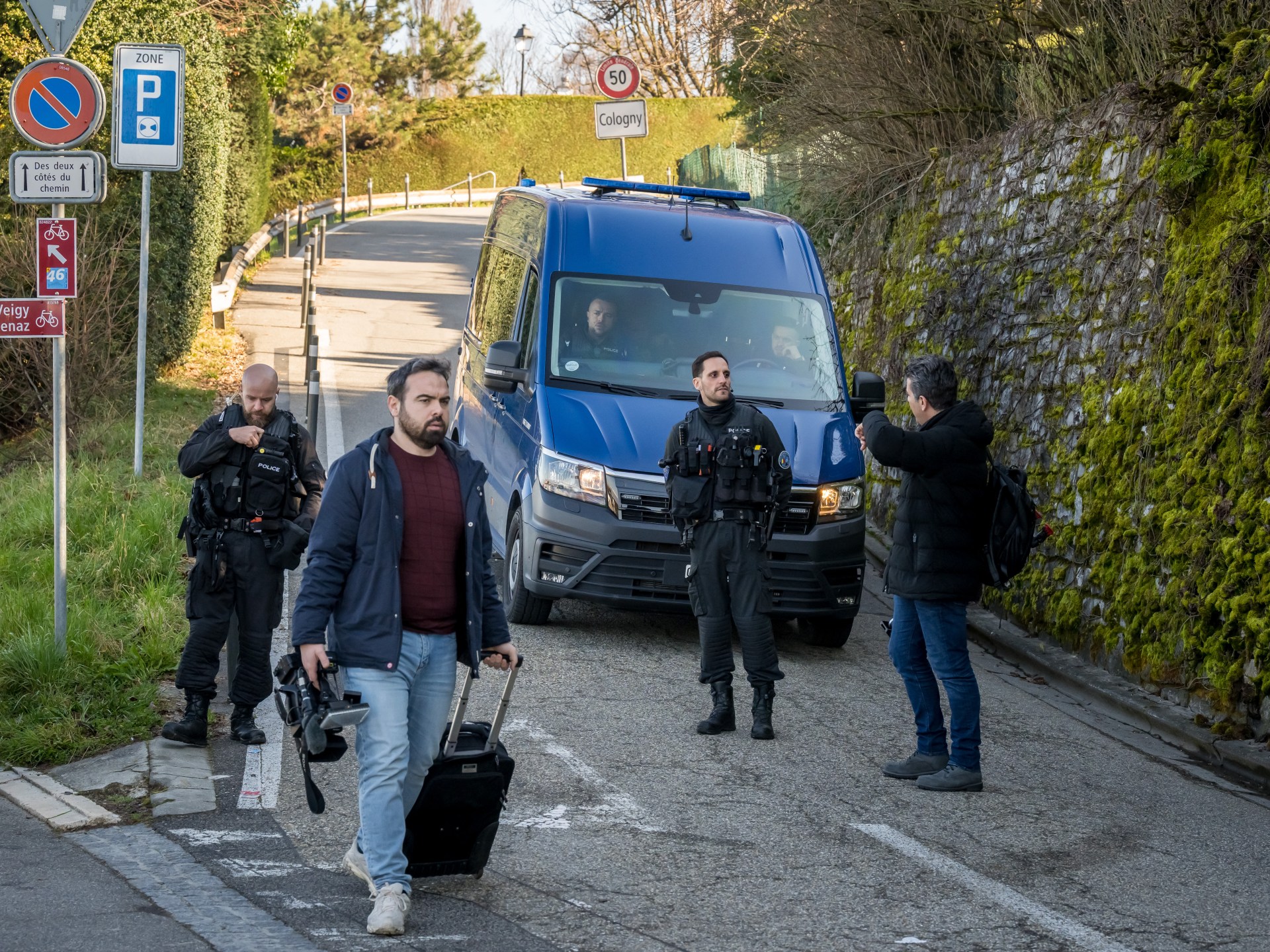
After the conclusion of the talks in Geneva on Thursday, Iranian Foreign Minister Abbas Araghchi said further technical talks would be held next week in Vienna and progress had been “good”.
- list 1 of 3US, Ukraine meet in Geneva as Russia hits cities with missiles, drones
- list 2 of 3US to allow Venezuelan oil sales to Cuba as alarm grows in the Caribbean
- list 3 of 3Trump says lawmakers Ilhan Omar, Rashida Tlaib should be removed from US
end of list
“These were the most serious and longest talks,” Araghchi said.
Omani Foreign Minister Badr bin Hamad Al Busaidi, who mediated the talks, said Iranian and US diplomats would consult with their governments before the Vienna talks.
Few details have emerged about the discussions, but Araghchi was reported to have met US envoy Steve Witkoff – if only briefly, according to Iran’s Tasnim news agency.
The Iranian team, led by Araghchi, handed over on Wednesday night Tehran’s written proposals to Al Busaidi, who also mediated previous rounds of talks in Geneva and Muscat.
The Omani diplomat then met with the US delegation on Thursday, led by Witkoff and US President Donald Trump’s son-in-law Jared Kushner. Al Busaidi mediated between the two teams throughout the day, and the US delegation also held separate talks over Ukraine.
Also taking part in the talks was Rafael Grossi, the director general of the International Atomic Energy Agency (IAEA), which will have to undertake nuclear monitoring and verification duties in Iran in case of any agreement.
The UN watchdog will hold several days of board meetings starting on March 6, which is around the 10- to 15-day deadline floated by Trump last week for Iran to reach a deal.
Advertisement
Western media outlets have suggested the board could once again consider a move to censure Iran depending on the results of the Geneva talks. Iran has accused Grossi of taking politicised action and criticised the IAEA after Israel attacked Iran in June, one day after the agency passed a resolution saying Tehran was not complying with its commitment to nuclear safeguards.

Fundamental differences
The two sides have been at odds over key issues, including uranium enrichment and missiles.
Washington has repeatedly emphasised, in lockstep with Israel, that it will not accept any nuclear enrichment taking place on Iranian soil, even at civilian-use levels agreed during the 2015 nuclear deal that Iran agreed with world powers. Trump unilaterally abandoned that deal in 2018.
In the days leading up to the Geneva talks, US officials increasingly focused on Iran’s ballistic missile programme, saying the missiles threaten US military bases across the Middle East as well as Israel. Iran has refused to entertain any talks on its conventional weapons. Iranian officials, including President Masoud Pezeshkian, have repeatedly said they will never develop nuclear weapons.
Speaking to local officials during a provincial visit, Pezeshkian also shot back at Trump’s assertion during a lengthy State of the Union speech that Iran was “the world’s number one sponsor of terror”.
Pezeshkian said numerous Iranian officials and nuclear scientists have been assassinated over the decades, particularly in the immediate aftermath of the country’s 1979 Islamic revolution.
“If the realities are seen fairly, it will become clear that Iran is not only not a supporter of terrorism, but one of the main victims of terror in the region and across the world,” he said.
The Iranian government’s IRNA news agency said Tehran’s proposal was expected to gauge US “seriousness” in the talks because it contained “win-win” offers.
Iranian officials have not publicly discussed all the details of their proposals, but they are believed to include diluting part of the country’s 60-percent enriched uranium and keeping the uranium inside the country. Iranian authorities envisage that could be paired with economic opportunities for the US related to Iranian oil and gas and the purchase of airplanes.

Supreme Leader Ali Khamenei has maintained his tough rhetoric against the US as well, casting doubt on the chances of any agreement. He also said Trump would be unable to overthrow Iran’s government after the US president said regime change would be “the best thing that could happen” in Iran.
Advertisement
Araghchi said during an interview on Wednesday that even if Khamenei is killed, the theocratic establishment in Iran would carry on because it has legal procedures in place to appoint a successor. Pezeshkian added on Thursday: “They can eliminate me, eliminate anyone. If they hit us, a hundred more like us will come up to run the country.”
Double-digit inflation as Iran braces for war
Iranian and US officials have been hailing supposed “progress” in the indirect talks this month, but many Iranians continue to prepare for war.
In Tehran and across the country, people are buying bottled water, biscuits, canned foods and other essentials in case of a war.
“A few days ago, I bought a power bank to keep the electronics charged. Now I’m looking for a short-wave radio so we can hear the news if the state shuts down the internet and electricity infrastructure is bombed,” said a 28-year-old resident of the capital who asked not to be named.
As bombs fell during the 12-day war with Israel in June, Iranian authorities cut off almost all internet access for several days, followed in January by an unprecedented 20-day total blackout imposed on about 92 million people as thousands of people were killed during nationwide protests.
The Iranian government, which blames “terrorists” armed and funded by the US and Israel for the protests, has rejected Trump’s claim that 32,000 Iranians were killed during the demonstrations. It said more than 3,000 people were killed, and rejects documentation by the United Nations and international human rights organisations that its security forces were behind the killings.
As the threat of war intensifies, not all Iranians are capable of stocking up on food and other necessities due to rising inflation that has gripped the country for more than a decade as a result of a mix of chronic local mismanagement and US and UN sanctions.
According to separate reports by the Statistical Centre of Iran and the Central Bank of Iran released on Thursday, inflation has now shot beyond 60 percent.
The Statistical Centre put annual inflation in the Iranian month of Bahman, which ended on February 19, at 68.1 percent, while the Central Bank said it was 62.2 percent.
Food inflation was by far the strongest driver at a whopping 105 percent. That included a 207-percent inflation rate for cooking oil, 117 percent for red meat, 108 percent for eggs and dairy products, 113 percent for fruit and 142 percent for bread and corn.
Iran’s national currency, the rial, stood at about 1.66 million rials to the US dollar on Thursday, near an all-time low.
Related News
Protesters march in Venezuela as National Assembly weighs amnesty bill
Iran, US set to hold talks as Trump threatens force, imposes sanctions
LIVE: Russia-Ukraine war enters fifth year as strikes hit Zaporizhzhia