

The Pan American Health Organization (PAHO), a United Nations agency, has issued a new report warning of an uptick in measles cases throughout the region.
On Wednesday, the organisation issued an epidemiological alert that called for member states to strengthen “routine surveillance and vaccination activities” in order to combat the spread of the disease.
- list 1 of 3Why has Canada lost its measles-free status – and could the US be next?
- list 2 of 3South Carolina measles outbreak grows to 185 cases amid vaccination worries
- list 3 of 3Alarms raised as Trump’s CDC cuts number of suggested vaccines for children
end of list
“The sharp increase in measles cases in the Americas Region during 2025 and early 2026 is a warning sign that requires immediate and coordinated action by Member States,” PAHO said in a statement.
Overall, in the first three weeks of 2026 alone, PAHO documented 1,031 cases of measles in the Americas. Throughout 2025, a total of 14,891 cases were confirmed.
Some of the biggest outbreaks the PAHO highlighted were unfolding in North America, with countries like the United States, Mexico and Canada facing high numbers of cases.
What is measles?
Measles is a highly contagious airborne virus capable of infecting nine out of every 10 people exposed to it, if they are unvaccinated.
In most cases, symptoms of the disease clear up within several weeks. However, measles can be deadly or cause life-altering health complications, particularly among young children.
Some sufferers find themselves with ear infections and lung inflammation. Others experience pneumonia or encephalitis, a swelling of the brain that can cause lasting damage, including seizures and memory loss.
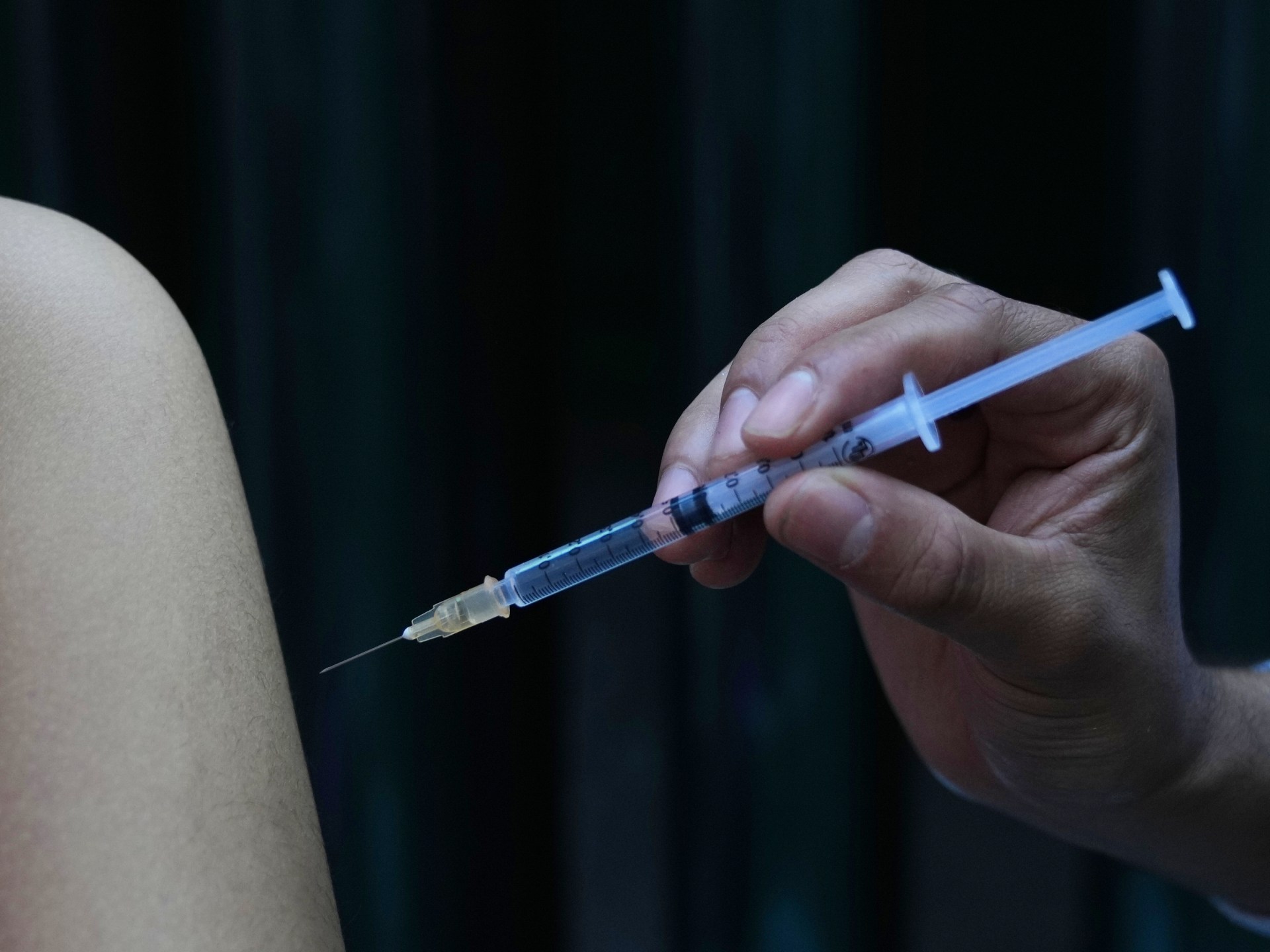
The only way to prevent measles and halt its spread is by taking a vaccine. That care is often administered through a combination vaccine known by the acronym MMR, for measles, mumps and rubella.
Advertisement
Doctors typically advise patients to get vaccinated early. For healthy children, the general guidance is to receive the first MMR dose before 15 months of age. The second and final dose is recommended before age six.
The MMR vaccine is widely considered safe. But in countries like the US, vaccination rates have fallen in recent years, in part due to conspiracy theories and misleading statements.
The country’s Health and Human Services Secretary Robert F Kennedy Jr, for instance, has previously asserted that the vaccine “wanes very quickly”, despite the fact that it offers lifelong protection.
Kennedy has also claimed there were health risks associated with the vaccine. But experts, including at the US Centers for Disease Control and Prevention (CDC), have repeatedly maintained that most people encounter no serious problems – and that the vaccine is far safer than exposure to measles itself.
“There have been no deaths shown to be related to the MMR vaccine in healthy people,” the Infectious Diseases Society of America says on its website.
High numbers in North America
According to PAHO’s report on Wednesday, the US has seen 171 new cases of measles in the first three weeks of 2026. The country experienced a total of 2,242 cases in 2025.
One of the ongoing outbreaks has been in South Carolina, where 876 incidents of measles have been reported in recent months. Of that total, 800 sufferers were unvaccinated, 16 had only received a partial vaccination, and 38 had an unknown vaccination status.
Meanwhile, in Texas, an outbreak resulted in 762 cases of measles between January and August. Two unvaccinated children died in that outbreak, and there were 99 hospitalisations.
In 2000, measles had been declared eliminated from the US, a sign that cases were no longer spreading domestically, though some cases did occur after exposure to the virus abroad.
Mexico, too, had achieved its measles elimination status in 1996, after an extensive vaccination campaign. The entire Americas region was declared measles-free in 2016.
But both the US and Mexico risk seeing their measles elimination status revoked, as outbreaks continue.
In Mexico, for instance, there were 6,428 cases of measles in 2025, the highest of any country in the Americas. For the first three weeks of 2026, there have been 740 more cases.
PAHO typically determines which countries have elimination status, and the organisation has indicated that it will review the situation in the US and Mexico during a virtual meeting on April 13.
Advertisement
Canada, meanwhile, already saw its measles elimination status rescinded in November. It has seen several measles outbreaks since October 2024.
PAHO found that there were 5,436 cases of measles last year, and 67 in the first three weeks of 2026.
The country can win back its elimination status only if it stops measles transmissions resulting from its outbreaks for more than one year.
Related News
Israeli drone strike kills two children collecting firewood in Gaza
Shipping giant Maersk to take over Panama Canal ports after court ruling
Russia-Ukraine war: List of key events, day 1,436