

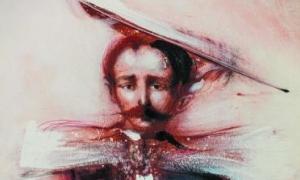


If we claim that we have fully realized Martí's vision of the Republic, not only would we be untruthful, but we would also be foolishly closing the doors to the future. What revolutionary Cuba has achieved in the field of social justice, always under unfavorable circumstances and even more so in recent years, is enormous; what remains to be done, fortunately, is immeasurable. The growing realization of Martí's principles, which depends not only on our will but also on the conditions of the world around us and especially on U.S. policy, means nothing less than our historical horizon.
We are moving toward the horizon, but can we possess it? The function of the horizon is to make us move toward it. Even when we retreat, the certainty that the horizon exists allows us to believe in the possibility of continuing to advance. Is what Martí proposes to us, not only in this or that text, but in the entirety of his life and work, totally achievable? I do not believe that these questions are what he would prefer in us. What he asks of us is that we move forward every day. This is Martí's meaning of life, in which negative forces are included, not as reasons for discouragement, but as spurs.
In a seminal speech, With Everyone, and for the Good of Everyone, Martí warns from the outset about "the grave danger of blindly following, in the name of freedom, those who take advantage of the desire for it to divert it for their own benefit" and praises "Cubans who express their frank and free opinion on all matters." This is what he calls "the full dignity of man," a concept that in the stark dilemma ("Either the republic is based on the integrity of each of its children [...], or the republic is not worth a single tear from our women or a single drop of blood from our brave men") is balanced by two other indispensable factors: "the habit of working with one's hands and thinking for oneself." This is not the freedom that can be used for purposes unworthy of it (which is what we see so much of today in the international mass media), nor is it the freedom that, by denying itself, places itself at the service of faceless ideas (to which certain forms of socialism were prone, and to which our press is sometimes prone). There is also a limit to freedom, to the "integrity of self," which is "respect, as a family honor, for the integrity of others." Because "integrity of self" is not selfishness, it is not amoral individualism, it is not caprice or anarchy, much less abuse of one another. It is, precisely, the opposite: an original person who must serve collective justice: "passion, in short, for the dignity of man."
Such are the principles, such is the desideratum. But if Martí was anything, as well as a man of spirit, he was a man of history, and if there was one thing he knew and never forgot, it was that "republics are not built in a day," that justice and freedom are not gifts from anyone and that they must be conquered, beyond political liberation, according to objective circumstances, step by step. Proof of this is that, a few months after the above formulations, which were already establishing themselves as a horizon, in the first issue of Patria and anticipating the praxis of the Cuban Revolutionary Party, he declared:

The press is one, and its freedom is greater, when in a secure republic it contends, with no other shield than itself, to defend the freedoms of those who invoke them to violate them, of those who turn them into commodities, and of those who persecute them as enemies of their privileges and authority. But the press is another when faced with the enemy. Then, in a low voice, the signal is passed. What the enemy must hear is nothing more than the voice of attack.
Someone claimed that by quoting this, I was trying to present Martí as a defender of censorship. This would be difficult in the case of a man who said of his own hands: "Let those whom I long to lift up bite them, and—I do not lie—I will love the bite, because it comes from the fury of my own land, and because through it I will see a brave and rebellious Cuban heart!" But there is one immutable fact: neither in Patria nor in the Revolutionary Party led by Martí was there any room for reformist ideas, much less annexationist ones.
My comment on the quote was and remains as follows: "What we hear, at this particular moment in history, is that popular resistance to the enemy, without seeking to turn the trench into a parliament, demands the tense freedom of the flag: freedom that is both waving and restrained. Waving like the wind that stirs it; restrained by principles to the flagpole planted in necessity. The greater our difficulties, the greater must be our freedom to suffer and resolve them."
Returning to With everyone, and for the good of everyone, it is striking that in this well-known speech Martí vigorously objects to and reproaches no less than seven groups of compatriots, whom he says "lie." These groups, undoubtedly significant in that they deserved so much space in the speech, were: 1) the skeptics; 2) those who feared "the habits of authority contracted in war"; 3) those who feared "the tribulations of war"; 4) those who feared the so-called "black danger"; 5) those who feared the Spanish as citizens of Cuba; 6) those who, out of fear of the North and distrust of themselves, leaned toward annexationism; 7) the "lindoros" (aristocrats), the "olimpos" (opportunists), and the "alzacolas" (intriguers). The seven groups had something in common: distrust in the ability of Cubans "to live on their own in the land created by their courage," which was precisely the core of the annexationist tendency. And it is this group, along with skeptics of various kinds, that can be said to continue to stand in the way of the revolutionary effort in one way or another.

Martí's "everyone," therefore, is not merely quantitative, part of an embrace of love, but also of critical rejection, a rejection that is not final but can only be turned into an embrace if those who deceive, err, or "lie" accept the central thesis of the discourse, which is the historical viability of an independent and just Cuba. That is why he declares from the outset: "I embrace all those who know how to love." The embrace is not for those who do not know how to love, although in the long run it will also benefit them, and in this sense we can speak, as we did at the beginning of this article, of the "formula of triumphant love." But in the immediate struggle for independence, which is not yet over, it remains true that there are groups that err or "lie," that are not part of Martí's "everyone" insofar as they do not really want "the good of all," an expression in which, despite the balance of social classes to which Martí aspired, the greatest emphasis is undoubtedly placed on the most disadvantaged. With everyone, and for the good of everyone, then, this masterful formulation of Martí's project for a republic, while a discourse of love, is nonetheless a combative discourse. For our struggle today, it tells us two fundamental things. The first is that we cannot accept "the perpetuation of the colonial spirit in our lives, with new Yankee uniforms, but rather the essence and reality of our own republican country." The second is that this "essence and reality" compel us to give a growing and original meaning to the freedom that we must align with justice "for the good of all." And always without forgetting that "it is necessary to count on what cannot be suppressed," that "the peoples, in the sweat of creation, do not always smell like carnations," that "everything has an ugly and bloody core," and that "the very thing we must fight is the very thing we need." We will not find a more profound moral and political dialectic.
We are already traveling the road to Martí's Cuba, and, moreover, it can only be found in him himself, as he speaks to us today, in the face of today's concrete problems. That is why we have proposed a free system of Martí-based education that provides an unshakeable foundation for our resistance and real prospects for the development of our freedom; that is capable of actualizing from within, from the soul of every child, adolescent, young person, every citizen, whatever their occupation and age, the desire for a Cuba where life itself, both private and public, is inseparable from the ethical and aesthetic values on which our culture is based.

Here we see the profound relationship between economic problems and moral problems, and this should lead us to see our economists working shoulder to shoulder with our educators at this time. Undoubtedly, the solution to material problems, provided it remains faithful to the founding principles of the Revolution, is indispensable for the goals we set for ourselves. However, that solution will never be the only necessary factor and, on the other hand, while that inevitably complex and slow solution makes its way and clears the path, we certainly cannot neglect an educational task in which all the civil agents, organizations, and institutions of our society must join forces.
When we speak of founding principles and axiological goals, we must go back to an ethic and a pedagogy that begin for us (assuming a humanistic and Christian legacy of centuries) in the classrooms of the Seminary of San Carlos with Father Félix Varela, continue in those of El Salvador with José de la Luz, continues in those of San Pablo with Rafael María de Mendive, and culminates in the revolutionary thinking of José Martí, teacher of the first group of young Cuban Marxists in the 1920s, which called itself the Generation of the Martí Centennial in 1953. It is this continuity, always threatened by domestic and foreign adversaries, that is the backbone of our history, and only our history, which deserved to give birth to men such as Céspedes, Agramonte, Gómez, and Maceo, but also a people capable of inspiring and following them. Only our history, we say, can teach us who we are, what our negative and positive tendencies are, our characteristic flaws and virtues, our internal and external enemies. It is not a question of clinging to historical ontologism. It is about recognizing that we have our own ways of reacting to the most diverse circumstances, as does any human conglomerate that has become a nation, and even more so if it has started from a colonial status that has forced it to conquer, with the weapons of culture and the inevitable weapons of war, a place in history: that is, in its own history, within the realm of universal history.
It must therefore be our history, since it is not a static past, but something we continue to make every day, an increasingly vivid and real agent in the formation of new generations. And when we say history, we do not mean just dates, names, and events. We mean the search for meaning, which is precisely what today's attempts to deny history seek to do, when they try to close its doors so that no one can continue to make it. And that is why today, more than ever, we must turn our eyes toward that horizon called José Martí, toward the man who accompanies us from near and far, and encourage his encounter, his dialogue with our children, adolescents, and young people within a pedagogical style such as the one he praised and practiced: free, conversational, enjoyable. We do not believe that this is the miraculous panacea for all our ills, which must be addressed by other concurrent means, but it is the antidote to many poisons, the strength to resist adversity, the ability to generate new spaces for creation and freedom, the taste for a clean life, and, above all, the conviction that history, which in its moments of confusion can be as blind as nature run wild, obeys a final imperative of "human improvement." And when this is not the case, it is our duty—because such an aspiration is what makes us men and women—to fight to make it so.
Martí's Cuba is not an aspiration without precedent: in fact, these can be found, visible and secret, in the pseudo-republic.
Much less do we postulate a creation from nothing. The Martí' foundations of that Cuba are present in three aspects of our revolutionary reality: the possession of national sovereignty, the taking of sides "with the poor of the earth" (not only of the Cuban earth), and the founding feat of literacy, which set in motion our scientific and cultural potential in general. When viewed closely, these achievements, unique in Latin America and the Caribbean, unique in the Third World, carry with them a great ethical burden, an ethics that we could call objective. What is sometimes lacking, especially among the younger generations, who have not lived through the first decades of the revolutionary epic, but rather the phases of "institutionalization" and the "special period," is the internalization of that objective ethicality in individual life. For this to happen, individual life, including the privacy of each person, must obtain new spaces within the collective space, since the latter must continue to be the ultimate regulator of our coexistence. As these spaces emerge as a spiritual, and of course political and economic, necessity, as we begin to see them from the grassroots level, the so-called "process of participatory democratization" —only possible on the basis of the aforementioned achievements, which are themselves democratic in essence— will unfold, so to speak, biologically. When we talk about improvement, therefore, we must conceive of it not as tweaks from above to a picture that is considered essentially finished, which would be absurd in a situation subject to such risky economic alternatives, but as growth in challenge, in confrontation, in difference, and as the progressive maturation of a living organism, with all the dangers that this implies.
To the extent that we are able to take them on board from the specific problems of today and the foreseeable future, there is an endless epic quality in Martí's work and personality that we must bring closer to our people, and especially to our young people, as a perpetually flowing spring. He said: "The epic is in the world, and it will never leave it; the epic is reborn with every free soul: whoever sees it in himself is the epic. [...] The epic is the country."
Immense is the spiritual work, the political work, the poetic work that awaits us. But I am wrong to say "awaits." We are already doing it.
May 18, 1995
(Published in the Yearbook of the Center for Martí Studies, No. 18/1995-1996)
Related News

"If the municipality is prosperous, so will be the province and the country"

"There are no talks with the U.S. government, except for technical contacts in the field o...

"When we have united, history has shown that we have always achieved victory"
