

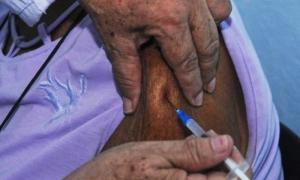


"Here are the results," said Miguel Díaz-Canel Bermúdez, First Secretary of the Communist Party and President of the Republic, on Monday afternoon, referring to the partial achievements of clinical studies with the Cuban biotechnological product Jusvinza in patients in the post-acute and chronic stages affected by the Chikungunya virus.
On December 2, 2025, a group of health experts began immunological and clinical studies on the island, hypothesizing that, with the intervention of Jusvinza, patients with chronic post-Chikungunya arthritis could show clinical improvements.
Fortunately, science has shown that, in the groups that took part in the study—in the provinces of Havana and Matanzas—there has been a notable improvement.
More than one voice took part in Monday's discussions to highlight the rigor and adequate safety profile of the study. There was talk of "country results." And there is agreement that, based on the treatment, the patients' response to the product is evident early on.
Dr. Julio Esmir Baldomero Hernández, director of Clinical Research at the Center for Genetic Engineering and Biotechnology (CIGB), stated that the study report could have solid data by early March and that the research includes long-term assessments, particularly with regard to safety and the persistence of the therapeutic effect.
The study, said the scientist, has been conducted in compliance with good practices and is therefore endorsed by the Center for State Control of Medicines, Equipment, and Medical Devices (Cedmed), which conducted an inspection just 24 days after the research began and ruled that it complied with good clinical practices.
Regarding a condition that has revealed its complexity, Dr. Miguel Hernán Estévez del Toro, director of the Hermanos Ameijeiras Surgical Clinical Hospital and an expert Cuban rheumatologist, emphasized that "we are facing a disease in which a percentage of patients will complete the three-month evolution and progress to chronic inflammatory arthropathy."
The expert said that, in all reported cases, "the inflammatory mediators are practically the same," those that "have some particularities in rheumatoid arthritis." When rheumatoid arthritis is not controlled, a chronic inflammatory process ensues that greatly limits the quality of life and functional status of patients, the doctor said.
"In other words, having a drug, a product that is capable of slowing the inflammatory progression of the disease, will be very beneficial," he said, announcing that, currently, according to instructions from the Ministry of Public Health and its Innovation Committee, a national survey has been launched by the National Group and the Cuban Society of Rheumatology.
According to Dr. Miguel Hernán Estévez del Toro, this survey includes all the specialist staff who have been treating patients. This is in order to seek a position, a consensus, which, according to the doctor, will be very good.
He stated that the current survey will result in "a highly consensual position paper, which will surely include treatment guidelines," the combination, he said, of rehabilitation. And that rehabilitation is the battlefield in which Jusvinza is the product that is called upon to play a relevant role.
Jusvinza is a Cuban biotechnology drug that controls hyperinflammation and regulates the immune response, approved to treat diseases such as rheumatoid arthritis and COVID-19. Repositioning this drug, which was not created to treat Chikungunya, has been, in the words of Dr. María del Carmen Domínguez, principal investigator of the study, a very difficult scientific exercise.
"The first gain in this cut, which is very preliminary, is the safety profile; we are once again confirming a good safety profile for the drug, and that also gives us something important, which is the ability to immunomodulate; because here we took what we had studied in rheumatoid arthritis and COVID-19 to more repeated administrations over time, which is a significant molecular challenge. Similarly, we can already see that, at this early stage, the treatment has not yet been completed, but that there is a contribution to the clinical improvement of patients," said the scientist.
At the meeting held at the Palace of the Revolution, which was also attended by the member of the Political Bureau and Prime Minister, Manuel Marrero Cruz, expert voices also confirmed that the incidence of the Chikungunya virus is tending to decrease in the country.


