The unity we need today is that of those who argue strongly, but march together
 15 December 2025


(Shorthand Versions - Presidency of the Republic)
Dear comrades and members of the Party Central Committee and guests:
We have had an intense Plenary Session despite its brevity. This is dictated by the situation in the country, which urgently needs transformations that must not only be economic and structural, but also require a change in mentality regarding the forms and methods of party work.
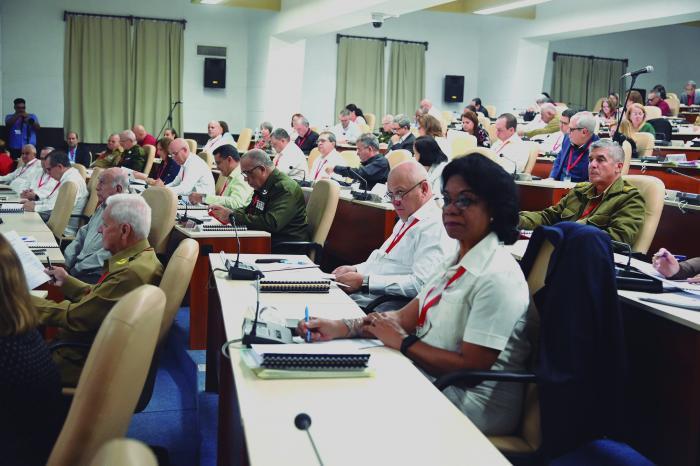
In a single day of meetings, we have had in-depth, critical, and, above all, responsible debates, taking advantage of the possibilities offered by technology to avoid costly personnel movements, without leaving anyone out. However, in my opinion, the greatest gain lies in the quality of the discussions, in that qualitatively superior way of addressing problems when they are touched with our hands thanks to a more frequent and systematic connection with the people.
Not even the most advanced technology can surpass the value of human contact. Our most important and urgent tasks are in the field, in the neighborhoods, the people's councils, the municipalities, the provinces, with our ears to the ground and our feet on the ground, as the Army General has warned us so many times.
From that essential link with the people, the source of the forces that sustain the Revolution, spring the solutions to the most pressing problems. This is something we learned in Fidel's school.
This is not a party of the elite; it is a party of the masses. We cannot lead by reports; we must and have to lead with the people, looking at problems head-on and in depth, and confronting them with the greatest possible degree of popular participation. Only from a collective and committed perspective can the harsh data on the behavior of the economy in recent months, characterized by increased financial, oil, and all-out persecution against Cuba, be calmly evaluated.
It would be surprising to have positive data in an economy brutally persecuted and besieged by the world's leading power, at a time when even the most dynamic markets are not free from the uncertainty generated by the current international economic turmoil. So let us address directly and without euphemisms the impacts of this siege on the Cuban economy at the end of another difficult year.
At the end of the third quarter, GDP has fallen by more than 4%, inflation is skyrocketing, the economy is partially paralyzed, thermal power generation is critical, prices remain high, deliveries of rationed food are not being met, and agricultural and food industry production is not meeting the needs of the population. Added to all this are the costly losses caused by the devastating passage of Hurricane Melissa.
This undoubtedly critical situation demands timely and systematic intervention by leaders and cadres to address the main problems facing the population, evaluating decisions and prospects, a fact that confirms the recognition of the authority of institutions and, in particular, of Party and Government representatives at all levels.
This certainty, however, cannot distract us from the widespread dissatisfaction with everything that works poorly or does not work at all, while criticism emerges everywhere of the excess of meetings that "solve nothing" and of the growing inequality between small population groups that seem to have all their problems solved, some even boasting of their economic status, while the majority cannot fully meet some basic needs.
This situation, caused primarily by six decades of external economic harassment, is seen as a new "now or never" scenario by the historical enemy of the Cuban nation and the heirs of the so-called exile community that made its fortune from the counterrevolution industry and has never stopped dreaming of another subjugated and dependent Cuba, pinned like another star on the U.S. flag.
This frustrated mercenary nightmare fuels the renewed imperial effort to suffocate the Cuban Revolution by applying a policy of maximum pressure and attrition, using coercive measures that significantly limit our scope of action, stifling dreams and efforts to achieve deserved prosperity, and violating the most basic human rights of the Cuban people with systematic aggression supported by a cowardly and slanderous campaign of media intoxication.
The fight is tough, long, and uneven. The enemy's rule is that there are no rules. International laws, commitments to peace and development are worthless to the empire and its acolytes. We have seen this in Gaza and we are seeing it against Venezuela. The end justifies the means, they seem to tell us every time they act in the name of the illegal law of the strongest, although the representatives of 21st-century fascism do not even bother to explain it.
In case there were any doubts, this November, fraught with threats and dangers, the empire has once again shown its disrespect for the international community—or what remains of it—with its new National Security Strategy, a crude combination of the Monroe Doctrine and Roosevelt's Corollary without any embellishment.
What is to be done? Lenin's classic question still includes the answer: do, act, transform. Plan against plan, Martí would say. And so would Fidel, who clearly called on us to "...emancipate ourselves by ourselves and with our own efforts...", challenging powerful dominant forces within and outside the social and national sphere, defending values in which we believe at the cost of any sacrifice.
The revolutionary thing will always be to act and to do so by mobilizing forces and talent with clear objectives, connecting the interests and demands of the country with the maximum use of the scarce resources at our disposal.
The revolutionary thing is to rise up every day ready to energetically confront apathy and affront, external aggression, and the complex situations that beset the economies of countries like ours, which have been stripped of their resources and rights more than once, and the siege specially designed to punish rebellious Cuba for its daring claim to remain free, independent, and sovereign a few miles from the empire.
What is revolutionary continues to be promoting and encouraging popular participation and control, highlighting and spreading the uplifting experiences of Cuban men and women, individually or collectively, not just one day, but every day. What is fair is to tirelessly demand that institutions provide effective and timely responses, that they be sensitive to the demands of citizens, and that public servants act as such. Above all, it means going where our compatriots live, work, and study, and even where they do not, to listen to and learn from those who face the greatest difficulties on a daily basis. It also means informing, explaining, arguing, guiding, unblocking, helping to organize and promote actions that enable them to face current challenges, not as a misfortune, but as an opportunity to collectively resolve what can be resolved with their own strength and resources.
We cannot forget for a moment that in the current conditions, the paralysis of many activities due to long hours of blackouts caused by a lack of fuel, lubricants, and maintenance of thermoelectric power plants completely disrupts daily life, generates uncertainty, and accentuates feelings of hopelessness, which can sometimes be reversed simply with essential and timely information, with a word of encouragement and gratitude for how much they do with so little.
I have confirmed this in my visits to the municipalities, the most rewarding experience of political work, which teaches us about the body and soul of the Cuban people, which I would never remove from my weekly agenda, because it has allowed me to reach the most remote parts of the country, to meet incredible compatriots who find solutions where others only see problems, and to confirm with them the vitality of the Revolution where resistance demands the most creativity.
There is poverty in Cuba, say the media outlets created by those who applaud the blockade and the suffocating measures. Yes, there is enormous material deprivation in Cuba, generated by the genocidal policy that generously pays those who celebrate that poverty. No one can be satisfied with that, and we will work tirelessly for the prosperity that this people deserves.
But alongside that poverty that the enemy of this heroic nation loves to see, there is another reality that hatred prevents them from seeing: a creative and hard-working people who do not give up, and there are dozens, hundreds of personal and collective projects that are "breaking through the bush with bare hands and a heart in their fists," as the unforgettable Vicente Feliú sang in his song A los que luchan toda la vida (To Those Who Fight All Their Lives).
These difficult years clearly show us the women and men who strive every day to grow and improve the country, expecting no reward other than the result of their work turned into progress. In contrast, there are those who profit from needs and shortcomings, those who hinder progress and delay advancement, and others capable of selling out the nation that once exalted them to the highest offices.
I was reminded of Fidel these days, and I quote: "The enemy knows all too well the weaknesses of human beings in their search for spies and traitors, but they do not know the other side of the coin: the enormous capacity of human beings for conscious sacrifice and heroism."
Fidel also said at the closing ceremony of the metalworkers' congress on July 6, 1960: "Because a revolution is nothing more than a great battle between the interests of the people and the interests opposed to the people [...] it teaches us which men and women serve, and which do not; those who are not even fit to fertilize their land with their blood and their lives; it teaches us who are made of human wood, who are made of noble and generous wood; and who are made of selfishness, ambition, disloyalty, treason, or cowardice [...]
"In a revolution, everyone has to take off their mask; in a revolution, the little altars collapse: those who have tried to live by deceiving others, those who have tried to live by posing as virtuous or decent people, or posing as patriots, or posing as brave. That is what the Revolution teaches us [...] it teaches us who the true patriots are [...] and where the great traitors come from."
I do not believe there are any phrases that more accurately describe the actions of Alejandro Gil, from whose degrading case we must draw experiences and lessons, making it clear, first and foremost, that the Revolution has zero tolerance for such behavior.
Comrades:
The new US National Security Strategy, a mixture, as I have already said, of the Monroe Doctrine and the Roosevelt Corollary, with a new corollary, that of Trump, promises to return the world to the dark times of Hitlerian fascism with hints of the savage conquest of the American West and the practices of privateers and pirates that gave the Caribbean Sea its sad notoriety in colonial times.
In an unprecedented affront to international norms, as in the days of Drake and Morgan, Donald Trump has just launched his pirates on a Venezuelan oil tanker, shamelessly seizing the cargo like a common thief. This was the latest episode in an alarming series of attacks on small boats and extrajudicial executions of more than 80 people, under accusations that have never been proven and amid a threatening military deployment unprecedented in a declared Zone of Peace.
The Bolivarian Revolution is the main target of the current threatening deployment of U.S. military ships in what they intend to continue using as a backyard for their misdeeds. Despite numerous demonstrations inside and outside their country against plans for war in the region, the occupant of the White House, his Secretary of State, and his Secretary of War make no secret of their threats against Venezuela and any other government they consider hostile.
Cuba denounces and condemns this return to gunboat diplomacy, this threatening diplomacy, this scandalous theft, yet another in the already long list of looting of Venezuelan state assets, this unacceptable interference in the internal affairs of a nation that set the course for the independence of our America.
We are not alone in the world. This was demonstrated by the immense support of the international community in voting in favor of the Cuban resolution against the blockade in the United Nations General Assembly, thwarting the aggressive and unprecedented campaign of pressure, blackmail, and coercion exercised by the United States government to prevent the repetition of the international condemnation of the genocidal policy of the economic, financial, and commercial blockade against the Cuban people. blackmail, and coercion by the United States government to prevent the international condemnation of the genocidal policy of economic, financial, and commercial blockade against the Cuban people, which is currently intensifying.
We will continue to denounce the genocidal blockade and mobilize international solidarity. At the same time, we will work actively to diversify economic and trade relations and strengthen integration with the sister nations of Latin America and the Caribbean, which are today under serious threat of aggression.
Comrades:
The impact of Hurricane Melissa and other natural events has been widely discussed, recognizing the resilience and solidarity of the people. Let this analysis serve to challenge us in our nature as Party cadres and leaders.
Just as we acted then, heroically preventing the loss of human lives, let us act every day with the discipline, rigor, and courage with which the combatants and leadership teams of the Revolutionary Armed Forces and the Ministry of the Interior acted, to whom we once again express our gratitude for their heroism and example.
I extend that recognition to the disciplined, conscious, and collaborative attitude of the Cuban people, of those who lost everything and did not give up; they did not sit down to cry on the side of flooded roads, and they have been a decisive force in the recovery of their places of residence.
The damage was devastating, which I will not detail so as not to prolong my remarks. Nor will I detail the progress made in the recovery of the eastern provinces. I will only say that from the very first minute after Melissa passed, I was certain that we would overcome the blow, despite the difficult conditions in which the country finds itself. And that certainty was always reinforced by the quality of the troops who took on the difficult task: our comrades in the Party and Government leadership who worked side by side, hand in hand with the presidents of the defense councils of the provinces, municipalities, and defense zones.
I know that in the heat of such intense battles there is no time to keep diaries and notes, but I trust that everyone can take a few hours to reconstruct moments and actions that will be useful in the future. We need to reconstruct experiences in order to update disaster risk reduction plans. The Cuban school of disaster response must continue to set an example and lead the way in these missions and in preparing everyone for the future threats posed by climate change.
I would like to take this opportunity to express my gratitude, on behalf of the Cuban Party, Government, and people, for the national and international solidarity that supports the reconstruction of the most affected areas.
Comrades:
Due to its immediate, medium-term, and long-term importance, I must refer, albeit briefly, to the Government Program to correct distortions and revive the economy, whose popular discussion is particularly significant at this time. I will not dwell on what has been discussed, but I must reiterate some considerations that I believe are important in order to achieve the results proposed in that Program.
Correcting distortions and reviving the economy is not a slogan; it is a concrete battle for stability in everyday life, so that wages are sufficient, so that there is food on the table, so that blackouts end, so that transportation is revived, so that schools, hospitals, and basic services function with the quality we deserve. We have debated harshly, without triumphalism, and we have defended an economic agenda that goes to the root of the problems and commits every agency, every territory, and every cadre.
We recognize the urgent need to move toward macroeconomic stability. This means putting our accounts in order, tackling inflation, adjusting the budget to protect those who need it most, and resolving the complex issue of the exchange rate. These are not easy or popular decisions, but a responsible party does not opt for the easy way out, but rather for a definitive solution to the problem. The task is to combine economic rigor with social justice, and that combination can only be guaranteed by the socialist revolution.
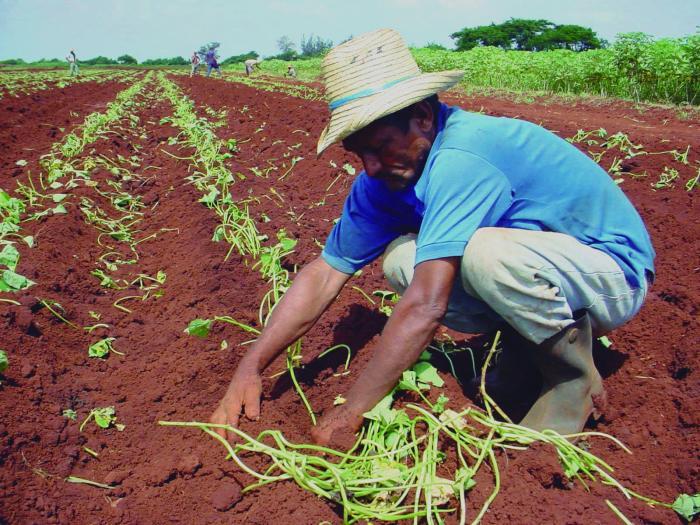
We have placed food production at the center as a national priority. A strong agricultural sector, with local supply chains, support for producers, and fewer obstacles to their management should change the landscape. Guidelines have been approved to eliminate obstacles, improve storage and marketing mechanisms, stimulate productive efforts, and better support those who work the land.
We have also reaffirmed the decisive role of socialist state-owned enterprises, which are called upon to demonstrate efficiency, discipline, and capacity for innovation in practice. The autonomy we defend is for the purpose of producing more, serving the country better, and linking up with the non-state sector without losing its socialist essence. The message is clear: whoever runs a state-owned enterprise must feel that every peso, every resource, every decision is a commitment to the people and not a space for privileges.
We agree that without economic efficiency, there can be no sovereignty. Therefore, it is essential to take a leap forward in the management of state-owned enterprises. Their autonomy will be expanded, but so will their responsibility for results. OSDEs must cease to be administrative structures and become true engines of development.
We also intend to promote, in an orderly and controlled manner, the undoubted contribution of MSMEs and non-agricultural cooperatives as necessary actors in boosting national production. Work will be done to better integrate them with the state sector. We will aggressively and strategically unblock foreign investment, with the aim of identifying and eliminating unnecessary procedures that scare away capital. As announced, the priority is on projects that generate food, energy, and foreign exchange.
Move forward with determination in correcting monetary distortions, always protecting the most vulnerable. As for exchange rate unification, it is an unwavering goal for the economic health of the country, which we must achieve gradually.
I have commented on some ideas without going into much detail. We must devote hours of analysis and discussion to the final version of the Plan, including the indispensable consultation with workers. We understand that bold proposals will emerge from them on how to leverage potential and reserves to achieve a plan that is more focused on the urgent need to resolve the country's current situation.
We have also discussed the State Budget and investment priorities, strategies to address inflation, the fiscal deficit, the impact of the blockade, as well as the arbovirus health crisis and other public health issues.
Another focus of our discussions is the energy transition. Cuba needs to move decisively toward a cleaner, more sovereign, and more efficient energy system. But we have made it clear that we do not want a transition that leaves behind territories, workers, or families. We want and must promote a just energy transition that generates employment, boosts local economies, and opens up opportunities for technicians, engineers, workers, and communities.
That is why the Plenary has endorsed the priority of investments in renewable energies; the expansion of solar and wind energy; the smarter use of biomass; and energy efficiency programs in homes, businesses, and services. Every solar panel installed, every circuit modernized, every efficient piece of equipment made widespread should also be seen as a new opportunity for work, training, and productive linkages. We have insisted that energy projects include components of local employment, on-the-job training, and community participation. The battle for energy is also a battle for territorial justice.
This plenary session focuses on giving priority to the municipalities most affected by blackouts, climate vulnerability, and lack of infrastructure. That is where the combination of investments, social programs, and popular participation must go first, as proof that the Revolution does not abandon anyone and that we do not see the energy transition as a privilege, but as a right.
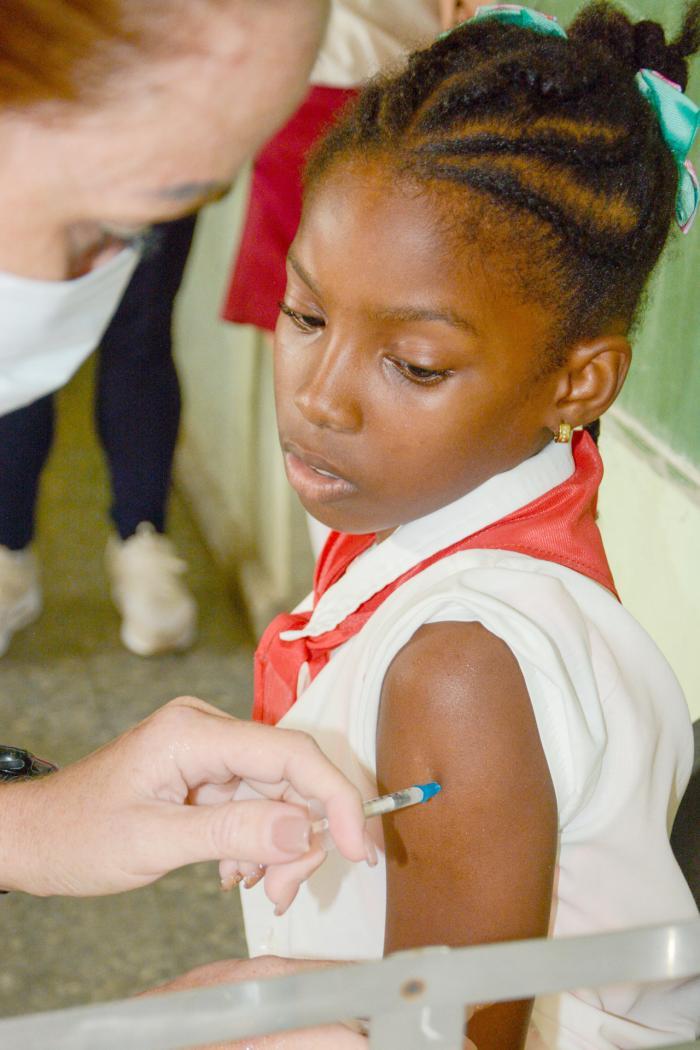
As for social development, it remains at the heart of the project. There can be no Revolution without social justice. We reaffirm that, despite limitations, health care and education will continue to be free and of high quality for all.
Today we leave here with concrete agreements, specific tasks and, most importantly, a unified action plan to face the enormous challenges that lie ahead.
Comrades:
Reviewing the implementation of the agreements from previous plenary sessions, we recognized progress, but also, in all honesty, we identified shortcomings, delays, and obstacles; bureaucracy, formalism, and inertia still place unacceptable brakes on the will of the Party and the needs of the people. It has been clearly stated here that everything that needs to be changed must be changed, and it will be changed. We have proposed and approved work concepts, priorities, and actions. Now it is time to implement, work, and deliver. Control mechanisms will be strengthened, and accountability will be thorough and systematic.
Once again, we take a responsible and optimistic view of Cuban youth. Cuban youth not only benefit from social policies, they are protagonists of the transformation. That is why the 11th Plenary Session has directed that each province and municipality work together with youth and student organizations on specific plans for the integration of young people into the labor market, for the accompaniment of those who neither study nor work, and for the development of productive and social enterprises that channel the creativity and responsibility of the new generations. We refuse to accept that young talent should be wasted and that migration should continue to be a life plan. The Revolution was born as a youth project and can only continue if young people feel it and make it their own.
With regard to the work of the Party, we have made a rigorous assessment of the actions undertaken. The aim is to strengthen political unity and the role of the Party in leading the country, the provinces, the municipalities, the institutions, and the communities, with priority given to the economic, ideological, and communication battles that we are called upon to wage every day.
The people's trust in their institutions is built on actions, tangible results, and sensitivity to everyday needs. The coordinated action to confront Melissa is the best proof of how much we can achieve with organization, discipline, and unity.
The course of the Plenary itself has confirmed time and again that our main strength is unity. A unity based on debate, criticism, and conscious discipline.
As for media intoxication and misinformation, we already know that there is no better antidote than truth, systematic work, and example. As commitments for the immediate present, based on what has been discussed here, I mention and ratify the following:
-Enrich and refine the Government Program with the contribution of the results of the popular consultation that is being carried out.
-Advance in the implementation of the approved economic measures, with discipline and control.
-Ensure that the 2026 Budget responds to the priorities of the people and the defense of the Revolution.
-Strengthen attention to territories affected by natural disasters, ensuring that no one is left helpless.
-Promote the active participation of youth in all areas of national life.
-Intensify the ideological, cultural, and communications battle, defending the truth about Cuba in the face of manipulation and misinformation.
Comrades:
We have reached the end of this 11th Plenary Session at a particularly challenging time for our homeland. No one is unaware of the economic tensions, material shortages, and external pressures our people are suffering, but no one can deny the moral strength, creativity, and resilience that the Revolution has demonstrated time and again. Today, this Central Committee reaffirms that the Party does not stand on the sidelines of the problems, but at the center of their solution, together with the people.
Everything we have said and agreed upon would remain empty words if the Party did not demand a different way of functioning from itself. The last plenary sessions have been clear: we must combat formalism, routine, complacency, and self-deception. We have spoken of criticism and self-criticism not as a ritual, but as a working method. Today we ratify that the single Party of the Cuban Revolution must be more democratic in its internal functioning, closer to the real problems of the people, more demanding of its cadres, and more transparent in its relationship with society.
The implementation of the agreements of this 11th Plenary Session will not depend solely on documents and resolutions; it will depend on the daily conduct of each activist, each cadre, the functioning of each institution in the territories, particularly in the municipalities; it will depend on the ability to listen, to rectify, to be accountable, to tell the truth, even if it hurts, and to mobilize the moral and productive reserves that are there, among the people, waiting for leadership to call them together and accompany them.
We are not unaware of the fatigue, irritation, and uncertainty that has taken hold in some sectors of society, as a result, first of all, of 66 years of blockade, now reinforced with a notable impact on daily life; but also as a result of mistakes and shortcomings that have yet to be resolved. It would be irresponsible to deny this reality and to ignore the self-criticism we owe ourselves. But it will not be possible to face and resolve the problems if we allow ourselves to be overcome by discouragement. We are the children of a people who made a revolution 90 miles from the greatest imperial power on the planet and who have successfully defended it for more than six decades.
As this 11th Plenary Session comes to a close, the call is very specific: Party and government officials must leave here with a realistic plan, with deadlines and responsible parties for each economic agreement adopted, and be transparent in reporting on progress and obstacles.
Above all, the call is for unity. A conscious unity, built on truth, participation, and mutual trust. The unity we need today is that of those who argue strongly but march together.
With that conviction and renewed confidence in the proven ability of our Cuban people to take on the greatest challenges and in the strength of our ideas, this working session of the 11th Plenary Session of the Central Committee of the Communist Party of Cuba concludes.
Intense work lies ahead of us. No one should expect easy or immediate solutions. The path ahead is one of struggle, creation, and intelligent resistance, because we are guided by reason, moral strength, and a heroic people as our greatest inspiration.
In the year of the Commander-in-Chief's Centennial, let us honor his memory with a permanent exercise of criticism and self-criticism, not for faults, but as a spur to transformative action. Changing everything that must be changed. Revolutionizing the Revolution, which is what is expected of us revolutionaries.
With Fidel, with Raúl, with our people!
We will win!
Homeland or Death!
Socialism or Death! (Exclamations of: "We shall overcome!")
(Ovation.)